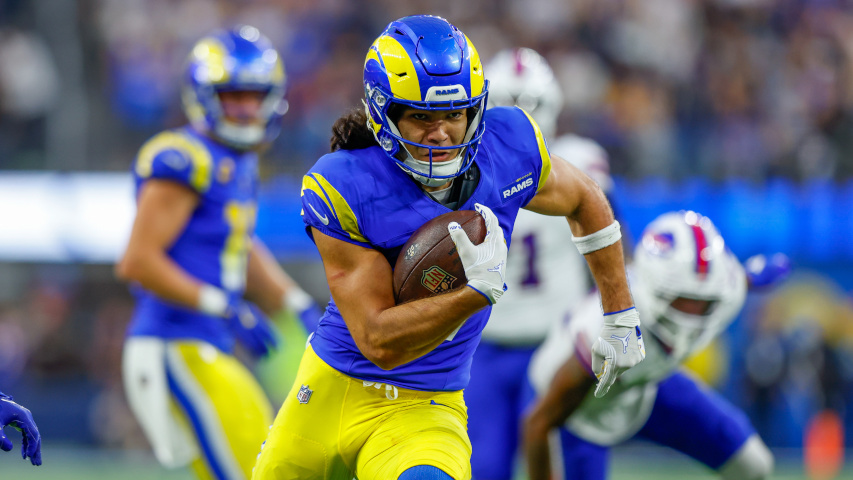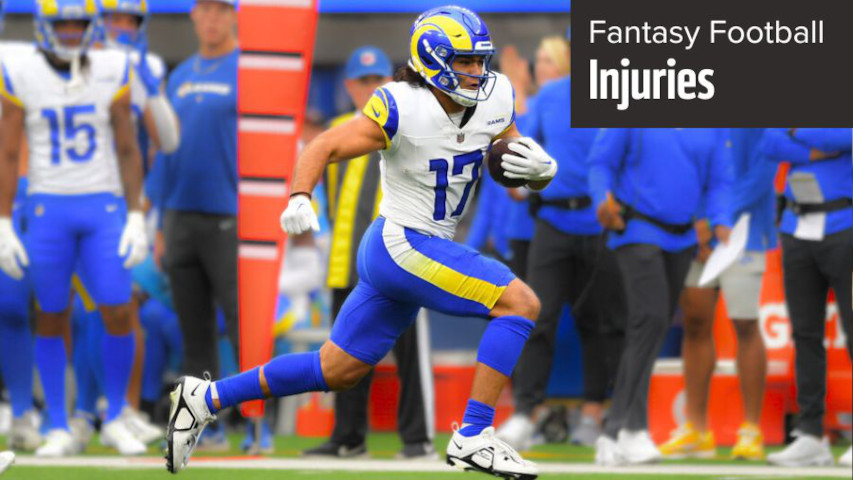

Christian Watson Has a Real WR1 Path in 2026
Green Bay Packers 2025 Overview
Schedule
| Week 1 | at MIN | Week 10 | vs. MIN |
| Week 2 | at NYJ | Week 11 | BYE |
| Week 3 | vs. ATL | Week 12 | at LAR |
| Week 4 | at TB | Week 13 | at NO |
| Week 5 | vs. CHI | Week 14 | vs. BUF |
| Week 6 | vs. DAL | Week 15 | vs. MIA |
| Week 7 | at DET | Week 16 | at CHI |
| Week 8 | vs. CAR | Week 17 | vs. HOU |
| Week 9 | at NE | Week 18 | at MIN |
Wins
2024
9
2025 Over/Under
10.5
Play Calling
| 2025 | 2026 Projections | |
| Plays Per Game | 59.4 | 60.5 |
| Pass Rate | 51.3% | 53.5% |
| Run Rate | 52.5% | 46.5% |
Key Additions
- QB Tyrod Taylor
- WR Skyy Moore
Key Departures
- WR Romeo Doubs
- WR Dontayvion Wicks
- RB Emanuel Wilson
Notable Coaching Changes
- None
Jordan Love
2025 Role & Results
Mediocre Production with Spike Weeks
Love threw for 3,381 yards and 23 TDs, ranking 13th and 14th, respectively, among QBs with 300+ dropbacks. He added just 6 INTs and posted a 101.2 passer rating.
Love finished as QB13 in total fantasy points but only QB21 in points per game.
The weekly fantasy results were volatile.
Love finished as a top-12 QB just five times, though three of those weeks landed him at QB2 overall. He had only three games outside the top 24, which points to a useful weekly floor even in a 15-game season where he ranked just 19th among QBs in pass attempts at 439.
Love Played Well with Low Volume
Love’s role was strong enough to support fantasy relevance but not big enough to unlock elite volume.
Love ranked 19th among qualifying QBs in attempts (439), completions (291), and dropbacks (493). That volume keeps him out of the QB1 tier.
Love posted the second-highest rushing total of his career with 199 yards. His 3.1 rushes and 13.3 yards per game marked a rebound from Love’s down 2024, finishing close to his first year as a starter (2.9 carries, 14.5 yards per game in 2023). But Love’s 24 scrambles also ranked just 17th at the position, signaling he’s no more of a rushing threat than most QBs.
Love’s Most Bankable Trait Was Efficiency
Love’s efficiency profile was the strongest part of his 2025 season.
His 66.3% completion rate vs. a 61.8% expected rate amounted to the league’s fifth-best completion percentage over expected. Love paired that with downfield aggression, ranking eighth in intended air yards.
He earned an 88.7 PFF passing grade, fourth among QBs with 300+ dropbacks. His 88.5 PFF overall grade ranked sixth. He ranked eighth in big-time throws and 11th in big-time throw rate.
Love showed strong QB metrics, but didn’t have the volume to turn that performance into strong fantasy output.
Packers’ Offensive Balance Limited Opportunities
Love ranked just 19th in attempts but still finished 13th in passing yards and 14th in passing TDs. He also ranked 19th in yards per attempt at 7.7.
The team has leaned more toward the run since signing RB Josh Jacobs in 2024. HC Matt LaFleur went from a 58.1% pass rate in 2023 to 48.8% in 2024 and 51.3% in 2025.
The Packers ranked 15th in total yards per game (332.6), 17th in passing yards per game (212.8), 14th in passing TDs per game (1.4), and 15th in expected points added per play (0.19).
Love’s completion efficiency and long passes helped the team’s production despite modest volume.
The Packers ranked 15th in rushing yards per game (212.8) and 12th in rushing TDs per game (1.0).
Three Years In, the Arrow Still Points Up
2025 was Love’s least productive fantasy season in terms of points per game.
2023: QB6
2024: QB13
2025: QB21
This coincides with a drop in plays per game over that time:
2023: 61.9
2024: 60.4
2025: 59.4
Love’s attempts per game also dropped after 2023, with Jacobs joining the team:
2023: 34.1
2024: 28.3
2025: 29.3
Despite the drop in fantasy performance, Love became more efficient over time, improving his adjusted completion percentage each season:
2023: 72.9%
2024: 74.7%
2025: 77.6%
Along with his adjusted yard per pass attempt over those years:
2023: 7.4
2024: 8.0
2025: 8.1
2026 Opportunity & Projection
The WR Losses Didn't Empty the Arsenal
Love’s receivers still look at least solid, despite Romeo Doubs leaving in free agency and the team trading Dontayvion Wicks to Philadelphia.
WR Christian Watson is coming off arguably his best season yet despite playing only 10 games. He averaged 17.5 yards per catch and 2.51 yards per route run while scoring 6 TDs. His 17.6 average depth of target ranked second WRs with 40+ targets, giving Love a true downfield option.
Slot WR Jayden Reed posted limited production thanks to a broken clavicle and Jones fracture in his left foot that combined to cost him 10 full games and parts of at least two others. Reed led the team in receptions and receiving yards each of the previous two years, though.
Second-year WR Matthew Golden adds another speedy option. His 12.7-yard aDOT and 41.3% slot rate provide flexibility. He'll need to improve on his mere 2.1 catches and 25.8 yards per game as a rookie, though.
TE Tucker Kraft’s 14.7 PPR points per game ranked second among TEs last season. An ACL tear in his right knee -- plus LCL and meniscus damage -- ended his season in November, but Green Bay seems to be expecting him back for the start of 2026.
Jacobs provides a worthwhile receiving presence (2.3 receptions per game over the past two seasons) in addition to carrying the ground game.
This Offense Starts on the Ground
Since signing Jacobs in 2024, the Packers’ offense has leaned run:
| Plays Per Game | Pass Rate | Neutral Pass Rate | Pass Rate Over Expected | |
| 2023 | 61.9 | 58.1% | 56.2% | +1.9% |
| 2024 | 60.4 | 48.8% | 47.8% | -4.5% |
| 2025 | 59.4 | 56.9% | 52.5% | -2.1% |
Expect the offense to continue down that path, with Jacobs signed through 2027.
The scheme does attempt to push the ball downfield. Love’s 8.8 intended air yards per attempt in 2025 ranked eighth among QBs. He ranked sixth in 2024 at 8.9.
Love Needs More Than Three Spike Weeks
Love has shown efficiency and talent through his three years as a starter, but the Packers’ run-leaning offense limits his ceiling.
The team did see an increase in pass rate and neutral pass rate last season, but that didn’t translate to bigger numbers for Love.
When the team got behind and was forced to pass, we did see Love spike to QB2 overall in three different weeks. If the team does move to a faster pace with a similar pass rate because of game script, Love’s talent can produce spike weeks. But he will need more than three to deliver low-end QB1 numbers.
An injury to Jacobs would also likely mean more of a passing lean and improve Love’s weekly fantasy output.
Low Pass Volume Keeps Love in QB2 Range
The biggest risk to Love’s scoring profile is simply Green Bay continuing with the same pass-run split of the past two years.
Love has played well, including the league’s seventh-highest passing-TD rate over his three seasons as starter (5.5%). But the limited volume has clearly capped his weekly fantasy output since Jacobs arrived.
One more sneaky factor last year: The offense ran less efficiently than in 2024. That included a dip from 6.1 yards per play to 5.6 and from 53 total offensive TDs to 44. If Green Bay doesn’t rebound from that No. 16 finish in scoring, it’ll lower everyone’s ceiling.
Draft Sharks Verdict
Love is a steady QB2, but Green Bay's declining play volume over the past three seasons keeps him short of starter status in 1-QB leagues. At an early ADP of QB18, he still makes sense as a superflex QB2 or a 1-QB bench stash. If Love's ADP climbs any higher, he's not worth the pick.
Customize Love’s projection for your exact league settings inside the Draft War Room.
Josh Jacobs
2025 Role & Results
Jacobs Goes Top 10 Again
Jacobs finished with 237.1 PPR points and 15.81 PPR points per game, ranking 13th and ninth among RBs. He scored as a top-12 RB seven times and a top-24 RB 11 times across 15 games.
The rushing production was solid but not dominant. Jacobs ran for 929 yards, ranking 20th among RBs. The TDs drove the fantasy value. His 13 rushing scores ranked third.
He also helped enough in the passing game, catching 36 passes for 282 yards and 1 TD.
Lead Back Once Again
Jacobs had a lead-back role.
Jacobs ranked 10th among RBs in carries per game and 61.9% of RB carry share for the Packers. That's the engine of his fantasy value. He isn't winning with explosive efficiency. He's winning because Green Bay gives him enough rushing volume and scoring chances to matter.
The receiving role was useful, too. Jacobs ranked 21st among RBs in targets and 14th in receptions. His 36 catches were enough to keep him involved when game scripts pushed Green Bay toward the pass.
Jacobs Struggled with Efficiency
Jacobs’ efficiency was fairly poor.
He forced 47 missed tackles as a rusher, ranking 11th among RBs. He ranked 34th among RBs in yards after contact per attempt (3.0).
He averaged 4.0 yards per carry (36th), produced minus-7 rushing yards over expected (38th), and finished at minus-0.03 RYOE per attempt (37th).
That marked a step down from 2024, when Jacobs had 4.4 yards per carry (27th), 217 RYOE (fifth), and 0.73 RYOE per attempt (10th).
That made the TDs especially important. Jacobs scored 13 rushing TDs (third among RBs). The role supports a strong TD total -- he scored 15 times on the ground in 2024 -- but repeating last year’s career-high 5.6% rushing-TD rate will be tough
Jacobs’ receiving efficiency was cleaner. He caught 83.7% of his targets, had zero drops, and earned a 90.0 PFF receiving grade (fourth among RBs with 30+ targets).
This Offense Starts With Jacobs
Green Bay’s offense helped Jacobs in the two ways that matter most for fantasy RBs: it gave him touches and scoring chances.
The team has leaned more toward the run since signing Jacobs in 2024. HC Matt LaFleur went from a 58.1% pass rate in 2023 to 48.8% in 2024 and 51.3% in 2025.
The Packers ranked 15th in rushing yards per game (212.8) and 12th in rushing TDs per game (1.0) last year. They were similarly middle-of-the-pack through the air, ranking 15th in total yards per game (332.6), 17th in passing yards per game (212.8), 14th in passing TDs per game(1.4), and 15th in expected points added per play (0.19).
The balanced approach helps Jacobs face light boxes. Only 17.52% of his runs in 2025 headed into boxes of 8+ defenders. That ranked 43rd among RBs with 90+ attempts.
Jacobs Regressed in 2025
Jacobs has ranked among the top 18 in PPR points per game every season, improving his scoring over the past four seasons:
- 2019: RB16
- 2020: RB15
- 2021: RB16
- 2022: RB3
- 2023: RB18
- 2024: RB7
- 2025: RB10
Here’s how he has fared in rush yards over expected per attempt by year:
- 2020: -0.03
- 2021: -0.06
- 2022: 0.47
- 2023: -0.37
- 2024: 0.73
- 2025: -0.03
Last year marked the first time he ranked higher than 15th with a negative RYOE per attempt. His TD total also helped make up for the second-fewest carries per game of his career.
- 2019: 18.6
- 2020: 18.2
- 2021: 14.5
- 2022: 20.0
- 2023: 17.9
- 2024: 17.7
- 2025: 15.6
Knock out the two games in which Jacobs played less than 30% of the snaps, though, and that average jumps to 17.2. And he rushed 18.0 times per game through his first nine outings, before a Week 11 knee injury challenged his snap shares the rest of the way. (He rebounded for 19 carries in the playoff loss at Chicago.)
Jacobs’ TDs per game has jumped in his Packers time, helping fuel his fantasy output:
- 2021: 0.60
- 2022: 0.71
- 2023: 0.46
- 2024: 0.88
- 2025: 0.87
2026 Opportunity & Projection
The Packers Make Jacobs Easier to Trust
The supporting cast is good for Jacobs.
Jordan Love gives Green Bay efficient QB play and enough downfield ability to keep defenses honest. He ranked eighth in intended air yards, and fifth in completion percentage over expected.
The team returns most of its key weapons as well, including Christian Watson, Matthew Golden, Jayden Reed, and Tucker Kraft. Losing Romeo Doubs and Dontayvion Wicks shouldn’t downgrade even the WR corps.
The Packers O-line ranked just 20th in PFF run-block grade.
The depth behind Jacobs at RB is fairly poor with the team losing Emanuel Wilson to free agency and not addressing the position beyond that. MarShawn Lloyd and Chris Brooks will back-up Jacobs.
Jacobs’ May arrest does make that lack of depth more important in case he misses time because of league discipline.
The Scheme Leans on the Run
Since signing Jacobs in 2024, the Packers’ offense has leaned run:
| Plays Per Game | Pass Rate | Neutral Pass Rate | Pass Rate Over Expected | |
| 2023 | 61.9 | 58.1% | 56.2% | +1.9% |
| 2024 | 60.4 | 48.8% | 47.8% | -4.5% |
| 2025 | 59.4 | 56.9% | 52.5% | -2.1% |
Expect a similar run-pass split this season.
The passing scheme pushes the ball downfield. Love’s 8.8-yard average depth of target ranked eighth among QBs in 2025. His 8.9 in 2024 ranked sixth.
A run game built around Jacobs and a vertical passing attack have created a balanced offense that should continue into 2026, which keeps Jacobs positioned for touch volume and scoring opportunities.
We Know Jacobs' Ceiling
Jacobs has finished seventh and 10th among RBs in PPR points per game the past two years. It’ll be tough for his ceiling to rise much higher than that unless he somehow adds significant receiving volume. That’s unlikely.
Expect his carries per game to rebound over last year’s 15.6, though, if he can stay healthier. Of course, Jacobs will also need to avoid further discipline for his off-field trouble if he’s to hit his ceiling.
Efficiency Dipping Creates Risk
There is little risk to Jacobs completely failing as long as the Packers offense stays balanced in its run and pass game, leaning into the run.
Jacobs' yards per carry and rushing yards over expected per attempt both dropped from 2024 to 2025, and he still finished as RB10 in PPR points per game. Even with similar rushing inefficiencies, Jacobs will likely get enough touches and TD opportunities to still perform as a low-end RB1 or high-end RB2.
The main risk may come with his legal issues. We’ll have to see where that goes.
Draft Sharks Verdict
Jacobs remains a dependable fantasy RB1 because the role and TD upside are strong. He's finished as a top-10 RB in PPR points per game in each of his two seasons with the Packers, and that should continue. As long as his legal trouble doesn’t keep him off the field, Jacobs looks like a solid-to-strong value at his early RB14 ADP.
Customize Jacobs’ projection for your exact league settings inside the Draft War Room.
Christian Watson
2025 Role & Results
Watson Spiked in Limited Time
Watson’s 2025 season was short but productive.
He finished with 35 catches on 55 targets for 611 yards, and 6 TDs across 10 games. That put him 46th among WRs in total PPR points, but 19th in PPR points per game.
Watson's weekly finishes were volatile. He had four top-12 weeks, but also four outside the top 36.
Downfield Efficiency That Carries Weight
Green Bay clearly used him as the field-stretcher. Watson’s 18.0-yard average depth of target (third among WRs) pointing to a true vertical role. He also led the team by garnering 24.1% of air yards, despite missing seven games.
That role fits QB Jordan Love, who ranked eighth in intended air yard. Love is willing and able to attack downfield, and Watson is the Packers' WR best suited to cash in.
Watson Received Efficient Targets
Watson’s efficiency was excellent. Among WRs with 50+ targets, he posted:
- 2.51 yards per route run (19th)
- 14.1 yards before catch per reception (third)
- 122.6 QB rating when targeted (fourth)
Those are strong indicators that Watson received efficient targets and created big plays when healthy last season. He also earned an 86.7 total-offense grade from Pro Football Focus, ranking 15th among that WR group.
This Offense Starts With Jacobs
Green Bay’s offense has leaned run since signing Jacobs in 2024. HC Matt LaFleur went from a 58.1% pass rate in 2023 to 48.8% in 2024 and 51.3% in 2025.
Last year’s Packers ranked …
- 15th in rushing yards per game (212.8)
- 12th in rushing TDs per game (1.0)
- 15th in total yards per game (332.6)
- 17th in passing yards per game (212.8)
- 14th in passing TDs per game (1.4)
- and 15th in EPA per play (0.19)
The passing game does work downfield to Watson’s strength. Love’s 8.8 intended air yards in 2025 ranked eighth among QBs. He ranked sixth in 2024 with 8.9 intended air yards.
Watson Keeps Improving
Watson has improved each of his last three seasons. His targets per route run saw a drastic increase in 2025:
- 2023: 0.19
- 2024: 0.19
- 2025: 0.23
That 2025 mark led the team ranking above Romeo Doubs and Jayden Reed (0.20) along with Dontayvion Wicks (0.19).
His yards per route run also increased each season:
- 2023: 1.56
- 2024: 2.26
- 2025: 2.51
Watson has always been a deep threat, however. His aDOT was near the top of the league every season:
- 2023: 16.7 (fifth)
- 2024: 18.7 (third)
- 2025: 18.0 (third)
And here’s how he ranked in PPR points per game each season:
- 2023: WR41
- 2024: WR81
- 2025: WR19
Watson’s improvement over the past three years plus his deep role give him enormous upside for 2026.
Durability Concerns are Behind Him?
A right ACL tear in the final regular-season game of 2024 kept Watson out until Week 8 last season. But he appeared in every game after that return, including Week 16 and 17 contests that found him questionable with chest and shoulder issues.
Watson has a long history of soft-tissue injuries, missing multiple games with hamstring issues in 2022 and 2023 (11 games total). Before the 2024 season, he changed his recovery plan to try to address those chronic hamstring problems. We haven’t seen hamstring issues since.
2026 Opportunity & Projection
The No. 1 Job Is There for Watson
Watson enters 2026 as Green Bay’s primary downfield WR and likely No. 1 WR on the depth chart.
The team still has other viable weapons, including slot-heavy Jayden Reed and second-year WR Matthew Golden. TE Tucker Kraft was also a strong target before his ACL injury, and Jacobs earned 43 targets himself.
Watson does not need to lead this team in catches to pay off with his downfield ability, but we’re projecting him to do so.
Jordan Love Matches Watson’s Talent
Love is a strong fit for Watson.
He ranked eighth in intended air yards. That gives Watson a QB willing to throw the downfield passes that drive his fantasy upside.
The team is built for “11” personnel (three WRs) with Reed primarily in the slot, and Watson and Golden manning the outside. Kraft also appears to be on track for the season as he works back from the ACL tear.
That supporting cast should help Green Bay sustain drives and force teams to leave Watson in single coverage at times.
Run-Leaning Scheme Lowers Passing Volume
Since signing Jacobs in 2024, the Packers’ offense has leaned run.
| Plays Per Game | Pass Rate | Neutral Pass Rate | Pass Rate Over Expected | |
| 2023 | 61.9 | 58.1% | 56.2% | +1.9% |
| 2024 | 60.4 | 48.8% | 47.8% | -4.5% |
| 2025 | 59.4 | 56.9% | 52.5% | -2.1% |
With Jacobs under contract through 2027, the Packers will likely continue hovering around a 50-50 run-pass split.
The scheme does attempt to push the ball downfield in the passing game. Love’s 8.8 intended air yards in 2025 ranked eighth among QBs. He ranked sixth in 2024 with 8.9 intended air yards.
Watson Might Just Need to Stay Healthy for a Breakout Season
We got top-20 per-game production from Watson last year, even though he was coming off an ACL tear. What we haven’t gotten yet is a full healthy season.
The absence of hamstring issues that past two years looks promising on that front, though. And Green Bay letting Doubs leave while trading Wicks away only helps the target outlook for Watson, who already looked like their best wideout.
His improvement over the past three years in targets per route run and yards per route run shows a WR who continues to grow and produce. Watson possesses WR1 potential if these trends continue.
Injuries Remain Concerning
The biggest question with Watson obviously remains the durability. Although he avoided hamstring trouble and missed no time after his return from the ACL rehab last year, he did pop up as questionable in weeks 16 and 17.
As mentioned above, those were upper body (chest and shoulder) issues, and thus far less worrisome than the hamstring history. But we still need to get at least one full, healthy season before we can dismiss the durability concern.
It’s also worth noting that Watson played just 67.5% of the snaps over his 10 regular-season games last year. That marked the second-highest snap share among his four NFL campaigns, and it made sense for Green Bay to avoid overworking him coming off the knee repair. But we don’t yet know how high that playing time can climb when Watson’s at full health.
He can deliver useful fantasy production even if he stays short of 85% playing time, but fewer snaps obviously lowers the ceiling to some degree.
Draft Sharks Verdict
Watson remains one of the highest-upside bets in Green Bay's passing game. He's improved in each of the last three years in targets per route and yards per route, and the Packers clearly want to get him the ball. The departures of Romeo Doubs and Dontayvion Wicks help Watson’s chances of boosting his target volume and significantly outperforming his mid-WR3 ADP.
Customize Watson’s projection for your exact league settings inside the Draft War Room.
Jayden Reed
2025 Role & Results
Reed Didn’t Do Much in 2025
Reed did not give fantasy managers much last season due to a broken clavicle and Jones fracture in his left foot that limited him to seven games. He reached 50% playing time in just three of those (plus the playoff loss at Chicago).
Reed finished with 19 catches, 207 yards, and 1 TD, adding three rushes for 28 yards.
That produced just 48.5 PPR points and 9.70 PPR points per game. Reed ranked 114th among WRs in total PPR points and in PPR points per game.
The weekly results were just as thin. He had zero top-12 finishes, one top-24 finish, and five games outside the top 36.
Reed Stays in the Slot
Reed’s role remained slot-focused.
He played 73.9% of his snaps from the slot, the 10th-highest rate in the league. That gives him a clear role but also likely limits him to packages of 3+ WRs.
Mixed Efficiency Profile
Reed’s efficiency was better than his fantasy production.
He produced 1.83 yards per route run (32nd among WRs with 20+ targets), while Jordan Love posted a 121.0 QB rating when targeting Reed (13th). That suggests the connection still worked when Reed got chances.
But Reed’s catches also were shorter targets. Out of 132 WRs with 20+ targets, Reed’s 8.3-yard aDOT (113th) and 10.9 yards per catch (101st) ranked low. That kind of role needs targets and receptions to matter.
Run-Heavy Offense Hurts the Target Counts
Green Bay has leaned run since signing RB Josh Jacobs in 2024. HC Matt LaFleur went from a 58.1% pass rate in 2023 to 48.8% in 2024 and 51.3% in 2025.
The Packers ranked 15th in rushing yards per game (212.8) last season, 15th in total yards per game (332.6), and 17th in passing yards per game (212.8).
Reed’s Injuries Caused a 2025 Flop
Reed’s 2025 proved to be the worst of his career, mostly due to his injuries. He only topped 50% of snaps in three of his eight games played.
His aDOT dipped from 2023 to 2024 and remained fairly consistent in 2025:
- 2025: 8.3
- 2024: 8.6
- 2023: 10.3
Reed also posted the lowest yards per route run of his career:
- 2025: 1.83
- 2024: 2.05
- 2023: 2.20
Reed did look more like himself in the playoff loss, tying Christian Watson for second on the team in targets while narrowly trailing Romeo Doubs for the No. 2 WR spot in playing time.
Multiple Injuries Limited Him
During training camp, Reed suffered a Jones fracture in his left foot, causing him to miss the preseason. He played in Week 1. During Week 2, he suffered a broken collarbone. He had surgery on both during the season.
That knocked Reed out for 11 games, returning in Week 13.
2026 Opportunity & Projection
Reed Needs Three-WR Sets Back
Expect Reed to remain the No. 3 WR, ceding snaps to Christian Watson and Matthew Golden in two-WR sets. Those two plus TE Tucker Kraft -- assuming his repaired ACL is ready -- present strong target competition, even with WRs Romeo Doubs and Dontayvion Wicks gone.
Reed will need the Packers to increase their three-WR sets after ranking just 22nd in that category last year (55.6% of snaps).
Reed’s injuries likely contributed to that rate falling from 67.3% (13th) in 2024. 2023 settled in the middle at 62.74% (18th).
Run-Leaning Offense Damages Target Availability
Since signing Jacobs in 2024, the Packers have leaned run:
| Plays Per Game | Pass Rate | Neutral Pass Rate | Pass Rate Over Expected | |
| 2023 | 61.9 | 58.1% | 56.2% | +1.9% |
| 2024 | 60.4 | 48.8% | 47.8% | -4.5% |
| 2025 | 59.4 | 56.9% | 52.5% | -2.1% |
With Jacobs under contract through 2027, the Packers will likely continue hovering around a 50-50 run-pass split.
The scheme does attempt to push the ball downfield in the passing game. Love’s 8.8 intended air yards in 2025 ranked eighth among QBs. He ranked sixth in 2024 with 8.9 intended air yards. That’s not great news for the short-range Reed, especially with Watson and Golden both presenting above-average downfield speed.
That said, Reed running as a dangerous underneath option could complement that duo well and keep him plenty involved.
The biggest question for Reed’s outlook might be whether he can beat Golden -- a 2025 first-round pick -- in target share.
Loss of Doubs & Wicks Gives Ceiling Hope
Reed’s role isn’t necessarily a negative. It appears likely to run similarly to the role that helped him finish 26th among WRs in PPR points per game as a 2023 rookie. That dipped to 42nd in 2024, however, before the injury-marred 2025.
Shedding Doubs and Wicks does free up 131 targets from 2025. Reed will battle Golden to absorb some of that and will need to rebound his yards per route.
He’ll almost need to beat Golden in targets to reach WR3 territory but might need another Watson injury to climb much higher.
If Everyone’s Healthy, Does Reed Even Stand Out?
We’ve already established that the Packers have leaned run since Josh Jacobs arrived. Unless he gets hurt or loses time to his domestic-violence case, we’re betting on a similar offensive approach. That obviously limits the target count on whole.
Although Reed led the Packers in receptions for each of his two healthy seasons to date, we’re not projecting him to do so this season. And there’s a chance he could slip all the way to fourth in targets, behind Watson, Golden, and Kraft.
Anything close to that would make it difficult to squeeze reliable fantasy production out of a WR whose short-range game increases the importance of target volume.
Draft Sharks Verdict
Reed basically lost 2025 to the combo of a broken clavicle and Jones foot fracture. But he led Green Bay in receptions each of the previous two years. The exits of Romeo Doubs and Dontayvion Wicks vacate 131 targets from last year’s total, but second-year WR Matthew Golden should also draw more work than he did as a rookie. Reed’s a decent option at his WR39 ADP in early drafting.
Customize Reed’s projection for your exact league settings inside the Draft War Room.
Matthew Golden
2025 Role & Results
Rookie Couldn’t Even Deliver Spike Weeks
Golden’s rookie-year fantasy production was thin. He had 29 catches on 44 targets for 361 yards and no TDs.
He had no top-12 finishes and just one top-24 finish among 14 games. He finished 12 of those outside the top 36, including nine outside the top 50 and six outside the top 80.
That left Golden well outside fantasy relevance throughout the season.
Golden Had Opportunities as a Rookie
Golden’s route participation was more interesting than his box score.
He ran 267 routes, playing 52.6% of snaps in the games he played. He played from multiple alignments, with a 56.6% wide rate and 41.3% slot rate. The slot rate increased to 51.1% when Jayden Reed was out.
Golden drew only 40 targets in 14 games, or 2.9 per game.
Golden’s First Season Disappointed
Golden’s efficiency was not strong enough to force a bigger role throughout the season.
He averaged 12.4 yards per catch (46th among 90 WRs with 40+ targets) and carried a 12.7-yard average depth of target (28th). So Green Bay targeted him with some of the intermediate and deep looks that can drive good yardage efficiency. But Golden’s 1.35 yards per route run (62nd) and 68.1 PFF receiving grade (55th) point to a player who didn’t do much with those opportunities.
Golden’s 2025 looked more like a developmental WR than a WR ready to break out.
Run-Leaning Offense Challenges His Production
Green Bay has leaned run since signing RB Josh Jacobs in 2024. HC Matt LaFleur went from a 58.1% pass rate in 2023 to 48.8% in 2024 and 51.3% in 2025.
The Packers ranked 15th in rushing yards per game (212.8) last season, 15th in total yards per game (332.6), and 17th in passing yards per game (212.8).
2026 Opportunity & Projection
Golden Has The Job. Now he Has to Produce.
Golden appears to be the favorite to be the primary outside WR across from Christian Watson with Jayden Reed mostly manning the slot.
Golden’s flexibility to play in the slot or out wide should keep him on the field, including in two-WR sets with Doubs and Wicks now gone.
That gives him a path to more involvement if he improves.
Jordan Love Gives Hope
Golden should at least benefit from good QB play.
Jordan Love ranked fourth in PFF pass grade last year and sixth in passer rating (101.2). His +3.7 completion percentage over expected (fifth).
The downside is that a strong rushing game and more-established pass catchers create serious competition for touches.
Offense Runs Through Jacobs
Since signing Jacobs in 2024, the Packers have leaned run:
| Plays Per Game | Pass Rate | Neutral Pass Rate | Pass Rate Over Expected | |
| 2023 | 61.9 | 58.1% | 56.2% | +1.9% |
| 2024 | 60.4 | 48.8% | 47.8% | -4.5% |
| 2025 | 59.4 | 56.9% | 52.5% | -2.1% |
With Jacobs under contract through 2027, the Packers will likely continue hovering around a 50-50 run-pass split.
The scheme does attempt to push the ball downfield in the passing game. Love’s 8.8 intended air yards in 2025 ranked eighth among QBs. He ranked sixth in 2024 with 8.9 intended air yards. Golden showed some downfield ability as a rookie and could succeed with Love’s downfield passing tendencies.
Golden Needs a Year-2 Jump
Golden’s ceiling path starts with a second-year jump in his development.
The Packers appear committed to putting Golden on the field. Letting go of Doubs and Wicks frees up 131 targets, and many of those could go to Golden if he earns them. If he can improve his route running and draw more targets, Golden could challenge for a top-2 spot in team target share.
Combine that with the downfield speed that could drive Watson-like yardage and scoring efficiency, and Golden could climb into WR3 territory as a fantasy scorer.
He Might Just Be Bad
The major risk for Golden is simply not showing progress.
Golden needs to improve dramatically on last year’s 1.35 yards per route run, which ranked 62nd among WRs with 40+ targets. That rate signals a player who didn’t garner enough targets, didn’t do enough with what he got, or both. And we weren’t big fans of Golden as a prospect.
Shedding Doubs and Wicks means target share available for someone, but it doesn’t necessarily mean Golden claims a large chunk. He’ll contend with healthier versions of Watson and Reed this season, as well as the return of Kraft, who missed last year’s second half.
Draft Sharks Verdict
Golden is tough to bet on for 2026 after a lackluster rookie season. Changes to the WR corps upgrade his opportunity in Year 2. But Golden’s offense leans run, and we’ve had questions about his upside since he arrived as a prospect. A low-WR4 price tag limits the risk, but we’re not excited about him in fantasy.
Customize Golden’s projection for your exact league settings inside the Draft War Room.
Tucker Kraft
2025 Role & Results
Kraft Excelled Before Injury
Kraft tore his right ACL, with minor damage to the LCL and meniscus. That obviously cost him the rest of the season, but only the ACL required reconstruction.
He was excellent before the injury. Kraft posted 32 catches on 44 targets for 489 yards and 6 TDs over his eight games. His 14.65 PPR points per game ranked fourth among TEs.
Kraft posted four top-12 finishes, including two weeks as the position’s top overall scorer. His other three full games produced finishes of TE17, TE27, and TE15 -- all before the Week 5 bye.
It’s worth noting that his season overlapped with WR Christian Watson’s by just two games. Watson debuted in Week 8 after working back from his own ACL tear. He played a limited role in that contest, and then Kraft went down for the season in the middle of Week 9.
That took a key Packers target out of action for nearly all of Kraft’s meaningful games.
Top Fantasy Performer While Mainly On the Line
Kraft’s role was fantasy-friendly, even while playing primarily inline.
He spent 58.8% of his snaps in that area (lined up on the end of the O-line), seventh-highest among 38 TEs who drew 40+ targets for the season. Tight ends who spend more time inline tend to block more and run shallower routes vs. TEs who spend more time in the slot and out wide.
Kraft did block on 12.9% of his pass snaps, the seventh-highest rate among those 40+ target TEs. The six guys ahead of him in that category reveal the potential fantasy limitations:
- Colby Parkinson
- Darnell Washington
- Cole Kmet
- AJ Barner
- Gunnar Helm
- Michael Mayer
George Kittle was the only other top-12 TE in PPR points per game who joined Kraft among the top 15 inline snap rates. He pass-blocked on 8.8% of his pass snaps.
Kraft’s 82.4% route rate ranked just 32nd among those 38 TEs.
Kraft’s Efficiency Boost Drove the Fantasy Breakout
Kraft averaged 15.3 yards per catch (first among TEs) and 2.33 yards per route run (second). He also posted a 157.2 QB rating when targeted, fourth among TEs.
The after-catch work was especially important. Kraft averaged 10.8 yards after catch per reception (first).
That matters because Kraft's average depth of target was just 4.8 (35th). He wasn't living on deep shots. He was turning short and intermediate targets into chunk gains.
According to Stathead, no other TE has reached 10.0 YAC/rec on 40+ targets since they started recording the stat in 2018. The only other TE seasons to reach 9.0 were Kittle in 2018 (9.9) and Kraft in 2024 (9.1). PFF’s numbers date back to 2006, and they add only Brent Celek’s 2013 season (9.0) to that list.
Kraft trailed only Bills TE Dalton Kincaid in YPRR last year and was one of just four TEs to reach 2.00 on 40+ targets. But his rate there wasn’t nearly as much of an outlier.
The past 10 years have seen eight TEs post multiple seasons of 2.00 YPRR or better on 40+ targets. That included Kittle doing so seven times, Travis Kelce four, and Mark Andrews four.
Kraft’s 2.33 ranks 14th among single TE seasons over that span.
Kraft Should be Thankful for His QB
Jordan Love helps Kraft’s output. He ranked fourth among 29 QBs with 300+ dropbacks in PFF pass grade, fifth in completion percentage over expected, and sixth in passer rating.
That’s a good setup for a TE who wins with efficiency. Love was accurate, aggressive, and productive enough to support multiple fantasy options.
Kraft Took a Big Leap
Check out how Kraft’s numbers have moved across some key metrics over his three seasons …
| Yards Per Route Run | Yards After Catch per reception | adot | PPR points per game Rank | |
| 2023 | 1.20 | 7.4 | 5.3 | TE35 |
| 2024 | 1.61 | 9.3 | 5.0 | TE15 |
| 2025 | 2.33 | 10.8 | 4.8 | TE4 |
2026 Opportunity & Projection
Kraft Should Start the Season Despite His Injury
HC Matt LaFleur said in late May that he was pleased with Kraft’s progress through his knee rehab and that he hoped to have his star TE “ready to go by training camp or early in training camp.”
Kraft will be a little more than 10 months past his Nov. 2 injury when the season opens, a realistic window for him to be ready for full duty.
Assuming no setbacks, Kraft should get back to dominating TE playing time for Green Bay. We’ll watch for any summer concerns, of course.
Run-Leaning Scheme Makes Receiving Efficiency Even More Vital
The Packers have leaned run since adding RB Josh Jacobs in 2024.
| Plays Per Game | Pass Rate | Neutral Pass Rate | Pass Rate Over Expected | |
| 2023 | 61.9 | 58.1% | 56.2% | +1.9% |
| 2024 | 60.4 | 48.8% | 47.8% | -4.5% |
| 2025 | 59.4 | 56.9% | 52.5% | -2.1% |
We’re betting on more of the same, barring injury to Jacobs or the domestic-violence accusations against him taking him off the field. That run-leaning split decreases target volume for the whole offense, which obviously isn’t good for any pass catcher.
Kraft doesn’t take as big a hit in that department as his WR teammates, because TEs in general don’t garner as many targets as WRs. That makes it easier for Kraft to challenge for top-12 positioning without a huge share.
But the limited volume also increases the importance of his high-level efficiency sticking around. If he doesn’t gobble up as many yards per catch or sees fewer TD opportunities, then Kraft could fall behind TEs who beat him in target count.
We Know How High a Healthy Kraft Can Climb
We’ve already seen Kraft average the position’s fourth-most PPR points per game over a half-season. We’ve seen him delivery ultimate spike weeks. Shedding Doubs and Wicks vacates 131 targets from 2025, 26.8% of Green Bay’s total pass attempts for the year.
Kraft could certainly absorb some of that. And if his efficiency stays close to last year’s levels, then he could score among the top 5 again.
Entering the season at full health will obviously be key to that pursuit.
Watch Out for Health and Potential Regression
There are three main prongs to Kraft’s 2026 risk profile:
First is the injury recovery. Things look good on that front early, and players commonly return successfully from ACL repairs at this point. We’ll watch the TE through summer and even into the season to track how close he is to full strength.
Second is the efficiency. Kraft could just prove he’s very similar to George Kittle. He’s not as fast but has bigger and looked similarly strong after the catch last season. We just don’t have enough evidence to say he’s there yet. So we have to leave room for possible regression on Kraft’s high-level efficiency in 2025.
Third, Kraft’s big first half last season came with Christian Watson and Jayden Reed basically absent. That probably helped his target share at least a little. (Although it also might have limited Green Bay passing volume overall.) A fully healthy WR corps -- even without Doubs and Wicks -- could knock Kraft down from a target share that ranked seventh among TEs through Week 8 (before he left Week 9 early).
All of those potential issues would be less concerning if Kraft were going at the bottom of TE1 territory in drafts. But they’re accentuated by his early ADP inside the position’s top 6.
Draft Sharks Verdict
Kraft's 2025 was short but showed real TE1 upside. He ranked fourth among TEs in PPR points per game, but he also appeared in just eight games before an ACL tear ended his season. Kraft looks like a promising player over the long term in an offense that has proven efficient with QB Jordan Love at the helm. But coming off the knee injury makes the TE a risky pick at his current top-6 positional ADP.
Customize Kraft’s projection for your exact league settings inside the Draft War Room.
Draft using the best dynamic tool in the industry. Our fantasy player valuations (3D Values) change during your draft in response to...
- Exact league settings - direct sync
- Opponent and Team Needs
- Positional scarcity & available players
- Ceiling, injury risk, ADP, and more!
You need a dynamic cheat sheet that easily live-syncs with your draft board and adapts throughout your draft using 17 crucial indicators.
Get your Draft War Room Today