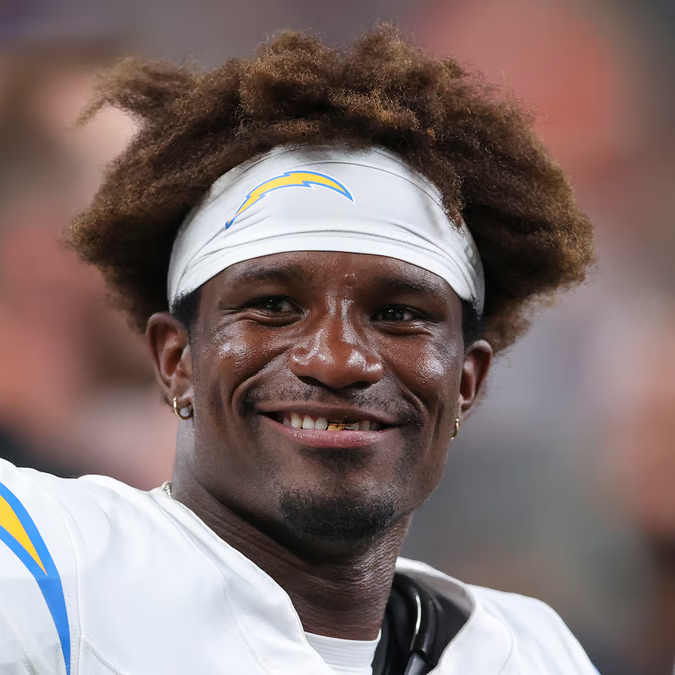
Still a No. 1 WR
Allen’s departure vacates 122 targets from the 2025 offense.
The setup around McConkey suggests the Chargers believe he’s capable of bouncing back. Quentin Johnston returns in an outside role after posting a career-high 14.0 yards per catch last year, but he finished third-worst in a sample of 52 WRs in targets per route run.
Tre Harris holds promise as a second-year Round 2 pick, but his rookie season offered little reason to think he’ll cut into McConkey’s role after 10.8 yards per catch on 32 receptions across 17 games and a 7.4% target share that ranked fifth on the team.
Oronde Gadsden II, David Njoku, and Charlie Kolar give the Chargers TE depth, but they look more like complementary pieces than real threats to McConkey’s role.
One Factor Could Unlock McConkey's Rebound
Mike McDaniel enters Year 1 as the Chargers’ play-caller.
McDaniel’s Miami units ranked 10th, seventh, ninth, and 21st in neutral pass rate, not far from the Chargers’ two 14th-place finishes under Greg Roman.
McDaniel’s scheme could also unlock more efficient usage for McConkey. Per Ryan Heath of Fantasy Points, McConkey ran just 9.9% of his routes from sets with fewer than three WRs last year, compared with 46% for Jaylen Waddle in Miami. More work in 1- and 2-WR sets would reduce his target competition.
That mattered in 2025, when the Chargers ranked third in dropback rate with 3+ WRs (81%). Miami, by contrast, finished with the fourth-lowest rate at 53%.
Paths to Ceiling
McConkey’s ceiling hinges on two things:
- becoming a staple in 1- and 2-WR sets
- getting a full, healthy season from Herbert
Our current projections place McConkey at WR21 in PPR ceiling, two spots higher than his rank in 3D Value.
Risk Factors
McConkey took a clear step back in Year 2, failing to separate from 33-year-old Keenan Allen. There’s a chance he settles in as just the team’s best WR rather than its clear leader, which would mean a smaller target share and more limited production.