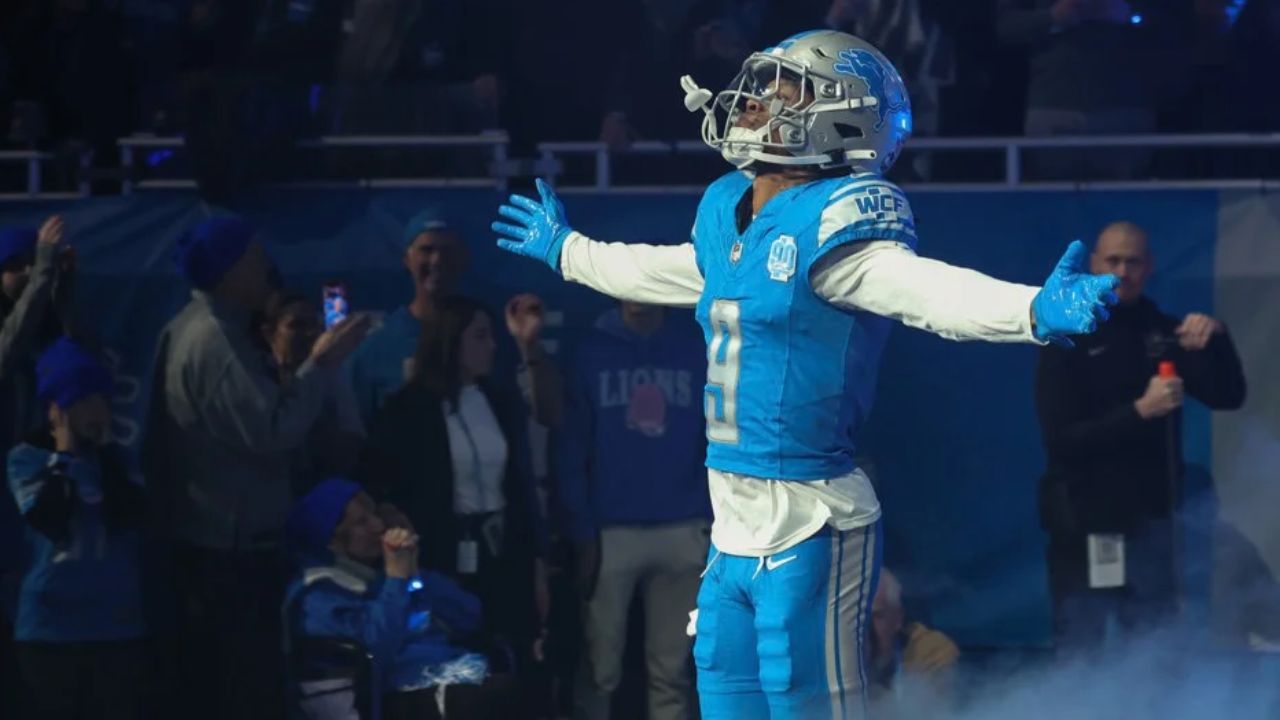
The Colts Freed Up a Bunch of Targets; Who’s Ready to Catch ‘Em?
Player Profiles
Indianapolis Colts 2026 Overview
Schedule
| Week 1 | vs. BAL | Week 10 | vs. MIA |
| Week 2 | at KC | Week 11 | at HOU |
| Week 3 | vs. HOU | Week 12 | vs. NYG |
| Week 4 | vs. WAS (in London) | Week 13 | BYE |
| Week 5 | at PIT | Week 14 | at PHI |
| Week 6 | vs. TEN | Week 15 | at TEN |
| Week 7 | at MIN | Week 16 | vs. CIN |
| Week 8 | at JAC | Week 17 | at CLE |
| Week 9 | vs. DAL | Week 18 | vs. JAC |
Wins
2025
8
2026 Over/Under
7.5
Play Calling
| 2025 | 2026 Projections | |
| Plays Per Game | 59.9 | 60.9 |
| Pass Rate | 56.6% | 56.2% |
| Run Rate | 43.4% | 43.8% |
Key Additions
- RB Seth McGowan
- WR Nick Westbrook-Ikhine
Key Departures
- WR Michael Pittman
- T Braden Smith
Notable Coaching Changes
- None
Daniel Jones
2025 Role & Results
His Best Fantasy Stretch Since 2022
Jones' 2025 season was his best performance since 2022. His 18.0 fantasy points per game marked a big jump vs. his previous two seasons:
| Season | FPTS/G | Rank |
| 2022 | 18.4 | QB10 |
| 2023 | 10.5 | QB42 |
| 2024 | 16.0 | QB22 |
| 2025 | 18.0 | QB12 |
Six of Jones’ starts ended as top-12 fantasy weeks, with only one of his other six healthy weeks falling out of the top-18 QBs. That gave him low-end QB1 value in Steichen’s offense, especially early in the season.
Rushing Fueled Early Production
Jones’ rushing production mattered, but there was a big asterisk. He scored 5 rushing TDs through Week 13, tied for fourth among QBs, and converted five of six carries from inside the 5.
The problem? Jones ran for two TDs in the first week of the season causing a spike in his fantasy scoring via the run.
He stayed fairly consistent after that with three more rushing scores over the course of the season.
His scramble and designed-run rates stayed fairly steady all season. Jones finished with 22 scrambles and 23 designed runs, giving him a scheme-backed rushing role that still left room for production.
Jones only had two games with 300+ yards passing, but his rushing helped keep Jones above QB18 in 11 of his 12 full games played.
The Offense Leaned Into Throwing
The Steichen offense also leaned on Jones to pass more than previous iterations. Across Jones’ 12 full games, this was Steichen’s highest pass rate over expected.
| Season | Pass Rate | Neutral Pass Rate | PROE |
| 2023 | 56.4% | 54.8% | -1.1% |
| 2024 | 52.4% | 49.7% | -6.4% |
| 2025 (12 Jones Games) | 56.1% | 55.6% | +3.1% |
| 2025 (5 Other Games) | 54.1% | 55.2% | -7.5% |
Jones also threw efficiently, posting a 67.2% completion rate against a 63.0% expected mark. His +4.2% completion rate over expected ranked sixth among 42 QBs with 150 attempts, a sign he wasn’t just living on easy, short throws.
The season came to a halt when Jones suffered an Achilles’ tear at the end of the first quarter in Week 14. He missed the rest of the season and put his start of 2026 in doubt.
2026 Opportunity & Projection
Achilles’ Injury Complicates Early Season
The most pressing question for 2026 is simply whether Jones will be on the field. His December Achilles tear came with a six-to-eight-month recovery timeline. That would bring him back around mid-August at the long end, leaving little margin for setbacks and real risk that he misses games or opens the season compromised.
The bigger concern is whether Jones can replicate his rushing production even if he’s ready for Week 1. A slower start physically could mean fewer designed runs, fewer scrambles, and a tougher path back to five rushing TDs, which mattered a lot to his fantasy value.
Jones returned in 2024 from a Week 9 ACL tear in 2023 and saw his rushing production decline slightly. He averaged 26.5 rushing yards per game with 4 yards per carry. That was down from his career averages to that point of 31.9 rushing yards per game with 5.77 yards per carry.
An Achilles injury could impact rushing even more than an ACL, but Jones slowed down a bit (especially on a per carry basis) after his ACL injury.
Losing Pittman Could Hurt
The supporting cast also took a hit. Michael Pittman Jr. drew a 21.5% target share and ranked 17th among WRs in PPR points before Jones’ injury. The Colts traded him to Pittsburgh after the season and didn’t import any comparable piece.
Alec Pierce now sits atop the WR depth chart after signing a four-year, $114 million extension. He ranked 16th in yards per route run, led the league in target air yards, and set career highs across the board in 2025. But ankle surgery clouds his early-season status, and before last year he’d mostly operated as a deep threat with limited target volume.
Josh Downs returns in the slot bur his playing time was down in 2025. His catches per game at 3.63 were the worst of his career as well. There has been some positive buzz around Downs from GM Chris Ballard
Tyler Warren showed upside at TE as a potential top weapon for the team as well. He certainly profiles as a pass catcher who could make up for Pittman’s departure as a short-to-intermediate target option.
Jonathan Taylor will remain the engine of this offense, especially if Jones’ injury affects the QB’s play. Indianapolis’ run game volume already caps Jones’ pass volume with Taylor leading the league in rushing attempts at 323 in 2025. He will likely be atop the league again and be the Colts’ best path to early offensive success.
Don’t Expect a Repeat of 2025
2025 may have shown us Jones’ ceiling. He got to low-end QB1 territory with the team passing more than expected with Jones, but take away Pittman, add uncertainty around Pierce, and factor in real mobility concerns after the injury, and the path back there gets much narrower.
If he’s healthy and Pierce is ready, the efficient passing and favorable system can still make Jones streamable. But with late-round QB depth plentiful, he’s a dart throw rather than a reliable fantasy asset.
Draft Sharks Verdict
Daniel Jones thrived in Shane Steichen's system in 2025, posting QB12 fantasy numbers per game thanks to efficient passing and a hot rushing start. But a December Achilles’ tear clouds everything, threatening his availability and the vital mobility. Jones is fine at his QB25 ADP, but beware of trusting him beyond low-QB2 territory.
Customize his projection for your exact league settings inside the Draft War Room.
Jonathan Taylor
2025 Role & Results
Taylor Scored More Than Expected
Taylor put together one of the best RB seasons in the league in 2025, finishing RB4 with 362.3 PPR points across 17 games. He averaged 21.3 PPR points per game, also RB4, and was the single biggest overachiever at the position, producing 4.1 more fantasy points per game than expected. Taylor averaged 2.1 more PPR fantasy points per game than expected heading into 2025.
Taylor led the league with 323 carries and 18 rushing touchdowns, while adding 46 receptions for 378 yards. He ranked ninth in yards per carry and fifth in rush yards over expected, meaning he was both getting volume and making the most of every touch.
2025 gave us Taylor’s best production since 2021:
| Season | FPTS/G | Rank |
| 2020 | 16.9 | RB10 |
| 2021 | 22.1 | RB2 |
| 2022 | 12.2 | RB23 |
| 2023 | 15.6 | RB12 |
| 2024 | 17.5 | RB7 |
| 2025 | 21.3 | RB4 |
Of course, scoring above expectation also signals some fragility in that production. We could see Taylor’s numbers regress in 2026 -- even if he stays healthy -- with less efficiency from him, the offense, or both.
QB Helped Unlock Taylor
Daniel Jones boosted the offense and helped Taylor excel.
Through the 13 weeks Jones started, Taylor ranked second in both PPR points per game and expected points, producing 6.2 points per game over expectation, the largest gap of any running back in that stretch.
Jones’ ability to threaten defenses through the air helped keep boxes light. Taylor faced 8+ men on just 18% of his carries, 42nd among 51 RBs with 90+ carries and down slightly from 19.1% in 2024 (26th).
The Colts ensured he received those opportunities. His 23 carries inside the 5-yard line ranked second in the league.
Struggles Without Jones
Taylor struggled to keep his production after Jones went down with his Achilles injury.
| Rushing Yards per attempt | TDs per game | Fantasy points per game | |
| 13 Games with Jones | 5.67 | 1.3 | 21.91 |
| 5 Games without Jones | 3.09 | 0.6 | 12.94 |
He scored fewer TDs with the offense struggling more and found less rushing room when attempting to run. The high-powered offense with Jones helped provide the opportunities for Taylor to succeed.
That could be a problem if Jones misses games in 2026.
2025 Was Finally Injury-Free
Taylor played all 17 games in 2025, his first time since 2021. Taylor missed at least three games each season from 2022 to 2024. High ankle sprains and ankle injuries caused his absences in 2022 and 2024, while a torn ligament in his thumb put him on the bench in 2023.
The chronic ankle issues for Taylor throughout his career are certainly worth noting heading into 2026. It could halt his fantasy season if those crop up again.
The Dual-Threat Version Is Back
Taylor’s receiving numbers were also the best of his career. He posted a 10.5% target share in 2025, the highest of his career, and ran a route on 71% of passing plays, fourth among all RBs.
That receiving role matters because it boosts his fantasy floor even in games where the run game stalls. For context on how that target share stacks up over his career:
| Season | Target Share | Receptions per game |
| 2020 | 7.0% | 2.4 |
| 2021 | 9.6% | 2.3 |
| 2022 | 9.1% | 2.5 |
| 2023 | 7.1% | 1.9 |
| 2024 | 7.4% | 1.3 |
| 2025 | 10.5% | 2.7 |
Taylor's receiving involvement is back to where it was when he entered the league. That makes him harder to gameplan against and more valuable in PPR formats.
2026 Opportunity & Projection
Jones' Recovery Pushes More Work Taylor's Way
Taylor's role could even expand further in 2026 despite his league lead in carries in 2025. Jones’ Achilles’ recovery could motivate more of a run lean in 2026, especially early -- and especially with Michael Pittman Jr. gone from the passing game.
Last year actually produced the fewest rushes per game since Steichen arrived, though we can attribute at least some of that to Anthony Richardson starting 15 games over the previous two years vs. none last year).
| Runs per game | passes per game | |
| 2025 | 26.0 | 32.2 |
| 2024 | 29.18 | 30.18 |
| 2023 | 28.2 | 33.7 |
Taylor’s 21.6 rushes per game in 2024 topped his 19.0 in 2025, but he also had a career low in catches per game at 1.3. So, more rushing could get Taylor more work on the ground, but also hurt his receiving.
The backfield competition is essentially nonexistent. DJ Giddens handled only 7.0% of Colts RB carries last year after arriving as a fifth-round pick. Seth McGowan arrived in the seventh round this spring and will need to prove he matters.
Taylor’s 73.1% share of team carries overall led the league in 2025.
Of course, it’s also worth noting that a weaker Jones and impacted offensive plan could hurt the unit’s overall efficiency. That scenario likely wouldn’t help Taylor’s output.
Slight O-Line Changes Shouldn’t Hurt
The Colts’ O-line remained one of the better run-blocking fronts in the league last season, ranking fourth in PFF run-blocking grade and seventh in ESPN run-block win rate.
The Colts let RT Braden Smith leave in free agency -- he got a two-year, $20 million deal from the Texans -- and plan to replace him with Jalen Travis.
Travis arrived in the fourth round of last year’s draft and started the final four games in place of the injured Smith. The rookie finished 38th in PRR run-blocking grade, just narrowly behind Smith (71.9, 35th).
Taylor Looks Fairly Safe … But There Are Risks
We know Taylor won’t lose meaningful work as long as he stays healthy, but that injury factor is the biggest risk.
We can’t accurately predict season-altering injuries. But we do know historically that it takes some luck for a RB to hold up through the kind of workload Taylor just got. From the league expansion to 32 teams in 2002 through 2024, we saw 105 RB seasons of 300+ carries. Of those, 37 got another 300+ carries the following year.
That did include Taylor hitting 303 in 2024 and then 323 last year. But he also missed three games in 2024, one of four seasons among his six as a pro that have included 2+ games lost to injury.
That’s not a reason to pass on Taylor but a factor to keep in mind and try to insure against if you do open with Taylor.
Questions Remain in the Offense
There’s also some risk in the offense, which tanked after Jones went down last season. More missed time for the QB would hurt the TD-heavy runner.
Even with Jones, we could see a softened Colts offense vs. last year’s hot start. That group averaged 32.1 points per game before its Week 11 bye, a pace that would have beaten the league-leading Rams by about 28 points for the season (and the No. 2 Patriots by 55).
Jones and the offense started to cool after the bye, but his injury early in Week 14 robbed us of the chance to see how it would finish.
A healthy Taylor in a healthy Colts offense has showed us he sports upside to the top of the position. But there’s also a chance we get something like Saquon Barkley’s 2025, where the factors that worked for the RB’s production turn against him.
And like Barkley, Taylor’s receiving doesn’t match the level of the three RBs joining him at the top of the ADP board (Jahmyr Gibbs, Bijan Robinson, and Christian McCaffrey).
Draft Sharks Verdict
Taylor remains the Colts' bellcow and his talent usually shines through. He showed RB1 overall potential with Daniel Jones at QB, but fell off a bit when Jones went down with injury. That could threaten his production if it happens again. Taylor should remain a top-five RB if he stays healthy and Jones lasts a full season. He's a first-round pick and worth targeting as RB3 overall.
Customize his projection for your exact league settings inside the Draft War Room.
Alec Pierce
2025 Role & Results
Career Highs Across The Board
Pierce took a significant step forward in 2025, finishing WR28 overall with 183.3 PPR points across 15 games. He averaged 12.2 points per game, good for WR27 in points per game. For context on how big that jump was:
| Season | FPTs/g | Rank |
| 2022 | 7.0 | WR82 |
| 2023 | 5.6 | WR90 |
| 2024 | 10.1 | WR50 |
| 2025 | 12.2 | WR27 |
That trajectory earned him a four-year, $114 million contract extension, and the underlying numbers explain why the Colts were willing to pay.
But Pierce was pretty volatile. He had two top-five fantasy finishes, but no other top-12 finishes last season. He also had seven weeks outside the top-36.
Pierce set career highs across the board in 2025: 84 targets, 47 catches, 1,003 yards, 6 TDs, and a 2.10 YPRR that ranked 16th among 76 WRs with 50+ targets. His 81.0 PFF receiving grade ranked 18th out of 111 qualified receivers.
Pierce Still Owns the Vertical Role
Pierce maintained his deep work from previous seasons while expanding his opportunities and production in other areas of the field.
Pierce ranked third on the team in target share at 17.4%, just behind Tyler Warren (19.4%) and Michael Pittman Jr. (19.7%). That increased to 18.3% in Jones’ 12 full games.
Pierce’s target share and targets per route run have improved in each of the past two seasons:
| Season | Target Share | T/RR |
| 2022 | 13.2% | 0.17 |
| 2023 | 11.1% | 0.12 |
| 2024 | 13.3% | 0.16 |
| 2025 | 17.4% | 0.19 |
His opportunities have been increasing and should increase even more with target-share leader Pittman moving on.
Pierce also had another strong downfield season in 2025.
He led eligible WRs in:
- Average depth of target (20.0 yards),
- Yards per reception (21.3)
Pierce has consistently seen plenty of deep work:
| Season | 20+ Yard Target % |
| 2022 | 19.7% |
| 2023 | 30.2% |
| 2024 | 45.5% |
| 2025 | 33.7% |
He Stayed Dangerous As the Route Depth Changed
What made 2025 different was Pierce’s success on short and intermediate routes. His PFF grades on those targets have climbed over the last two seasons:
| Season | Short Target Grade | Intermediate target grade |
| 2022 | 74.1 | 93.1 |
| 2023 | 85.7 | 91.6 |
| 2024 | 89.2 | 96.7 |
| 2025 | 89.4 | 99.0 |
Both 2025 marks were career highs. A WR who can stress defenses deep and win underneath is much tougher to cover than a one-dimensional speed threat, and that development helped earn the big contract.
Pierce Produced with Every QB
The environment helped too. The Colts posted a 3.1% pass rate over expected in QB Daniel Jones’ 12 full games after posting negative PROE figures in each of the prior two seasons.
More passing volume obviously means more opportunities, and Pierce capitalized. He also carried over that production to Philip Rivers and Riley Leonard games after Jones’ injury, suggesting the upswing is real and not necessarily QB dependent.
Pierce’s best two fantasy performances of the season came in Weeks 16 with Rivers (24.6 points, WR5 overall) and Week 18 with Leonard (29.1 points, WR2).
2026 Opportunity & Projection
March Surgery Puts the Breakout on Hold
The opportunity is real, but the concerns stack up quickly. Pierce had ankle surgery in March, hasn’t guaranteed he’ll be ready for Week 1, and is working off a reported 4-6 month recovery timeline. That leaves his early-season availability in doubt.
There’s also no guarantee Pierce will be 100% even if he opens the season on the field. We’ll have to track reports on Pierce’s practice participation and even observations on how close he looks to normal speed as the start of the season draws closer.
The timing gets even trickier when you add Jones’ Achilles recovery. If both players are easing into the season, the Colts’ passing game could open at reduced capacity and destabilize Pierce’s early fantasy outlook.
Pittman's 19.7% Target Share Is Up for Grabs
The silver lining is the opening in the WR room. Indy traded Michael Pittman Jr. to the Steelers and added no meaningful replacement. His 19.7% target share has to go somewhere. Pierce is an obvious candidate to absorb part of that volume after landing his new contract.
There is some competition for those targets. Tyler Warren already topped Pierce in target share last season, while Josh Downs has drawn praise from GM Chris Ballard. That means target competition, but the Colts gave Pierce $114 million because they want him heavily involved.
Massive Upside, But He Could Still Bust
If Pierce gets healthy and stays healthy, leads the team in targets, and builds on last year’s short-to-intermediate growth, he could push into WR2 territory in fantasy scoring.
His deep-ball profile brings the kind of spike-week potential that swings fantasy matchups, and the Colts have clearly committed to him.
But the ankle surgery could cost him games or leave him compromised early in the season, and his 2025 production was a major jump from anything he’d shown before. That means he’ll need to prove factors such as the career highs in catch rate and yards per route can stick rather than regress.
If he reverts to a one-dimensional deep threat, you're looking at a volatile week-to-week option who could bust with plenty of quiet games. And, of course, there’s the risk that the ankle simply dogs him all season.
If his ADP hangs around WR36, that seems more risk than reward.
Draft Sharks Verdict
Pierce signed a massive contract and steps into the No. 1 WR role after his best season to date. Pierce showed legitimate all-around ability for the first time as well. The problem is a March ankle surgery that puts his Week 1 availability in question. And his record before last year doesn't inspire confidence in his weekly viability. Consider Pierce a boom-or-bust WR4 who looks overpriced at his early WR36 ADP.
Customize his projection for your exact league settings inside the Draft War Room.
Josh Downs
2025 Role & Results
Worst Year of His Career
Downs took a step back in 2025, finishing WR44 overall with 136.4 PPR points across 16 games and averaging just 8.5 points per game, which ranked 54th. It was the lowest per-game average of his career to date:
| Season | FPTS/G | Rank |
| 2023 | 9.2 | WR53 |
| 2024 | 13.1 | WR30 |
| 2025 | 8.5 | WR54 |
The regression is harder to explain away when you consider the context. The Colts passed at a higher rate than expected with Daniel Jones at quarterback, posting a 3.1% PROE in his starts compared to negative figures in each of the prior two seasons. A better passing environment still didn't help Downs.
His target share dipped despite that pass environment:
| Season | Target Share |
| 2023 | 22% |
| 2024 | 30% |
| 2025 | 17.2% |
Lower target share, and Downs’ efficiency dipped too.
The YAC Vanished, So Did His Fantasy Value
Downs’ playing declined in 2025, including a career low in route rate (among total Colts dropbacks):
- 2023: 68.3%
- 2024: 72.9%
- 2025: 62.8%
Less time on the field met with a dip in yards after the catch. Some of that can be explained by an average target depth that grew vs. 2024. But comparing Downs’ numbers to his 2023 rookie campaign reveal more about the downturn:
| season | YAC | YAC NFL Rank Among WRs with 50+ Targets | aDOT | aDOT NFL Rank Among WRs with 50+ Targets |
| 2023 | 5.5 | 33rd (80 Eligible) | 7.4 | 60th |
| 2024 | 5.6 | 24th (84 Eligible) | 6.7 | 73rd |
| 2025 | 2.5 | 69th (78 Eligible) | 8.5 | 69th |
Yards after catch are crucial for a low-aDOT WR such as Downs. He didn’t create them in 2025, which helped drag down his receiving production overall.
His Lowest Slot Rate Still Led the League
Downs still ran predominantly from the slot last season, with his 78.8% slot rate leading all 76 WRs who saw 50+ targets.
That marked the lowest slot rate among his three pro seasons to date, though, with that work shifting outside:
| Season | Slot % | Wide % |
| 2023 | 81.3% | 17.7% |
| 2024 | 84.5% | 14.0% |
| 2025 | 78.8% | 20.2% |
That bodes well for Downs seeing more time in two-WR sets in 2026, but he’ll need to prove he can produce out there.
Rookie TE Cannibalized Downs’ Role
TE Tyler Warren’s emergence also mattered. He ran a route on 79.9% of team dropbacks (compared to 62.8% for Downs). Warren also ranked second on the team behind Pittman in target share.
Part of Warren’s playing time came from the slot at the expense of Downs. The first-round pick played 43.6% of his pass snaps in the slot, cutting into the underneath looks Downs depends on. Colts TEs as a whole commanded a 25.7% target share.
That marked a change from 2024 when Colts TEs only played 29.9% of their pass snaps from the slot with a combined 15.4% target share. Warren taking slot snaps and targets from Downs appeared to also contribute to the lower target share and fantasy numbers.
The Colts also ran more multi-TE sets. They went from playing 24.8% of their offensive snaps with 2+ tight ends on the field in 2023-2024 to 35.6% in 2025. Downs only played 4.3% of his snaps with multiple TEs on the field, meaning he stayed on the sideline when more big guys came out.
That will need to change in 2026 to rebound the wideout’s opportunities.
2026 Opportunity & Projection
His 2026 Case Starts Out Wide
Downs’ 2026 case relies heavily on opportunity. Michael Pittman Jr. is gone, and the biggest WR additions were journeyman Nick Westbrook-Ikhine and seventh-round rookie Deion Burks.
Ashton Dulin projects as the No. 3 receiver after totaling 40 receptions across his first six NFL seasons. Downs should be the favorite to join Pierce in two-WR sets, which would deliver a large boost in playing time.
Downs has played little in two-WR sets through his first three seasons, but Steichen has said he believes in Downs’ ability to perform out wide.
Alec Pierce’s March ankle surgery adds another layer of opportunity. If Pierce misses time or starts slowly, Downs could garner even more target share.
Uncertainty Plagues Downs’ Fantasy Outlook
He’s not a lock for strong target volume, though. Warren enters his second season as a candidate for expanded usage, particularly with the lack of WR depth. Warren already ran nearly half his routes from the slot in 2025, and more time in there could again limit Downs’ targets over the middle.
The offense carries uncertainty as well. Daniel Jones' torn Achilles could mean a slow start or missed games, which would suppress the passing volume that makes Downs viable. One potential offset is that a less mobile Jones may be quicker to check down, which could play into Downs' strengths as a short-area receiver -- if he’s not focusing too heavily on working deeper from an outside spot.
Everything Has to Break Right to Hit Ceiling
Downs’ ceiling requires several things to break right:
- replacing Pittman as one of the offense’s top two WRs
- Producing alongside Warren and Piece
- and recapturing his 2024 YAC ability.
If that happens, high-end WR3 territory is back within reach.
Quiet Weeks Remain the Default Outcome
The downside risk is that we just get more of the same from 2025.
Downs would be in trouble if Jones remains hampered by last year’s injury or goes down again.
There’s also a chance that Dulin steals time in two-WR sets and keeps Downs’ role limited. His modest low-WR4 ADP would mitigate the damage to your roster, though, if things play out that way.
Draft Sharks Verdict
Downs gets a boost in available opportunity with Michael Pittman Jr. gone. But he needs to prove a down 2025 is behind him and needs QB Daniel Jones (Achilles) to prove he’s healthy. Downs gets a path to career-high usage but faces multiple risk factors. He’s appropriately priced in WR4 range and has showed there’s upside at least into mid-WR3 range if things to his way.
Customize his projection for your exact league settings inside the Draft War Room.
Tyler Warren
2025 Role & Results
Warren Produced, Even While Leaving Some on the Table
Warren delivered one of the position's best rookie seasons ever. His TE11 finish included 11.1 PPR points per game, 10th-most by a rookie TE in NFL history. And his TE3 ranking in expected points per game points to even more available opportunity.
Jones Brought the Best out of Warren
Warren ranked second among the Colts in targets (106), receptions (76), and receiving yards (817).
Warren averaged 6.2 targets per game on a 19.4% target share and posted 1.95 yards per route run, fourth-highest among 52 TEs with 30+ targets.
He actually saw slightly more targets per game after Jones went down, but the quality tanked. Warren’s catches and yards dipped:
| Targets per game | receptions per game | receiving yards per game | |
| With Jones (12 Games) | 6.2 | 4.8 | 57.0 |
| Without Jones (5 Games) | 6.4 | 3.6 | 26.6 |
Jones gave Warren quality targets while trusting the rookie as a reliable receiving option.
Warren’s receiving profile fits PPR formats well. His 5.9-yard average depth of target made him an easy option, and his 6.4 yards after catch per reception ranked fifth among TEs showed he can turn those short passes into meaningful gains.
Warren’s 78.4% catch rate through Jones’ 12 full games vs. 56.3% after he went down also point to efficiency upside if the QB can stay on the field all season. And the Colts passed at a higher than expected rate (3.1% pass rate over expected) before Jones went down.
That topped the Colts’ PROE rates for Steichen’s first two seasons, signaling more trust in Jones than previous Indy QBs. That could portend more passing opportunities and production going forward.
Goal-Line Role Boosts Warren’s Scoring Potential
Warren led the team with 26 red-zone targets in 2025, according to Pro Football Focus, and tied for sixth among all TEs in end-zone targets (but turned just two of those seven into TDs).
The Colts also gave Warren six carries for the season, three of which came from inside the 5-yard line.
The one TD he added from that limited work isn’t enough to meaningfully alter his fantasy outlook, but it’s just another signal that the Colts want to get him the ball. And it aligns with his usage at Penn State.
Warren rushed 32 times and scored six times on the ground across five seasons with the Nittany Lions. Most of that came via his 26-218-4 rushing line in 2024.
We can’t project significant production for Warren in that area, but don’t be surprised if he adds a bonus TD or two near the goal line.
2026 Opportunity & Projection
The Vacated Targets Fit Warren Best
Pittman’s departure could send more work Warren’s way.
Pittman’s 19.7% total target share leaned heavily on work in the short-to-intermediate areas. That included a 24% share of targets in the range of 1-9 yards. Warren trailed him narrowly at 22.3% in that range and thus stands to benefit.
Josh Downs could also absorb some of those targets. He drew a team-high 27.8% target share in that range but also figures to work the middle of the field at least a bit less if his outside role grows.
Ashton Dulin projects as the No. 3 receiver after catching just five passes last year and 40 for his six-year career to date. (He missed all of 2023.) So expect limited challenges to roles of Warren, Downs, and Pierce.
Warren stands out as the Colts’ biggest threat over the middle.
A Slower Jones Could Feed Warren
That short-range role could become even more important if we get a limited Jones to open the season. A slower, less mobile QB may lean harder on quick throws and checkdowns.
Jones has also been a short-range passer for most of his career. He has ranked outside the top 20 in aDOT in five of six seasons in which he dropped back at least 300 times.
There’s a Ceiling Worth Chasing
Warren already proved in his first year that he can handle a real role and produce. He enters his second season with a better understanding of the system, an obvious path to targets (with potential growth in that area), and a QB who trusts him.
He could climb into the position’s top 3, especially in PPR.
If Warren absorbs a meaningful chunk of Pittman’s vacated targets, keeps creating after the catch, and stays involved near the goal line, the weekly and season-long upside both look enticing.
Draft Sharks Verdict
Warren delivered a strong rookie season and could be set up for an even bigger 2026 role thanks to Michael Pittman Jr.’s departure. He profiles as an ideal short-area target for a recovering Daniel Jones and fits comfortably at his TE4 ADP.
Customize his projection for your exact league settings inside the Draft War Room.
Draft using the best dynamic tool in the industry. Our fantasy player valuations (3D Values) change during your draft in response to...
- Exact league settings - direct sync
- Opponent and Team Needs
- Positional scarcity & available players
- Ceiling, injury risk, ADP, and more!
You need a dynamic cheat sheet that easily live-syncs with your draft board and adapts throughout your draft using 17 crucial indicators.
Get your Draft War Room Today