Sorting the 2025 Rookie IDPs from Studs to Shrugs
Who to Hold Close and Who to Throw Back
Two of my favorites delivered quickly.
One of my least favorites looked poised to make me look stupid … but might actually make his NFL team look foolish.
And lots more 2025 rookie defenders still need to write their NFL stories.
Let’s review this year’s class of rookie IDPs as we head into an offseason of dynasty decisions, and then a whole new group of prospects.
Edgy Class Remains Largely Unproven
The 14 defensive players selected in Round 1 of the 2025 draft included five edge players. Another six edge players followed in Round 2.
That position figures to drive the long-term assessment of this defensive class, and it’s still way too early to fully grade the group. But we can dig into the individual players and situations to see who’s trending up, who looks iffy, and about whom we simply don’t know enough yet.
Of course, that extends to more than just the edge group. So I’m sorting the relevant IDP rookies from the first two rounds into appropriate buckets here for their dynasty outlooks. And then we’ll hit on a still-intriguing pack of DTs as well as some later-round players who deserve attention.
These Three Already Look Like Next-Generation Studs
Abdul Carter found no shortage of love en route to landing third overall in April’s draft. The other two players in this section lasted until Round 2 while showing traits that got us excited.
Carson Schwesinger, LB, Cleveland Browns
I’m leading with the Cleveland ‘backer because I expect him to present the most fantasy value of the three going forward, at least to the broadest set of IDP managers.
I went well above redraft consensus to project Schwesinger among the top 12 LBs in our preseason rankings this year. And halfway through the season, frankly, I was pretty sure I had overrated him.
Schwesinger averaged just 3.1 solo tackles through his first eight games with minimal big-play production and sat on the border of LB2/LB3 territory. But he returned from the Week 9 bye -- and a Week 8 high-ankle sprain -- to deliver 9+ total tackles in each of the next eight contests (before sitting out Week 18).
The rookie went from 4 tackles for loss over the season’s first half to 7 the rest of the way, with 6 QB hits vs. 3 in the first half.
He closed the year as a top-12 performer with the high tackle floor and cross-category upside I hoped we’d get.
TIP
Schwesinger already claims the top spot in our updated dynasty LB rankings.
Nick Emmanwori, S, Seattle Seahawks
The Seattle second-round pick got lots of love around here leading up to and through the NFL Draft. The case was just so easy to make.
Emmanwori delivered quickly -- and repeatedly -- in college, left early, and delivered a monstrous athletic profile at the Scouting Combine.
Injury slowed his start, but Emmanwori played 92% of Seattle’s defensive snaps from Week 6 on and ranked top-5 among DB scorers over that span. And his mere 1 INT vs. 11 passes defensed (as well as 6 college INTs) reveal still-untapped upside.
Emmanwori basically split his time this season evenly between “box” safety and slot corner, the two best roles for a DB to generate consistent fantasy numbers. He spent just six total snaps at deep safety, according to Pro Football Focus.
We’ll see whether that continues. But Emmanwori clearly has the potential to be a Derwin James-style difference maker at a position where most guys blend together.
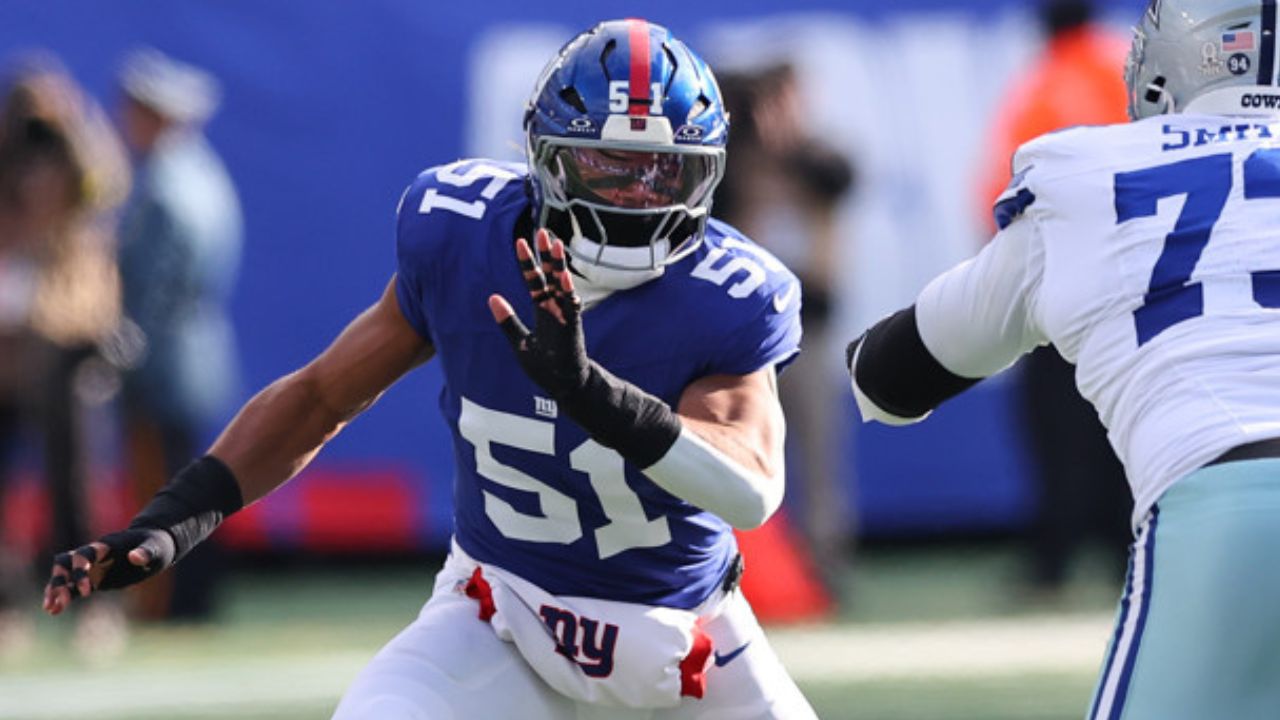
Abdul Carter, Edge, New York Giants
Carter finished the fantasy season (for most leagues) with just 4 sacks. Seems like a disappointing campaign for a guy drafted third overall. But be careful about judging too harshly on that single stat.
The Giants rookie tied for 12th-most pressures among all edge players (through Week 17), according to PFF. He beat Maxx Crosby in that category, on fewer pass rushes.
To be fair, Crosby spent much of the year playing through a knee injury that finally (notoriously) required surgery. But Carter also posted a 12.7% pressure rate, edging well-established veteran teammate Brian Burns (11.2%). And he ranked 13th among all edge players in PFF pass-rush grade.
According to ESPN, Carter’s 52 pressures (again, through Week 17) rank second-highest among rookies since ESPN began tracking the stat in 2017.
Abdul Carter had 9 pressures vs. Raiders. His second straight week with 9 pressures.
— Jordan Raanan (@JordanRaanan) December 29, 2025
Carter has 52 pressures this season, second-most since ESPN began tracking pressures in 2017.
2019 Nick Bosa 60
2025 Abdul Carter 52
2021 Micah Parsons 51
2024 Jared Verse 50
He probably didn’t pay off overall if you selected him in redraft, but Carter gave us plenty of reason to believe in his future. And if you don’t already have him in dynasty, he probably won’t be easy to acquire.
It’s Not Obvious, But You Should Buy Into These Three
These guys provided grounds for skepticism in 2025, but also reason for longer-term belief.
Jihaad Campbell, LB, Philadelphia Eagles
This first-round pick presents a real good news, bad news profile.
Good news: He overcame offseason shoulder surgery to start right away for a defense that had just shut down Kansas City in the Super Bowl.
Bad news: That starting gig ended after eight games and dwindled all the way to no defensive playing time by Week 12.
I’m still betting on the positive side because Philly didn’t just bench Campbell. The Eagles swapped him out for incumbent Nakobe Dean, a fourth-year pro who needed the first half of the season to finish working back from the patellar tendon tear he suffered last January.
I’ll be watching the details on Campbell’s first full NFL offseason. But here’s what he still has going for him:
- 21 years old (until Feb. 24)
- displayed role versatility and playmaking ability in the SEC
- early draft entrant
- Round 1 selection by a franchise that hasn’t generally paid up for LBs under GM Howie Roseman
Now might be a good time to see if the Campbell manager in your league is overrating Campbell’s “benching” -- though you might also want to wait until Dean returns from his hamstring injury.
Jalon Walker, Edge, Atlanta Falcons
One reservation I had with Walker as a prospect: He proved to be a bit of a positional ’tweener. Even his final season at Georgia found him dropping into coverage on nearly as many snaps (178) as he rushed the passer (195), according to PFF. That necessarily limited his pass-rushing production.
You might look at the mere 5.5 sacks and 9 QB hits of his rookie season and think, same issue. But you’d be wrong.
Walker spent 98% of his defensive snaps on the edge (eight total snaps at off-ball LB) and rushed the passer 282 times vs. just 50 coverage snaps.
His pass-rush efficiency still needs work. He ranked just 69th among all edge players in pressures. But Walker also ranked just 69th in pass-rush chances. He played through some injuries and ultimately drew a mere 50.8% snap share for his 15 games.
That limitation could continue for a sub-250-pound player. And if Atlanta gets a new DC with its next head coach, perhaps Walker’s usage changes. But there’s enough to like so far to be intrigued for the near- and long-term future … especially when you consider that he won’t turn 22 until Feb. 24.
Donovan Ezeiruaku, Edge, Dallas Cowboys
Two sacks and 39 total tackles won’t make this early second-round pick stand out. But similar to Abdul Carter, Ezeiruaku enjoyed a better debut than the obvious numbers will reveal.
Let’s start with this from ESPN’s Ben Solak:
"Ezeiruaku has the tools of a productive outside pass rusher, but it's his play against the run at 6-foot-2, 248 pounds that really impresses. Ezeiruaku is behind only Carter among rookie edge rushers in run stop EPA and has eight tackles for zero yards or negative gain on the season.”
That aligns with his college career as well. Ezeiruaku graded out as a high-level run defender in each of his final three seasons at Boston College. That included grading higher vs. the run than in the pass rush his sophomore and junior campaigns.
Ezeiruaku’s final year found him ranking 17th in PFF pass-rush grade among 508 FBS edge players who played at least 200 snaps. His 59 total pressures tied for eighth.
You Might Still Need a Little Patience
The size Solak mentioned will remain a challenge. But Ezeiruaku’s immediate strength against the run points to his ability to overcome that even at the pro level. And Dallas already boosted his playing time: from 48.6% through Week 8 to 65.1% the rest of the way, when the rookie became an official starter.
Of course, if it took Ezeiruaku until his fourth college season to really get his pass rush going -- 15.5 sacks over his first three seasons vs. 16.5 as a senior -- then we can’t necessarily count on a 2026 breakthrough there.
The aforementioned second half of his rookie NFL season found Ezeiruaku tying for just 53rd in pressures among 85 edge players with 200+ snaps played.
The 2026 Glow-Up Candidates
This trio showed a bit less than the group above as rookies but could deliver upside as soon as Year 2.
Mike Green Jr., Edge, Baltimore Ravens
Green looked like he might have been a first-round candidate in last year’s draft if not for sexual-assault allegations in both high school and college. But he landed late in Round 2 with a Ravens D that presented immediate opportunity.
The positive: Green got that chance. He played 61.6% of snaps in his second pro game and 76.5% in Week 3. He finished the year with a 62.7% snap share overall.
The negative: He didn’t really deliver. Green ranked 29th among all edge players in pass-rush opportunities but tied for just 60th in pressures. That probably helped motivate the rookie’s playing-time dip over the final four games.
(Baltimore also got Edge Tavius Robinson back from an eight-week IR stint for that span. But Robinson was on the field weeks 2-6, when Green got his initial boost.)
So How Do We Go from Meh 2025 to Upside 2026?
It’s fair to be wary of a rookie who didn’t do much (3.5 sacks) with his opportunity and finished his year with a playing-time decline. But it’s also fair to remember:
- Green was a rookie.
- He won’t turn 23 until July 28 of this year.
- He only really played one full college season.
Green got just 38 total snaps in his lone year at Virginia. Then he sat out 2022, played 341 snaps across 13 games in his first year at Marshall (26.2 per game), and jumped to 719 snaps in 2024 (55.3 per contest).
It’s also important to remember why he looked intriguing in the first place. That lone full season produced an FBS-leading 17 sacks. He led his draft class with 22.5 final-year tackles for loss. And PFF graded Green No. 1 among all 2024 edge players in pass rush and No. 2 against the run.
Perhaps that upside doesn’t surface in his second year, but Green still looks like a talent worth betting on over the long term (though it’s OK to dismiss him from your plans for the sexual-assault allegations).
Nic Scourton, Edge, Carolina Panthers
Shane touted Scourton as his favorite of the second-round edge players right after the draft, before Jadeveon Clowney’s departure even cleared the path for Scourton’s high-end rookie usage.
Scourton saw limited time his first two games but hit 85% in a Week 3 start. He wound up playing 67.8% of Carolina’s defensive snaps for the year and acquitted himself solidly. The rookie drew the third-best total PFF defensive grade among Panthers starters, trailing only CB Mike Jackson and DT Derrick Brown.
Scourton tied for fifth-most pressures among all rookies and ranked fifth among rookie linemen in run-defense grade.
He racked up 29 tackles for loss over his final two college seasons, despite splitting them between Purdue and Texas A&M. And Scourton’s still early in his development. He’ll turn 22 this Aug. 25.
Derrick Harmon, DL, Pittsburgh Steelers
The 21st overall pick in April started eight games for the Steelers and topped 50% playing time on seven occasions, despite dealing with knee issues at the beginning of the season and again in the second half.
Assuming a healthy offseason and start to 2025, Harmon should be a lock for more second-year snaps in a system that has kept Cameron Heyward in position for stat production. I’m certainly not saying that Harmon’s already near the level of Heyward, who ranks among the best 5-technique performers of all time. But the kid’s in at least a decent spot.
And there’s desirable talent, of course. Beyond landing in Round 1, the 6’4.5, 313-pounder closed his college career with a strong stat line in his lone Oregon season:
- 45 tackles
- 27 solos
- 11 tackles for loss
- 5 sacks
- 4 passes defensed
- 2 forced fumbles
- 2 fumble recoveries
- 11 more pressures than any other interior DL, according to PFF
Why You Should Be Careful with These Two
Rookie year carried positive results for this duo, but there’s reason to not buy all the way in.
James Pearce Jr., Edge, Atlanta Falcons
Wait a second. This guy racked up 10.5 sacks in his debut. He’s just the 48th rookie to ever reach double digits, and the previous three guys to do so have stayed pretty good since:
- Micah Parsons in 2021 (13.0)
- Josh Hines-Allen in 2019 (10.5)
- Maxx Crosby in 2018 (12.0)
So why the caution?
I’m not calling Pearce a fraud by any means, and he might be a blossoming stud. If you play in a format that favors sack/pressure scoring rather than balancing that more with tackle scoring, then you should be excited for Pearce’s long-term potential.
My primary question is what he’ll offer beyond the sack production, though. Pearce saw his run-defense snaps limited in college, leading to a mere 1.6 solo tackles per game over his two starting seasons. As an NFL rookie, he posted just 26 total tackles across 17 outings and ranked 26th among Falcons in PFF run-defense grade.
Will he improve in that area, add mass, and stay on the field more going forward? Maybe. But it’s not generally a good idea to bet on a player finding NFL success in an area in which he didn’t succeed in college.
Here’s What You Need to Do with Pearce
So, am I delivering this warning to motivate you to trade Pearce away now? Maybe. But also maybe not.
What you really need to do with Pearce is figure out how much sense he makes for your particular format.
If you get points for QB hits, pressures, or any other non-traditional pass-rushing stats, then he’s probably a solid to good fit. Same deal if your scoring includes a sack-to-solo ratio of 4-1 or higher.
If you’re at 3-1 or lower on that front, though, this might be a good time to shop the first-round pick. He’s likely to remain a sack-dependent scorer.
TIP
See where all the rookie D-linemen sit in our updated dynasty DL rankings.
Demetrius Knight Jr., LB, Cincinnati Bengals
I’ve been warning about Knight since he was a prospect last spring. So when the Bengals …
- drafted him in Round 2
- dumped starting LB Germaine Pratt
- and immediately installed the rookie into the lineup
… frankly, it looked bad for my Knight predictions. But then some funny things happened.
For one, fourth-round classmate Barrett Carter replaced veteran MLB Logan Wilson on the depth chart and vaulted to the position’s playing-time lead from Week 6 on.
At the same time, Knight’s role began to falter. It looked like natural playing-time volatility for a new guy at first, but Week 5 found journeyman Oren Burks starting ahead of Knight. Burks basically disappeared from the lineup over the next four games, but then he re-emerged to split time with Knight across a seven-game span.
Knight ultimately played 73% of Cincinnati’s defensive snaps for the season and cracked the top 30 in fantasy scoring at the position, thanks to cross-category production. Those two factors would seem to position a rookie LB well for at least the near future. But I remain skeptical.
One Big Factor Continues to Work Against Knight
It’s obviously nice for a rookie to start immediately, score well, and stay in the lineup all year. But you should look skeptically at the team’s mid-season incorporation of Burks, a 30-year-old who entered the eason with just 17 career starts among 108 NFL appearances across three other teams.
Knight’s playing-time fluctuations also look troubling in the context of:
- Cincinnati’s defense playing even worse than in 2024, after which the Bengals moved on from DC Lou Anarumo
- Carter passing him in playing time
The latter could be explained away on its own as Carter being a better fit for relaying defensive calls in the huddle. But we can’t ignore the collection of factors, which also includes one I haven’t mentioned yet.
My top reason for Knight skepticism entering last April’s draft was his age. It wasn’t necessarily a problem that he hit the league as a 25-year-old rookie. The problem: He didn’t become a college starter until his age-23 season. His productive years at Charlotte and then South Carolina came as a 23- and 24-year-old.
The Bengals clearly overlooked that factor and fell in love with the athleticism in Round 2. But when you combine that with a bumpy debut season, Knight makes for a difficult guy to trust over the long term.
My recommendation: Try to trade Knight ahead of your rookie draft, before he reveals himself to be a fantasy fraud.
Meh
These three first-round picks look unexciting for varied reasons.
Mykel Williams, Edge, San Francisco 49ers
It might seem unfair to lead this section with a guy whose season ended Nov. 2 with an ACL tear … and it probably is. But I’m doing it anyway because that injury’s no more than a minor factor here.
I’ve been skeptical of Williams’ outlook since the beginning of last prospect season. Why? Because evaluators always seemed more interested in making excuses for his shortcomings rather than simply acknowledging them.
Williams hit Georgia as a five-star recruit in 2022, enrolled early, started immediately, and led that Bulldogs team in pressures as a true freshman. But he failed to ever build on that. He posted fewer pressures the next two years and topped out at 5.0 sacks and 8.5 tackles for loss in his final college campaign.
But the experts explained that away as Williams playing through injuries. And then he tested well at his pro day and went to the 49ers 11th overall.
Before the ACL tear, though, the rookie’s nine appearances produced just:
- 1 sack
- 3 QB hits
- 20 total tackles (11 solo)
- And 19 pressures
According to PFF, his 4.5 pass-rushing productivity rating tied for 18th among all rookie defenders who got at least 100 pass-rush opportunities. That trailed not only 11 edge classmates, but also six interior linemen.
What Changes with the Injury?
That Williams’ season did end with an ACL tear obviously alters our options at this stage.
You’re probably not going to be able to sell him for a meaningful price in dynasty, for example. If you can -- say, a Round 2 or 3 rookie pick -- I’d likely go ahead and do so. More likely, though, you’ll probably have to sit on Williams at least into the coming season.
If, on the other hand, you play in a league shallow enough that Williams gets dropped this offseason, he’s stashable.
I don’t believe in the former Bulldog’s long-term value, but the 49ers clearly do. And we’ll all get some players wrong along the way.
So if you’re stuck with Williams or find him freely available, stash and see what happens over the next season or two. We’ll see this summer how quickly his knee can rebound.
Malaki Starks, S, Baltimore Ravens
Williams’ college teammate similarly found an NFL starting job right away. The second half of the year found a bit of playing-time fluctuation, which included Baltimore acquiring Alohi Gilman to work slightly ahead of Starks in a three-safety alignment (98.9% snap share from Week 8 on vs. Starks’ 91.0%).
That’s not really alarming, though. Starks remained a near-full-timer throughout a debut season that just saw him turn 22 on Nov. 13. I expect that Starks will remain a starter, move away from the increased special-teams reps he played over the season’s second half, and potentially make Gilman (or a similar player) more expendable.
The “meh” factor for fantasy purposes here is role.
Starks played the highest percentage of “free safety” snaps among this year’s Ravens trio. Gilman’s arrival coincided with Kyle Hamilton shifting to spend nearly all of his time in the box or slot.
That’s a much more favorable fantasy role than spending nearly 60% (or more) of your time at deep safety.
Starks Likely to Become Just Another Fantasy Safety
Of course, playing deep certainly does not eliminate a safety from delivering fantasy value. Cincinnati’s Geno Stone scored among the top 10 DBs this year while playing 61% of his snaps in deep coverage. The Rams’ Kamren Curl led the position while playing deep on 59.2%, nearly identical to Starks’ breakdown. And Chicago’s Kevin Byard perennially scores well despite lining up predominantly deep.
So the message here is not to just dump Starks and forget about him in dynasty. It’s just that he’s not likely to turn into a fantasy difference maker. The further you get from the ball on defense, the more you tend to need big plays to carry your value. And that production’s difficult to repeat year over year.
Shemar Stewart, Edge, Cincinnati Bengals
Stewart hit last year’s draft as a classic hoax archetype: The player who delivers thrilling athletic testing and makes evaluators forget that he never turned that ability into college production.
Stewart delivered the second-best speed score among 2025 edge prospects (120.3), trailing only James Pearce Jr. And that was enough to dupe the Bengals into drafting him 17th overall, despite the fact that Stewart totaled just 4.5 sacks across three seasons at Texas A&M.
Yeah, I know that sacks fall well short of telling a pass rusher’s whole story. But if you can’t tally more than 1.5 of them in any of your three college seasons -- despite playing at least 12 games in each -- then you ain’t getting to the QB enough.
Injuries limited Stewart to just eight games as an NFL rookie, during which he managed just 1 sack and 4 QB hits.
But I’m not betting on a healthier Stewart blowing us away with his production going forward.
Got Patience? They Got Potential
These two second-round edges might not graduate to meaningful NFL production. But if you’ve got a spot to stash them, you could reap some (eventual) benefits.
Oluwafemi Oladejo, Edge, Tennessee Titans
The Titans grabbed this guy late in Round 2 and immediately gave him starter-level playing time. Oladejo topped 68% snap shares each of the first three games. He started quietly on the statistical front, though, and then sustained a Week 6 calf injury that wound up ending his season.
It doesn’t look like we should worry about the issue for 2026. The rookie returned to on-field workouts late in the year even though he never returned to game action. So he should be in line for a full offseason.
That’s particularly important for a guy who’s still early in his edge development.
Oladejo spent only his fourth college season in that role after beginning as an off-ball LB. His 13.5 tackles for loss that year ranked fourth in the Big Ten. And his 33 pressures (per PFF) led his nearest UCLA teammate by 14.
That Tennessee started him right away clearly works in the young guy’s favor.
JT Tuimoloau, Edge, Indianapolis Colts
Tuimoloau arrived in Round 2 but played just 18.5% of Colts defensive snaps for the year. This offseason should start to tell us how much that was his fault vs. just landing in a crowded depth chart.
The 2025 Colts stood two-deep in veterans at each edge spot. At the moment, only Tuimoloau and Laiatu Latu are under contract at the position for 2026.
Those vets didn’t play particularly well, though. Latu ranked a nice 21st in PFF pass-rushing grade among 130 edge players who played at least 200 snaps. The group’s next-best grade behind Latu’s 77.0? Tuimoloau at 63.3 (66th).
The Ohio State vet enjoyed a productive four-year college run. He spent three seasons as a starter, tallied 43.5 career tackles for loss, and led the Big Ten with 12.5 sacks as a senior. Tuimoloau followed that with a 78th-percentile speed score at 6’4, 270 pounds.
If he enters 2026 as a Colts starter, there’s breakthrough potential.
DT Class Remains Interesting
The 2025 draft also found four DTs drafted in Round 1, with two more following among the first 11 picks of Round 2. Although that group didn’t post big numbers this season, it will be worth watching for leagues that require DT starters.
Here are those six players in order of draft position:
- Mason Graham, Cleveland Browns (fifth overall)
- Kenneth Grant, Miami Dolphins (13th)
- Walter Nolen, Arizona Cardinals (16th)
- Tyleik Williams, Detroit Lions (28th)
- T.J. Sanders, Buffalo Bills (41st)
- Alfred Collins, San Francisco 49ers (43rd)
Nolen flashed exciting upside despite limited exposure. A calf injury sidelined him until Week 9, but then Nolen racked up a sack, a pass deflection, and 2 tackles for loss in his debut. He collected 5 tackles for loss and 5 QB hits across six appearances, despite leaving two of those early (one after just six snaps).
Unfortunately, a Week 16 knee injury ended his season and required surgery, though (ex) HC Jonathan Gannon refused to say whether it was an ACL tear “out of respect for the player.”
Graham tallied the third-most pressures among all rookies (36), trailing only edges Abdul Carter and James Pearce Jr. That makes him more interesting than it would seem from his mere 0.5 season sack total.
The rest of the group has plenty left to prove on the stat front. One interesting note: Sanders spent 46.4% of his snaps at an end or edge spot. That could signal statistical upside as the playing time grows for the athletic 290-pounder.
Late-Round LBs Mix Upside Potential with Lingering Questions
Five of these guys logged unexpected starter turns. But is any of them truly worth believing in?
Barrett Carter, Cincinnati Bengals
You should see nothing but positive in Carter rising from fourth-round pick to Week 6 starter and full-timer. But two key questions remain:
- Was he good enough?
- Were the 2025 Bengals good enough?
Carter narrowly trailed Demetrius Knight for the team tackle lead and tied for 45th league wide. According to PFF, though, he also tied for 14th-most missed tackles among all LBs. Carter’s 14.8% missed-tackle rate fell just 0.2 percentage points behind Knight’s, ranking 28th among 100 LBs who played at least 200 snaps.
Carter and Knight also both graded poorly across categories, with Carter trailing Knight everywhere but run defense.
Might Cincinnati look to upgrade on the fourth-rounder this offseason? Might the team seek an even fuller defensive facelift?
Carter’s worth keeping in dynasty for now, but don’t necessarily consider him a safe bet to open 2026 as a full-timer.
Cody Simon, Arizona Cardinals
Simon took over the lead LB spot after Mack Wilson suffered a Week 9 rib injury that kept him out the rest of the way.
Simon played 89% of the snaps the rest of the way, with most of his missed plays coming in a Week 15 contest he left in the first quarter. Simon averaged only 3.25 solo tackles over those eight healthy games, though, with basically no production in the big-play categories.
Perhaps it was just rookie struggles amid a weak defense, but Simon also posted just one year of meaningful production among his five at Ohio State. We’ll see whether Arizona -- under a new coaching staff -- heads toward 2026 with Simon in a starting role (or not).
Teddye Buchanan, Baltimore Ravens
Buchanan had his encouraging debut ended by a Week 15 ACL tear. That timing challenges not only his first full NFL offseason, but could keep Buchanan from being ready for the start of 2026.
That possibility only increases the chance that Baltimore -- also under a new coaching staff -- seeks a potential replacement in free agency or the draft.
We should at least have a pretty good idea by the end of April what the team thinks of Buchanan’s 2026 outlook.
Francisco (Kiko) Mauigoa, New York Jets
This fifth-round pick popped into the lineup in Week 4, after the Jets lost Quincy Williams to IR. Mauigoa logged four straight games of more than 80% playing time at that point, and reports surfaced about the coaches being excited with his upside.
But then injury struck the rookie, Williams returned, and Mauigoa failed to reach 40% playing time in any of his final five contests.
Williams seems likely to leave in free agency, but we’ll have to see whether that means a starting shot for Mauigoa. If he does, there’s some intriguing upside.
Mauigoa racked up 9.5 sacks and 29 tackles for loss over his two seasons at Miami. PFF credited him with an impressive 46 pressures among 171 pass rushes over that span.
Shemar James, Dallas Cowboys
The Cowboys have a lot to sort out at LB this offseason, a situation complicated further by the ouster of DC Matt Eberflus.
James -- a fifth-round rookie -- jumped in for six starts amid injuries and other deficiencies, and he delivered four games of 9+ total tackles (including three lines of 11+). But he also logged the second-worst overall PFF grade among Dallas LBs, narrowly ahead of only Kenneth Murray.
James did post the second-best missed-tackle rate among the group, trailing Logan Wilson. And he trailed only DeMarvion Overshown in pass-rushing grade. But there’s not enough here to make James worth clinging to.
His three-year Florida run topped out at 64 total tackles in his final season, with career totals of 5 sacks, 11.5 tackles for loss, and 3 passes defensed.
Danny Stutsman, New Orleans Saints
Stutsman garnered the least playing time among the six LBs in this section, making it onto the field for just 18.5% of New Orleans’ defensive snaps. Perhaps he’s just a Day 3 pick we can ignore going forward. But I’ll be watching his offseason.
Saints LB Pete Werner remains under contract for at least two more years. But his 62% playing time in 2025 marked his lowest rate since 2021 and a decline of 20 percentage points from last year. And New Orleans’ lead LB, Demario Davis, is about to hit unrestricted free agency ahead of his age-37 season.
Stutsman delivered a highly productive run at Oklahoma:
- Three years of 104+ total tackles
- 7 sacks and 34.5 tackles for loss across those three seasons
- 8 career passes defensed
- 4 forced fumbles and 3 INTs
And he followed that with a 91st-percentile speed score at decent size (by today’s standards): 6’2, 233 pounds.
Barring some signal this spring that they don’t like his starting chances, I’m looking to stash Stutsman this offseason on the chance he finds the lineup this fall.
Why Aren’t You Making Dynasty Trades Right Now?
This just might be the perfect time to work some trades in your dynasty league.
There are likely some managers who don’t know much about the incoming rookies yet. That makes it difficult for them to appropriately value their rookie picks.
And even those who drown themselves in college football every Saturday will be affected by the recency bias of the just-completed NFL year.
Take Advantage