- Start Your Path to WinningThese basics lay the foundation for your title run
- Core Strategies for Best Ball SuccessLearn these essentials before your next draft
- Elevate Your Game with Advanced TechniquesWanna win? Then you can't draft like everyone else
- Put Your Knowledge & Tools to WorkPowerful tools give you an unfair advantage
Best Ball Looks Simple. That's Why So Many Drafters Get It Wrong.
Best Ball sounds easy: draft a team, never touch it again, cash if the roster hits. The catch is that the easiest format to manage demands the toughest draft-room decisions, especially in big tournaments.
The good news: You can leverage this unique format to outsmart your competition and win a bunch of money.
The first thing you need to understand might be obvious: Drafting best ball teams is far different than regular fantasy football drafts.
"Draft and forget" sounds simple. Best ball strategy isn't. You need to be much more intentional about how you build your team.
And if you're entering big tournaments, the way you draft changes even more dramatically.
That’s why we made this Best Ball Strategy Guide to help you beat the competition in any draft you enter.
Plus, at the end, there's info on easy-to-use tools that help you draft smarter and faster … using every Best Ball strategy and tip you've learned.
1. Best Ball Strategy Basics
Fantasy football always comes down to building the best team. But best ball formats introduce a couple of key wrinkles that should change how you draft.
1. There's no waiver wire or trades. The team you draft is your team for the season.
Impact: Building depth across all positions matters more. You need to build a resilient roster that can weather busts, injuries, and bye weeks without the ability to make in-season moves.
2. You don't set a starting lineup. Best ball platforms automatically optimize your lineup each week, plugging in your highest-scoring players.
Impact: Weekly volatility becomes an asset. Low-scoring weeks hurt less because they often stay out of your lineup, while spike weeks are more likely to count.
We'll dive deeper into how to take advantage of these differences throughout this strategy guide.
But first, let's look at the most popular best ball formats -- and how strategy differs in each.
Tailoring Your Draft Strategy to Best Ball Formats
Are you drafting in a best ball tournament against thousands or even hundreds of thousands of teams? Or playing in a standalone 10- or 12-team league?
It’s makes a difference for how you’ll draft.
Both formats share many core strategies, but a standalone league looks more like the fantasy drafting you’re used to.
You’ll still want to stack teammates. You’ll still want to hunt for spike weeks. But you can more easily get away with imperfect roster construction.
Your Tournament Team Needs to Chase Perfection
By comparison, your tournament team needs to be damn near perfect. The more competitors you’re facing, the better your roster needs to be.
That’s where finding edges, taking chances, and getting unique become especially important. And we’ll get into all those areas.
But no matter your best ball format, you should always do this …
The Best Ball Edge: Choose Upside Over Consistency
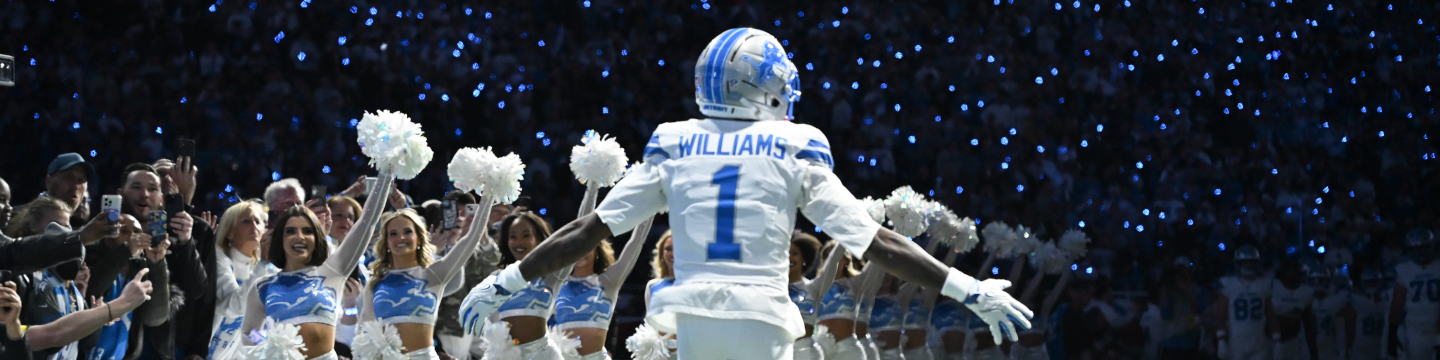
That’s the biggest key to best ball success. A player like WR Jameson Williams will infuriate you when you need to set a weekly lineup, forcing you to either guess when to use him or just eat his bad weeks.
The Best Ball format allows you to benefit from Williams' spike weeks and have someone automatically take his spot when he posts a dud.
That doesn’t mean you should only target boom/bust types. But you don’t need to worry about balancing such players with more consistent producers.
TIP
Our Best Ball Rankings incorporate a proprietary Best Ball Factor metric to boost volatile players that are more valuable in this format.
Drafting vs. Building: Strategic Approaches In Best Ball
If it’s a standalone best ball league, you only need to focus on building the best team to win that league.
This approach changes dramatically if you are participating in a tournament, where you’re likely submitting multiple entries.
The more entries you have, the more you’re building a best ball portfolio.
Avoid Common Mistakes in Your Best Ball Portfolio
Each team in your portfolio is chasing the same prize pool, but the portfolio still needs an overall strategy.
To avoid the most common tournament-killing mistakes, you’ll have to consider factors such as:
- Player exposures: the percentage of your total rosters that include each player
- Varying your roster structure: how and when you address each position
- How to get unique: you can’t beat thousands of teams just by “picking the best players”
We’ll dig into how you can mistake-proof that portfolio in the Advanced Draft Techniques section.
For now, let’s turn to …
2. Core Best Ball Draft Strategies
No matter what kind of Best Ball draft you’re heading into, the following essential strategies will set a strong base.
And just like everything we teach at Draft Sharks University, it all starts with value …
Leverage the Value Your Draft Presents
While our award-winning projections guide the draft, but player rankings also hinge on:
- How his projected fantasy points stack up against the average for that position.
- The relative value of his position compared to other positions (adjusted for your league's settings and scoring rules).
- And how your particular draft unfolds.
Capitalize on Draft Value
You’ll probably have a pretty good idea of how to value players heading into your draft, based on your pre-draft rankings, ADP, and draft practice.
Maybe you’re ready to go heavy on WRs early. Maybe you’re sure you want to wait on a QB.
That’s fine. A plan is good. But drafting by a rigid plan with no flexibility will keep you from taking advantage of your specific draft.
What if everyone goes WR-heavy? What if Josh Allen slips a round past ADP?
You have to be ready and able to adjust on the fly if you want to take full advantage of every pick.
TIP
Check out the top best ball values in each of the first 10 rounds of drafts.
Recognizing value when it presents itself will deliver a key boost to your Best Ball drafting.
And it boils down to good drafting strategies by position...
Mastering QB Strategy in Best Ball Drafts
You’ll want to finish your Best Ball draft with two or three QBs (assuming it’s not superflex). Whether you go two or three depends on when you draft them.
Taking an early QB is fine because the top guys bring reliable scoring and big weekly spikes. Just remember: the earlier you draft him, the more you need him to deliver.
So treat that early QB as though he’s going to start for you most weeks. Wait for your second QB. And unless you take that second very late, you should probably stop at two QBs.
TIP
Josh Allen's spike-week upside is incredibly valuable in best ball. Over the last three seasons, he's accounted for 14% of all QB games of 30+ fantasy points.
Should You Draft Three QBs in Best Ball?
It’s also fine to wait on the position, even into the double-digit rounds.
But if you go that path, you should select your second QB sooner after your first. In this case, you’re not betting as heavily on that starter.
And in this scenario, you'll likely want to draft a third QB late, depending on the strength/upside of the first two.
Unlocking Tight End Strategy in Best Ball
How you approach TE should be similar to your QB plan. Like at QB, you only need one starting TE per week.
So the earlier you draft your first, the more you need to expect him to pay off, and the longer you should generally wait on your second.
One key difference: You’ll most often want a third TE. They don’t score as reliably as QBs. And if you do get two starter-level performances in a week, one could slot into your flex position.
TIP
A TE-premium format such as FFPC will alter how early you need to target the position. It also adds value to drafting three or even four of them.
How Will You Know When to Target QB and TE?
That will depend on your format, how you’re building your team, and even how your specific draft proceeds.
A high-level draft assistant will make your life easier … and give you a huge edge over the competition.
Make Your RB Best Ball Strategy Work
Some analysts will tell you there’s only one way to handle RBs in best ball drafting. That’s BS.
Robust RB, Hero RB, Zero RB. All these strategies can work. It’s more about how you apply your chosen draft strategy.
How to Win Drafting Robust-RB
Drafters have pushed RBs up in ADP this season vs. the past few. That's made a Robust RB strategy (which we define as taking 3+ RBs in the first 5 rounds) tougher to pull off.
It can still work in drafts that find RBs falling, though. It's possible to snag a trio of top-20 RBs and dominate that position throughout the season.
You'll then want to focus on building depth at QB, TE, and especially WR. Finish your draft with 5 or maybe even just 4 RBs.
How to Win Drafting Hero-RB
“Hero RB” means taking a RB with one of your first two draft picks. But then you wait a while before adding any more at the position.
That first RB is your “hero” at the position. You’re drafting that guy early to put up big numbers and anchor the position. So you’ll get more value by collecting lower-level RBs behind him.

Finish your draft with 5, 6, maybe even 7 RBs. You’ll rake in the big weeks from your non-hero RBs while avoiding being hurt by their down weeks.
Top Hero RB targets for 2026 include:
- Christian McCaffrey
- James Cook
- Kenneth Walker
How to Win Drafting Zero-RB
You’ve probably heard of the “Zero-RB” method, which typically refers to waiting until at least Round 6 before selecting your first RB. You’ll want to finish your draft with 6-7 RBs.
This strategy gains value if those you’re drafting with are not following the same path. The more fellow drafters looking to load up on WRs early, the tougher it’ll be for you to find value there.
But with RBs generally going earlier in draft this year than the past few, it's possible to land a trio of top-15 WRs.
Whenever you draft Zero-RB, target a mix of RBs with strong receiving roles and those with paths to big workloads. Kyren Williams in 2023 became the poster boy for what’s possible.
Top Zero-RB candidates for 2026 include:
- Jaylen Warren
- Jacory Croskey-Merritt
- Jordan Mason
- Tyjae Spears
- Keaton Mitchell
- MarShawn Lloyd
- Dylan Sampson
- Jonah Coleman
TIP
Our ADP Market Index tool will help you spot the best late-round RB values.
Can I Win With Other RB Draft Strategies?
Of course. You can build a good team with any RB strategy. Just pay attention to how you do it.
If you select three early RBs, lean away from the position for a while to fortify your other areas.
At the same time, watch how your draft is going. If everyone else is letting RB value fall, then you can differentiate with a high-level RB4. Let him vault your RB scoring upside and/or rack up points in a flex spot.
Take Advantage Of The Sale On WRs
RBs going earlier in drafts this year has resulted in a discount on top WRs. That's made a WR-heavy start to drafts more viable than it's been the past few seasons.
WRs are generally valued for their spike-week potential, especially in PPR (points per reception) leagues.
In best ball, drafting WRs early can capitalize on their high-ceiling performances, since you're automatically getting the highest-scoring players each week. This strategy leverages the positional depth and potential for explosive weekly scores from top-tier WRs, providing a competitive edge.
What’s that mean for your draft? You can still go Zero-RB, Hero-RB, or any other draft plan that favors wideouts early.
But pay attention to your positional tiers and the players available at other positions. If you’re simply taking whoever’s next when your turn comes up, then you’re not differentiating your roster.
TIP
Get tiers for your best ball draft on this customized cheat sheet.
Chase Proven Stud WRs Early in Best Ball
One of the biggest mistakes you can make in any best ball draft is spending an early pick on a player coming off a flimsy “breakout” season.
- Did he score way more TDs than expected for his reception total?
- Was his catch rate or yards per catch way out of line with other seasons?
- Has something significantly changed with his situation vs. last year?
If you answer “yes” to any of those, be wary of his elevated price tag.
And if someone else drafts that flimsy player ahead of a WR who’s been gobbling targets for several years, smile and enjoy your stud wideout.
Look for Breakout Potential in Middle Rounds
If you land 2-3 high-level WRs early, then it gets easier to take chances and chase upside through the middle rounds of your draft.
Target some younger WRs who have signaled breakout potential. Be willing to overlook that lone area of uncertainty. If he were a sure thing to break out, then he’d be going earlier.
Be careful, though. The more areas of uncertainty he sports, the more risk he presents.
TIP
How will you know which potential breakouts to target in this range? Our Best Ball Draft War Room switches to Upside Mode for just that reason. We’re hunting for breakouts in that range just like you are.
Want more WR draft tips?
The further you get into your draft, the more stacking matters. And the more interesting rookies get. Let’s dig into that … and more.
Build Stacks … But Don’t Reach for Them
Unless you’re new to best ball, you already know stacking matters.
Stacking pairs teammates together on a fantasy football roster, most commonly a QB with pass catchers. Every time that QB completes a throw, gains passing yards, or tosses a TD, someone’s on the other end.
If you can rack up points on both ends of a single play instead of needing two separate plays, then you’re in good shape.
Basic Stacking Delivers Points in Bundles
If you’re deciding between two QBs or a pair of WRs at a certain turn, pay attention to whether you already have the other half of that potential stack on your roster.
That should be enough to break the tie in your decision-making. You’ll get a bigger boost from completing that stack than banking on the unrelated QB and WR both hitting.
But don’t reach too far to complete that stack. Doing so undercuts the value of the stack by placing a worse player on your roster.
Look for Stacking Opportunities as You Draft
As soon as you roster your first player, start looking for stacking opportunities. Just remember that not all stacks carry the same value.
The Draft Sharks Best Ball Draft War Room helps by applying green highlights to teammates of players you’ve already rostered.
And it’ll vary by importance. The link between QBs and WRs and TEs, for example, shows darker green. Don't miss out on these. RBs, on the other hand, show lighter green to signal lower stacking value.
Next-Level Stacking Presents a Bigger Edge
Everyone in your best ball draft will know about stacking QBs and pass catchers. That’s why you need to dig a little deeper.
Combine that QB with multiple pass catchers to deepen your bet on his season and take full advantage if that offense explodes.
And even if you don’t land that QB, stacking pass catchers from offenses that you believe in can multiply the starter weeks you derive from that high-ceiling offense.
Pay attention to game-stacking for playoff weeks.
If you’re drafting in a tournament that follows a regular season with 2-3 playoff weeks, then pay attention to the NFL matchups in those final weeks.
Already have a QB-WR stack on your roster? Consider drafting a WR, RB, or TE playing against that team in Week 17.
If your roster makes it to the final round, that grouping will give you a chance to load up on fantasy points from a high-scoring game.
TIP
Check out the top best ball game stacks for 2026 tournaments.
Don’t overdo your playoff stacking.
Beware of a few things on this front:
- Other drafters will be game stacking as well. So look for some less-popular groupings to differentiate your Week 17 lineup.
- None of us really knows how these NFL teams will look by the end of the year. Don’t be too sure about which Week 17 matchups make the best targets.
- Focusing too much on building these playoff-week stacks can lead to overlooking the regular season. Don’t target worse players just for the Week 17 stack.
3. Advanced Best Ball Draft Techniques
Each year means more best ball drafting, more people drafting teams, and more experience for those best ball drafters. That makes it tougher to find and maintain your edge in best ball drafts.
And isn’t that why you’re here?
We’re constantly hunting for new edges, drawing from our own drafts -- reviewing what worked … and what didn’t -- and presenting those edges to enhance your draft.
Here are some techniques we’re putting into action …
Leverage ADP Fluctuations to Steal Value
You can now draft all year. But drafting in March is very different from drafting in August.
Incoming rookies, for example, will commonly stay on the board much longer before April’s NFL Draft than they will after. That means opportunity to maximize your rookie exposures in early drafting, before many of their ADPs climb.
And it’s not just rookies. You can get …
- Good early values on veterans headed for free agency
- Good values on players with potential to create buzz during training camp and preseason.
- Good August values on guys who slide down the ADP board simply because of negative reports or perhaps a minor injury.
Stay on Top of ADP All Year
The Draft War Room pulls direct ADP feeds from actual Underdog Fantasy and FFPC best ball drafting. So you’ll always know where each player is commonly going.
Even for the guys who aren’t moving up or down the ADP rankings, that info can be vital for highlighting draft day targets.
Take Advantage of Recency Bias
Recency bias is when you weigh recent results or factors more heavily than older data. And you’ll see plenty of it in your best ball drafts.
Last year’s top scorers are going MUCH earlier this year. And the guys who disappointed? They’ll cost less now … often to a shocking degree.
Working out projections early for the coming season is a great way to know who the market is too high or too low on.
Scoring a Late-Round “Lottery” Winner
Matt Stafford, Javonte Williams, and Michael Wilson. All three went very late in 2025 drafts.
And then all three turned into difference-makers for the best ball rosters they landed on.
Knowing what to look for over those final few rounds can mean the difference between a throwaway pick and a tournament winner.
Target Rookie WRs
Wideouts historically start slowly in their first NFL seasons but improve over the second half.
It makes sense. There’s a lot to learn and get used to. And the QB and coaches need to learn about you. More experience, more comfort.
Just look at Rashee Rice’s 2023. A quiet start gave way to a huge finish, right at the time of year you’re hoping to advance your best ball roster through the playoff rounds.
That’s why rookie WRs make cleaner best ball bets than redraft starters. You can wait out the slow start and cash the big weeks later.
Look for Players with Non-Obvious Opportunity
No one knew that Bucky Irving was about to take over the Buccaneers backfield a couple of years ago. But we did know that Rachaad White was coming off an inefficient 2023.
Seek out talented players with upside signals who just need one break to open real opportunity.
Don’t Be Afraid to Get Unique
The larger the field you’re trying to beat, the more upside to getting unique with your roster build.
One easy trick: At the end of your draft, scroll through players with ADPs beyond draft range.
Stash a player with some intrigue from that area as your RB6-7 or WR9-10. If he hits, you’re getting points everyone else missed. If he doesn’t … what’d you really lose?
Some exciting last-pick targets in 2026:
- Ray Davis
- Emmett Johnson
- Kaytron Allen
- Chris Bell
- Kyle Williams
- Charlie Kolar
- Michael Mayer
4. Time to Draft: Leveraging Advanced Tools & Technology
If you’ve made it this far, you’re clearly serious about best ball drafting.
You want to do it right.
You want an edge.
You want to win.
That’s where advanced technology and tools can level up your best ball drafting prowess by providing data-driven insights, projections, and optimization algorithms.
Here’s a quick look at the types of advanced tools that can help with best ball drafting:
1. Explosive Player Potential
- Purpose: Explosive Player Potential (EPP) gauges the consistency of a player's performance throughout the fantasy football season. A lower EPP signifies a player who delivers stable and predictable performance scores, making them reliable picks for fantasy rosters. Conversely, a higher EPP points to a player with fluctuating performance levels, capable of scoring significantly high in some weeks and underperforming in others.
- Features: In Best Ball, where a player’s highest scores are automatically counted each week, those with higher variance in their scoring can become strategic assets. Their occasional peak performances can significantly impact weekly matchups, potentially giving you an edge.
2. Projection Systems and Models
- Purpose: Uses historical data and statistical models to project player performance for the upcoming season.
- Features: Adjustments for player situations (team changes, injuries, etc.), strength of schedule, and other variables. Some models offer ceiling and floor projections to identify potential breakout players or consistent performers.
3. Roster Optimization Algorithms
- Purpose: Helps in constructing the optimal roster composition based on projected points and player variability.
- Features: Algorithms that balance risk and reward by evaluating the projected points distribution of players. Useful for identifying when to draft players and how many to roster at each position.
4. Player News Aggregators and Alert Systems
- Purpose: Provides real-time updates on player injuries, trades, and other news that could impact player value.
- Features: Customizable alerts for specific players or teams, integration with drafting tools to adjust player rankings in real-time.
5. Advanced Metrics and Analytics Platforms
- Purpose: Offers in-depth analysis using advanced metrics not typically found in standard stat sheets.
- Features: Metrics such as opportunity share, yards per route, air yards, and rush yards over expected for skill-position players. Visualization tools to analyze trends and performance outliers.
6. Machine-Learning Models for Trend Analysis
- Purpose: Identifies patterns and trends that may not be obvious through traditional analysis.
- Features: Prediction models for player breakout seasons, injury-risk assessment, and performance regression or improvement.
7. Community and Expert Consensus Rankings
- Purpose: Aggregates rankings from a wide range of experts and the fantasy football community to provide a consensus view.
- Features: Comparison tools to see where your evaluations differ from the consensus, helping to identify potential sleeper picks or overvalued players.
8. Live-Sync Drafting Tools Tailored to Best Ball
- Purpose: Allows for drafting using updated player rankings and valuations in real-time. More advanced sync tools integrate most or all of the aforementioned features.
- Features: Syncing with Best Ball platforms, live draft assistance, and in-app access to news and analysis.
Selecting the right tech for your best ball draft isn’t just another step. It’s part of building your draft edge and matching every feature to your strategy.
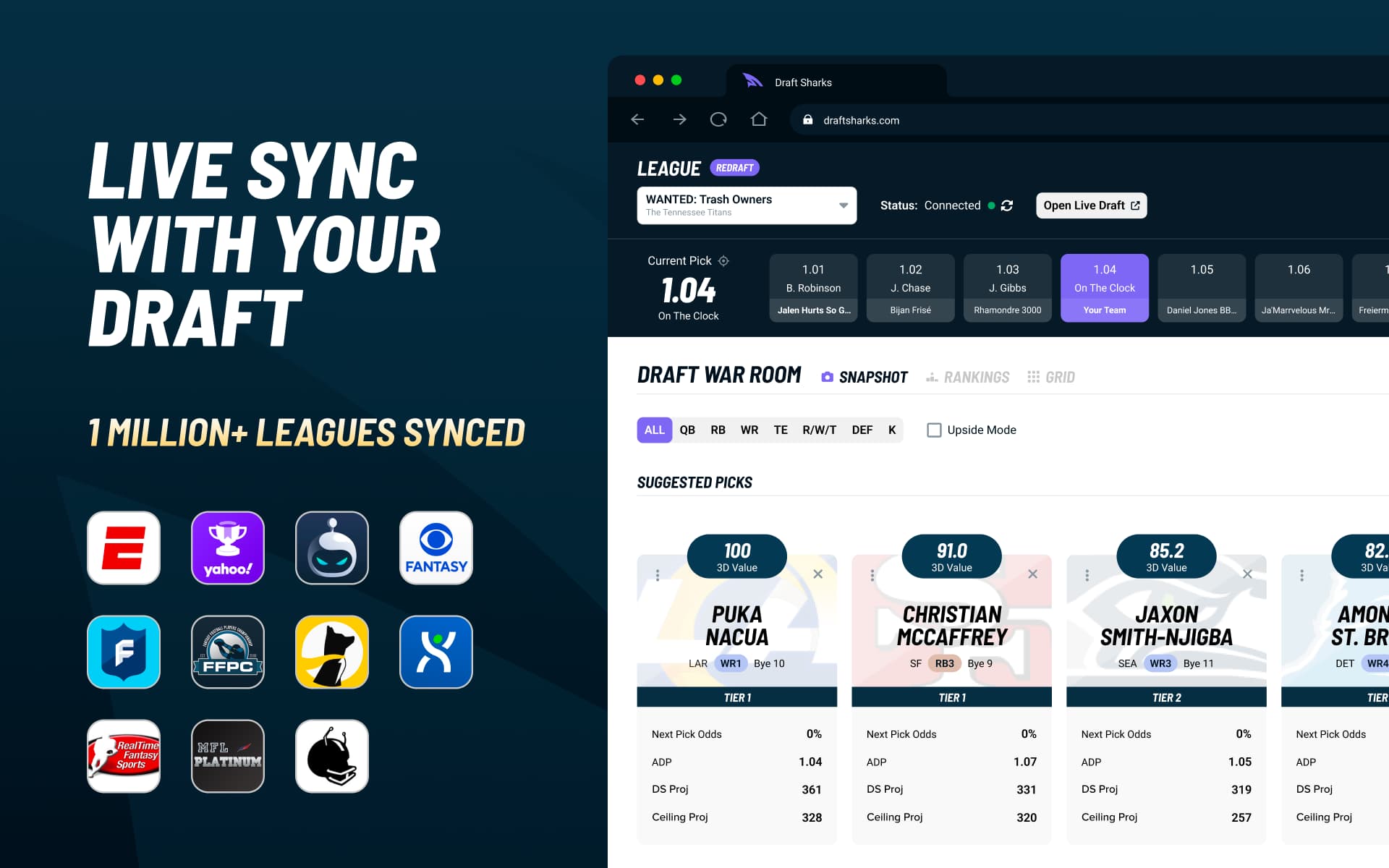
That's where our Best Ball Tool comes into play: your very own “Best Ball Draft War Room.”
It's packed with all 8 features we just mentioned, plus it's hardwired with every best ball strategy we walked you through...
Ready to level up? See for yourself how it works.
FAQs About Best Ball
What is best ball in fantasy football?
Best ball refers to the fantasy football format where you don't need to set your starting lineup every week. The platform on which you play automatically takes the best-scoring lineup from the roster you drafted. Best ball fantasy football typically requires you only to draft your team, with no management beyond that point.
How many of each position to draft in best ball?
Exactly how many players to draft at each position depends on the relative strengths and weaknesses of your roster. In general, though, look to draft 2-3 QBs, 5-7 RBs, 6-8 WRs, and 2-3 TEs.
Where can I play best ball?
You can play best ball on several platforms. Underdog hosts the biggest best ball tournament: Best Ball Mania VII, which has a $15 million prize pool. You can also play best ball on DraftKings, FFPC, Drafters, and other platforms.
What is the difference between redraft and best ball fantasy football?
"Redraft" most commonly refers to the most widely played version of fantasy football. In typical redraft, you draft a team for one season, manage that team's roster via the waiver wire and trades, and set a starting lineup each week. Best ball fantasy football still includes the draft, but you generally don't need to do any roster management beyond that. In best ball, your top-scoring lineup gets automatically pulled every week from your team's roster.