Projected Role & Competition
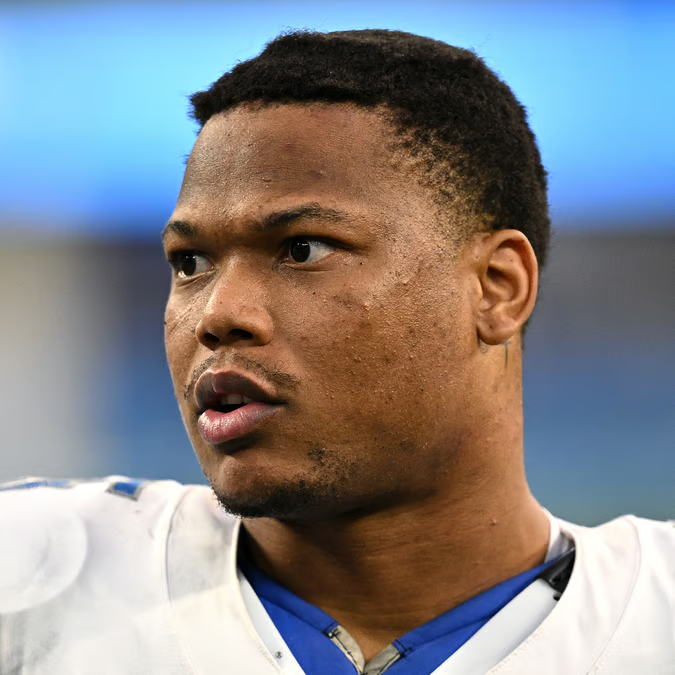
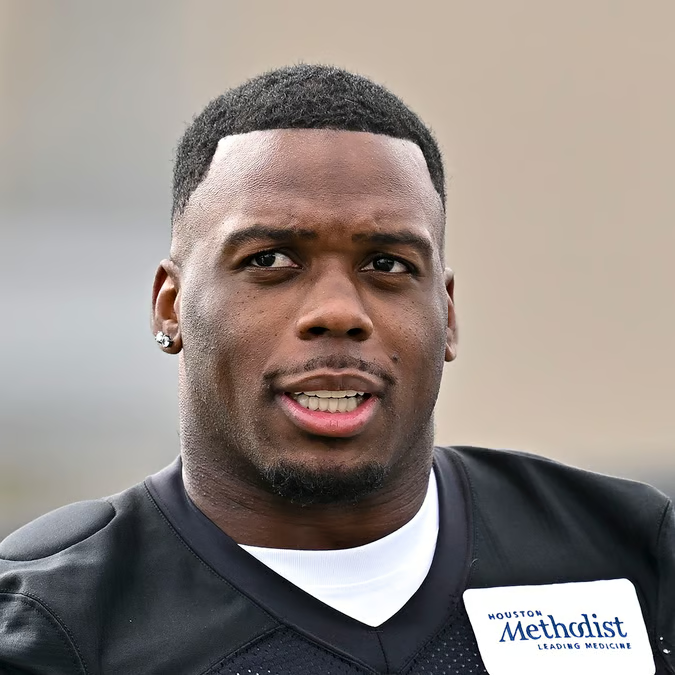
Houston acquired Montgomery from Detroit in March for OL Juice Scruggs, a 2026 fourth-round pick, and a 2027 seventh-round pick, a meaningful price for a backfield that needed a lead back. He enters 2026 as the clear lead runner, with Woody Marks behind him.
Montgomery should at least dominate early-down and goal-line carries, which has always been the engine of his fantasy production. The situation on the Texans could make for less TDs however.
Montgomery handled 61.5% of the Lions carries within the 5-yard line last season (compared to 38.5% for Jahmyr Gibbs). The team totaled 26 carries inside the 5 last year, and 55 carries over the last two years.
The Texans only had 21 carries inside the 5 last season, with Marks’ 9 leading the team. (He converted only one of them). The Texans totaled a mere 33 carries inside the 5 over the past two years.
That’s likely to mean fewer TD opportunities than Montgomery saw in Detroit.
Supporting Cast
C.J. Stroud returns as the starter, but he's coming off a down year (QB22 in fantasy points per game) with declining efficiency. More importantly here, Houston's 57.4% pass rate (14th) and low RB target share (13.2%, 29th) structurally limited last year’s RB receiving production.
We’ll see if that number can climb back toward the 18.2% in 2024 (11th) or 18.9% in 2023 (15th), before Caley arrived.
The O-line's run-blocking grades are the bigger story for Montgomery. Houston ranked 21st in PFF run-block grade, 32nd in ESPN run-block win rate, and 24th in adjusted line yards, all bottom-10 marks that make it harder for any back to produce efficiently, regardless of talent.
They have reshuffled somewhat with free agents Wyatt Teller and Braden Smith expected to start along with rookie first-round pick Keylan Rutledge.
The O-line additions don’t inspire confidence. Teller ranked 39th among 103 guards with 100+ snaps last season in PFF run blocking grade while Smith ranked 73rd among 106 OTs.
Rutledge offers upside, ranking 18th among 439 FBS guards last season.
Coaching & Offensive Scheme
Nick Caley's first season as OC in 2025 produced a conservative leaning offense. The 57.4% pass rate (16th) and 54.5% neutral pass rate (14th) both dropped in 2025 from Slowik’s previous years.
The Texans offense in Caley’s second year could look similar to 2025. It should remain a balanced scheme designed to take pressure off Stroud and the O-line, with downfield passing to Collins as the primary motor.
The one difference would be the investment in Montgomery fueling the run game. Montgomery’s a clear upgrade on last year’s version of Nick Chubb, and that enhanced backfield could mean more running for the 2026 offense.
Paths To Ceiling
We know Houston plans to hand Montgomery the backfield lead, but two big questions will control how high his ceiling can climb:
- How large a share of the carries -- and especially targets -- will Montgomery get?
- Can the offense improve on whole and provide more TD chances?
The Texans have topped out at 13th in scoring (twice) in Stroud’s three seasons. If they can improve on that and give Montgomery the backfield receiving lead, he could easily climb into the position’s top 20 in fantasy scoring.
Risk Factors
The O-line presents the biggest risk. Houston ranked 32nd in ESPN run-block win rate last year. If it doesn’t improve on that, Montgomery will have a tough time delivering efficient rushing.
Texans RBs generated 2.73 yards after contact per attempt last year. Montgomery has beaten that rate in five of his seven pro seasons, including the past four in a row.
If the O-line leads to inefficient rushing and Montgomery continues to see limited receiving usage, he could land in low-RB3 territory and offer your team little help.