Fantasy Football Injuries: Return Timelines For Daniels, Nabers, Barkley & More

Nothing can wreck a fantasy season like injuries.
But injuries also present opportunity. You can gain an edge over your competition by having a better understanding of injuries, how long they’ll keep players out, and how they’ll impact performance upon return.
That’s why we have Tyler Smola -- a doctor of physical therapy with more than a decade of sports medicine experience -- to break down what these injuries really mean for fantasy managers.
Tyler separates reality from rumor, explains timelines, and gives you the performance outlook you need to make sharper decisions.
Here's what you need to know about the key fantasy football injuries after a brutal Week 2 ...
TIP
Our exclusive Injury Predictor uses the internet's most comprehensive injury database and advanced machine learning to compute injury-risk ratings for every fantasy-relevant NFL player.
Fantasy Football Injuries: QBs
Jayden Daniels, Commanders

- Injury: Left elbow dislocation
- Expected Weeks Missed: 4-8 (non-surgical), season-ending (surgical)
Outlook: Deja vu for Daniels. He suffered two elbow dislocations last season and a third midway through Week 2. Daniels will now undergo imaging to determine whether he suffered any damage to the joint surfaces or the ligaments that stabilize the elbow.
If he once again avoids surgery, we can expect him to miss approximately six games and return in a brace. But that is much less likely than it was last year. A first-time dislocation is often treated non-operatively, but each subsequent dislocation increases the likelihood that surgery may be necessary.
We should find out this week whether Daniels opts for surgery or rehab. Surgery would most likely mean the end of his 2026 campaign. Hypermobility and long-term elbow stability are now major concerns moving forward.
TIP
Need a replacement for Daniels? Check the Free Agent Finder.
Caleb Williams, Bears
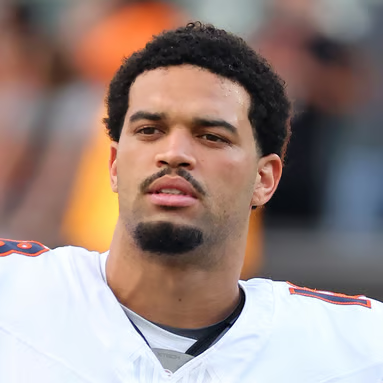
- Injury: Right hamstring strain
- Expected Weeks Missed: 1-4
Outlook: Williams’ reaction initially had us fearing a Dak Prescott-level hamstring strain (tear), but early reports are telling us otherwise. He was seen walking out of the stadium with a minimal limp, and Pro Football Talk’s Mike Florio reported that “there is optimism that it is not a severe injury.”
As of now, we can expect this to be a Grade 1 or 2 hamstring strain. It's still unlikely that he plays in Week 3.
Expect Williams to miss a game or two, with a decline in rushing production upon his return. There is also a high risk of re-injury during his first week back.
Fantasy Football Injuries: RBs
Saquon Barkley, Eagles
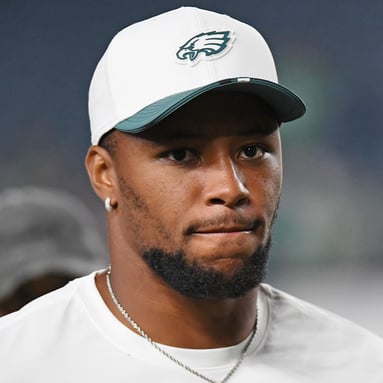
- Injury: Stinger (brachial plexus injury)
- Expected Weeks Missed: 0-1 (Unless MRI shows neck issue)
Outlook: Stingers are caused by a stretch or compression of the brachial plexus (a bundle of nerves that comes out of the neck). Typically, these are transient injuries with no long-term issues.
The only complication for Barkley would be an underlying neck injury that caused the stinger, which could lead to missed time. Stingers can also recur, potentially causing issues over the next few weeks.
J.K. Dobbins, Broncos

- Injury: Hamstring strain
- Expected Weeks Missed: 1-2
Outlook: Early reports indicate that Dobbins suffered a Grade 1 hamstring strain and will likely miss 1-2 weeks.
There is a high risk of re-injury during acceleration and top-end sprinting. Dobbins also has a long injury history, further reinforcing his injury-prone label.
Rico Dowdle, Steelers
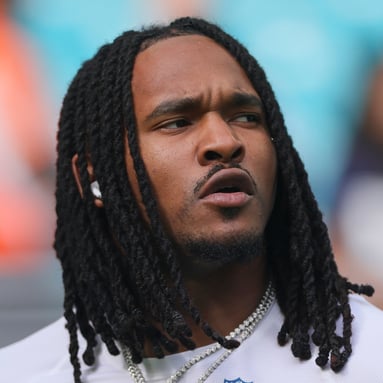
- Injury: Toe
- Expected Weeks Missed: 2-6
Outlook: We haven't received an update on the specific toe injury Dowdle sustained, but for now, we should expect turf toe.
That's a sprain of the ligament on the bottom of the great toe. This ligament is stressed with every step or stride an athlete takes, making the injury painful and limiting. Turf-toe injuries are typically associated with multi-week absences that can sometimes stretch into months.
For now, expect Dowdle to miss multiple weeks, with the potential for a longer absence depending on the severity.
Jadarian Price, Seahawks
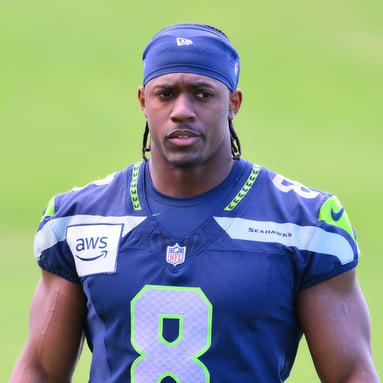
- Injury: Shoulder
- Expected Weeks Missed: 0-4
Outlook: The only update we received on Monday was that Price has a shoulder injury, not a chest injury.
No pathology was given, but it is not expected to be serious. Possibly an AC joint, similar to D.J. Moore? We should find out more in the next couple of days.
Jonathan Brooks, Panthers

- Injury: Groin strain
- Expected Weeks Missed: 2-4
Outlook: Previous injury is the greatest predictor of future injury.
We know Brooks' injury history. HC Dave Canales stated Monday that Brooks was still undergoing tests to determine the severity of the strain.
This typically means it's not a low-grade strain. Expect Brooks to miss multiple weeks as the Panthers likely will exercise caution with said history.
As with hamstring strains, there is a high risk of re-injury upon return. Even when he returns, expect snaps to be limited the first week back.
Fantasy Football Injuries: WRs
Malik Nabers, Giants

- Injury: Right shoulder (Inferior dislocation or subluxation?)
- Expected Weeks Missed: 0-2
Outlook: An awkward play left Nabers on the ground in clear pain, grabbing his right shoulder. Nabers likely inferiorly dislocated or subluxed the shoulder.
He previously sustained a labral tear in this shoulder at LSU. Labral tears can leave the shoulder more susceptible to instability.
Nabers was able to return to the game but was ineffective. His immediate future will depend on how the shoulder responds over the next few days.
For now, we shouldn’t expect him to miss prolonged time. However, if he dislocates his shoulder again this season (which he is now at a much higher risk of doing), surgery will be on the table.
TIP
See where Nabers sits in the updated Rest-of-Season rankings.
D.J. Moore, Bills

- Injury: AC joint sprain
- Expected Weeks Missed: 1-4
Outlook: Another injury that seemed worse in the moment than the reports that followed. Moore avoided a clavicle fracture and instead suffered an AC joint sprain.
The AC (acromioclavicular) joint is where the clavicle (collarbone) meets the acromion of the scapula (shoulder blade). AC joint sprains typically occur from a direct impact to the point of the shoulder, causing injury to the ligaments that stabilize the joint.
AC joint injuries can be more limiting for WRs than RBs, as overhead range of motion, strength, and shoulder stability are more critical.
Another major concern with AC joint injuries in WRs is the risk of re-injury upon return. A direct tackle or fall onto the point of the shoulder can stress the healing ligaments and aggravate the injury.
Moore could miss a game or two, although ESPN’s Adam Schefter suggested last week that Moore has a chance to play vs. the Chargers on Sunday.
Mike Evans, 49ers
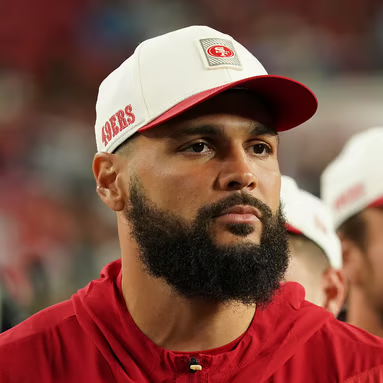
- Injury: Hip
- Expected Weeks Missed: 0-1 (for this injury)
Outlook: Another week that Evans makes it into this article.
So far, nothing this season has kept Evans off the field. We don’t have details on the pathology of the hip injury, but HC Kyle Shanahan was quick to downplay it.
As of now, we don’t expect this to turn into any sort of long-term issue. However, Evans will continue to be someone we expect to miss at least some time this season.
Alec Pierce, Colts

- Injury: Heel
- Expected Weeks Missed: 4-8
Outlook: Pierce was unable to bear weight after re-injuring his now-longstanding heel and ankle issues. This is the same injury he underwent surgery for early in the offseason.
Pierce will now miss an extended period as he works to calm down and rehab the injury once again. Don't be surprised if he lands on IR.
Jayden Reed, Packers

- Injury: Back
- Expected Weeks Missed: 4-season ending
Outlook: A very scary play that resulted in Reed being hospitalized overnight.
The only good news is he has movement in all four extremities and has returned to Green Bay. It's hard to speculate what exactly happened, but Reed might miss the rest of the season.
Demarcus Robinson, 49ers
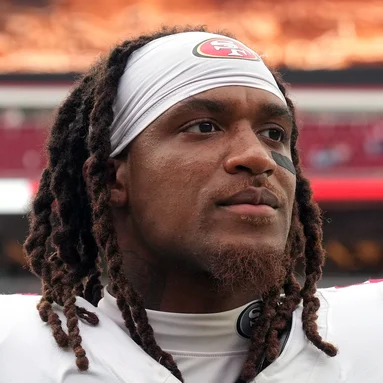
- Injury: High-ankle sprain
- Expected Weeks Missed: 3-6
Outlook: Similar to the A.J. Brown injury, Robinson suffered a high-ankle sprain.
This is a challenging injury to rehab and can remain limiting even after a player returns to the field.
Expect Robinson to miss 3-6 weeks, with the possibility of being limited during his first week back.
Fantasy Football Injuries: TEs
Dallas Goedert, Eagles
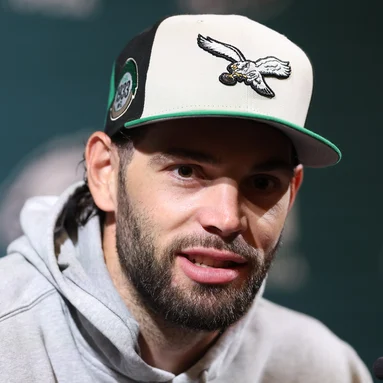
- Injury: MCL sprain
- Expected Weeks Missed: 2-6
Outlook: Goedert suffered an MCL sprain in the Week 2 win over the Titans.
Reports indicate that he will miss a few weeks, making a full tear (Grade 3) less likely. Expect Goedert to miss approximately a month and be slightly limited upon return.
This will have a much smaller performance impact than a high-ankle sprain. However, he will have a slightly increased risk of further knee injury, such as an ACL injury, as he returns.
David Njoku, Chargers

- Injury: Fibula fracture
- Expected Weeks Missed: 4-8
Outlook: Njoku was placed on IR on Monday with a fibula injury, which we should expect to be a fracture.
Fibula fractures are typically easier to recover from and often allow a quicker return than fractures of the other bone in the lower leg, the tibia. That’s because the tibia bears approximately 90% of the body's weight, while the fibula bears the remaining 10%.
Still, this is a fracture, and Njoku will likely miss 6-8 weeks.
What Do These Injuries Mean For Your Fantasy Team?
The smartest managers don’t just track injuries ... they act on them faster than the rest of the league.
Our fantasy football projections update around the clock and feed directly into the Team Dashboard, Free Agent Finder, and the rest of our fully customized tools.