Does Ladd McConkey Still Belong in Your Draft Plans?
Player Profiles
Los Angeles Chargers 2026 Overview
Schedule
| Week 1 | vs. ARI | Week 10 | at BAL |
| Week 2 | vs. LV | Week 11 | vs. NYJ |
| Week 3 | at BUF | Week 12 | vs. NE |
| Week 4 | at SEA | Week 13 | at TB |
| Week 5 | vs. DEN | Week 14 | at LV |
| Week 6 | at KC | Week 15 | vs. SF |
| Week 7 | BYE | Week 16 | at MIA |
| Week 8 | at LAR | Week 17 | vs. KC |
| Week 9 | vs. HOU | Week 18 | at DEN |
Wins
2025
11
2026 Over/Under
10.5
Play Calling
| 2025 | 2026 Projections | |
| Plays Per Game | 64.4 | 62.0 |
| Pass Rate | 62.6% | 57.2% |
| Run Rate | 37.4% | 42.8% |
Key Additions
- RB Keaton Mitchell
- TE David Njoku
- TE Charlie Kolar
- C Tyler Biadasz
- G Cole Strange
- G Jake Slaughter
Key Departures
- WR Keenan Allen
Notable Coaching Changes
- OC Greg Roman out
- OC Mike McDaniel in
Justin Herbert
2025 Role & Results
QB9 Finish Proves MisLeading
Herbert threw for 3,727 yards, 26 TDs, and 13 INTs across 16 games. He added a career-high 498 rushing yards and two scores on the ground.
That was good for QB9 in total fantasy points and QB8 in points per game, but the week-to-week ride was uneven:
- five top-5 finishes
- just one other top-12 week
- five games at QB20 or worse
Solid Efficiency
Among 42 QBs with 150+ attempts, Herbert ranked:
- Eighth in completion rate over expected
- 10th in adjusted completion rate
- 13th in TD rate
- 14th in yards per attempt
- 19th in fantasy points per dropback
Those marks look a lot like Herbert’s first five NFL seasons, which counts as a small win given the rough setup around him.
Chargers Crumble Around Herbert
Herbert faced a league-high 43.3% pressure rate and absorbed 54 sacks, second-most in the NFL.
The Chargers spent most of the season without both starting OTs, as Rashawn Slater missed the year and Joe Alt played just six games before ankle surgery. That helps explain their last-place finish in ESPN’s run-block win rate.
The backfield got hit, too. Round 1 rookie Omarion Hampton played only nine games, and Najee Harris lasted 15 carries before a season-ending Achilles’ tear.
L.A. still ranked third in total plays despite finishing 27th in pace and 30th in situation-neutral pace. The passing volume remained solid, with Herbert ranking 13th in attempts per game and the Chargers sitting seventh in pass rate.
Playing Through Pain
Herbert broke a bone in his left hand during a Week 13 matchup with Vegas that required surgery. He only missed time in Week 18, resting ahead of the Chargers’ wild card game.
2026 Opportunity & Projection
A Deep Pass Catching Group
The Chargers return six of their top seven target earners from 2025.
Keenan Allen is the lone exception, and at 34 his departure shouldn’t be a major loss. Among 56 WRs with 80+ targets last year, Allen ranked:
- 36th in yards per route run
- 38th in yards per game
- 52nd in yards after catch per reception
- 53rd in yards per catch
The Chargers should spread Allen’s targets across a deep, young pass-catching corps.
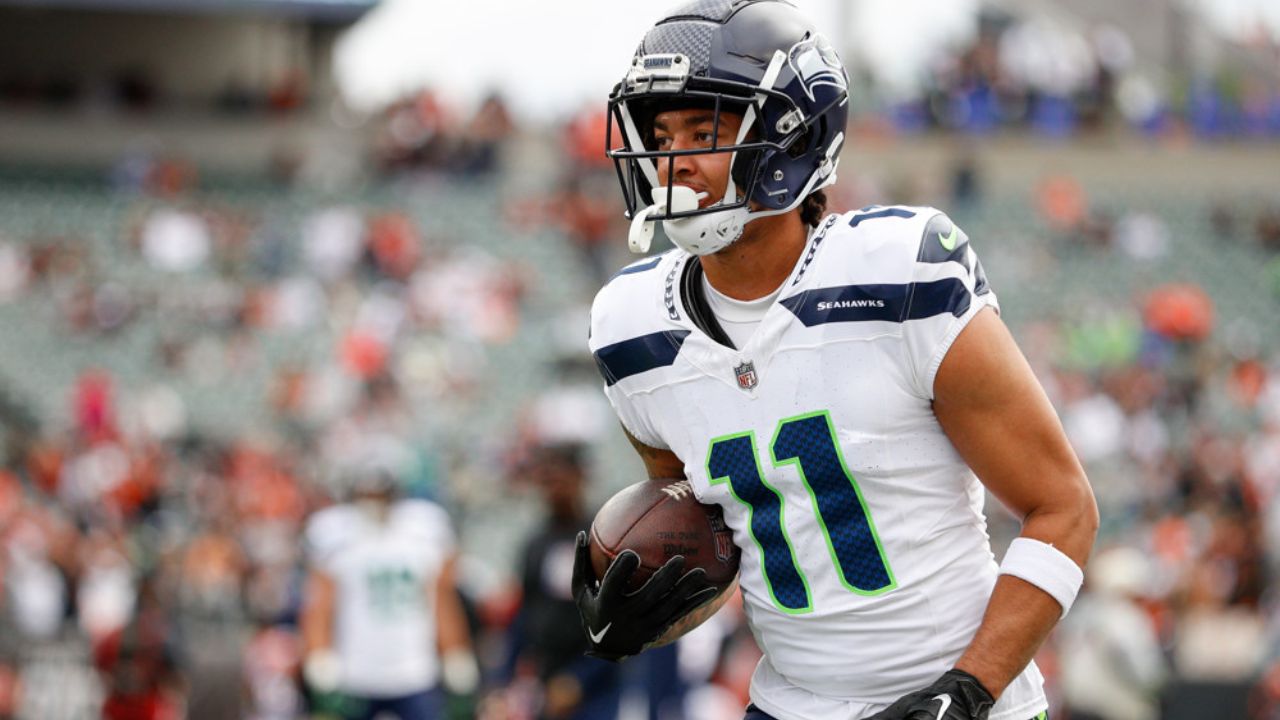
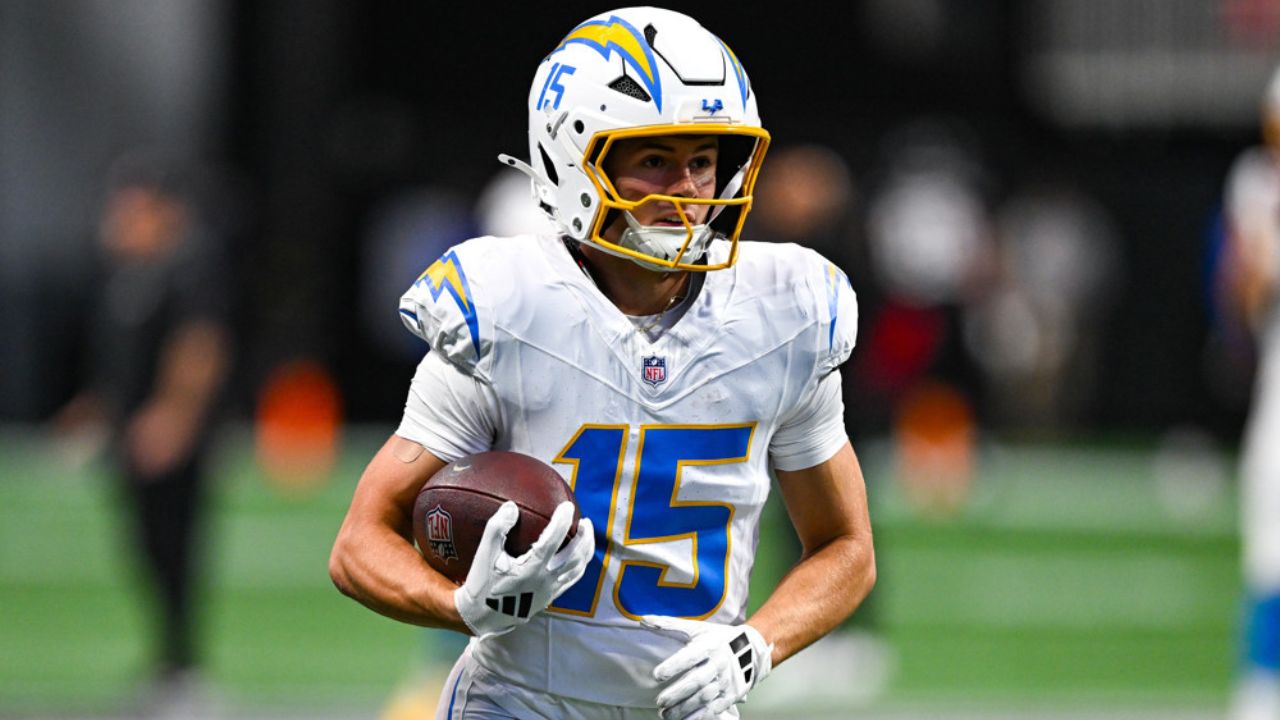
Ladd McConkey battled calf, biceps, foot, and ankle injuries during a down 2025, but he’s only 24 and just one year removed from a rookie season with 82 catches, 1,149 yards, and 2.38 yards per route run. Quentin Johnston remains volatile, but his six games of 70+ yards, team-high 8 receiving TDs, and fifth-year option pickup show the Chargers still believe in him.
Tre Harris brings potential for a Year 2 jump, despite only 324 yards as a rookie. He supplies good size (6’2, 205), high-level athleticism (9.18 Relative Athletic Score), and strong college efficiency (3.00 yards per route run). Round 4 rookie Brenen Thompson adds 4.26 speed and a deep threat (18.6 career yards per catch in college).
The Chargers also return TE Oronde Gadsden II, who went from a Round 5 rookie to finishing fourth on the team in catches, yards, and receiving TDs. David Njoku arrives as a veteran complement, but he missed 11 games over the past two seasons and got outplayed by Round 3 rookie Harold Fannin Jr. with Cleveland in 2025.
Charlie Kolar also joins the TE room after serving as a depth piece behind Mark Andrews and Isaiah Likely in Baltimore. He should help as a blocker, with some untapped receiving ability still in play.
The O-line should improve if Slater (patellar) and Alt (ankle) stay healthy. L.A. also upgraded at C with Tyler Biadasz, who ranked 15th among 37 centers in PFF run-blocking grade last season, well ahead of retired 2025 starter Bradley Bozeman.
The guard spots are less settled, with Cole Strange, Trevor Penning, and rookie Round 2 pick Jake Slaughter battling for two spots.
McDaniel Supplies an Upgrade
Mike McDaniel enters an OC role after acting as Miami’s HC over the past four seasons.
His Miami track record doesn’t suggest a major shift from Herbert’s two years under Greg Roman:
McDaniel in Miami
| Plays | Pace | Pass Rate | Neutral Pass Rate | Pass Rate Over Expected | |
| 2022 | 59.3 | 20th | 61.4% | 59.3% | +4.5% |
| 2023 | 61.9 | 27th | 56.7% | 61.3% | +2.4% |
| 2024 | 63.6 | 29th | 58.6% | 55.5% | +1.3% |
| 2025 | 55.8 | 31st | 54.5% | 54.0% | -4.2% |
Roman in Los Angeles
| Plays | Pace | Pass Rate | Neutral Pass Rate | Pass Rate Over Expected | |
| 2024 | 59.8 | 32nd | 54.5% | 56.3% | +1.4% |
| 2025 | 64.4 | 27th | 57.4% | 56.3% | +3.4% |
McDaniel’s offenses peaked with a healthy Tua Tagovailoa in 2023 and 2024. Miami finished fourth in passing yards and TDs in 2023, then climbed to first in yards and fourth in TDs in 2024. McDaniel coaxing that type of production from a QB less talented than Herbert strengthens Herbert’s 2026 case.
The quick game will be worth watching. McDaniel has stressed getting the ball out of Herbert’s hands in under 2.4 seconds to offset the pass rush, which fits his Miami track record with Tua. Per TruMedia, he averaged 7.8 yards per attempt on throws under 2.4 seconds in McDaniel’s offense, ranking second among qualifiers.
Paths to Ceiling
Herbert’s setup looks stronger this time, with a deeper group of weapons, an OC who helped a lesser QB reach QB1 territory, and an O-line that should rebound if it stays healthy.
Risk Factors
The biggest concern is still the O-line. Herbert has missed just five games since 2021, but he’s absorbed too many hits while playing through various injuries. If the Chargers can’t keep the O-line intact, Herbert’s weekly floor could remain frustrating.
Draft Sharks Verdict:
Herbert managed a QB8 finish in points per game last year while dealing with poor protection, injuries, and frustrating weekly swings. Now he gets an OC upgrade in Mike McDaniel, more pass-catching depth, and what should be an improved O-line. Herbert isn’t cheap at QB9, but his combination of top-end talent and a better offensive setup makes him worth the price.
Customize Herbert’s projection for your exact league settings inside the Draft War Room.
Omarion Hampton
2025 Role & Results
Hampton Shows Year 1 Promise
In nine games, Hampton ranked 13th among RBs in PPR points per game; 16th in half-PPR.
He carried 124 times for 545 yards and 4 TDs, adding a receiving line of 32 catches, 192 yards, and 1 score. The rookie posted three top-12 fantasy finishes, with three others between RB17 and RB22. His low-end weeks came out at RB33, RB38, and RB52.
Forced Into a High-Volume Role
Hampton opened the year in a larger role than expected after Najee Harris missed the lead-up to Week 1 with an eye injury. The rookie handled an 80.6% snap share in the opener, plus 17 of 19 backfield touches.
The backfield tilted back toward Hampton after Harris’ Week 3 Achilles’ tear. By Week 4, Hampton was up to an 87.5% snap share and handled all 17 RB touches.
After missing weeks 6-13, Hampton averaged 17.5 touches per game over his final four contests.
A Mixed Efficiency Profile
Among 51 RBs with 90+ carries, Hampton ranked:
- Third in missed tackles forced per attempt
- 11th in yards after contact per attempt
- 15th in rush yards over expected per attempt
- 24th in yards per carry
He was less effective as a pass catcher, ranking 27th out of 43 RBs in yards per route run and 38th in yards per catch.
O-line A Major Letdown
The Chargers didn’t create an ideal rushing environment, finishing 26th in rush rate (37.4%) and 17th in attempts per game.
L.A. also finished near the bottom of the league in PFF run-blocking grade (32nd) and ESPN run-block win rate (31st). That tracks with LT Rashawn Slater missing the season with a torn patellar tendon and RT Joe Alt missing 11 games with an ankle injury.
Ankle Fracture Ruins His Season
A Week 5 left-ankle fracture knocked him out until Week 14, and a later right-ankle injury cost him the finale. He returned for one postseason carry against New England.
Hampton entered the NFL with no missed games at North Carolina but broke his left ankle while in high school in March 2021.
2026 Opportunity & Projection
A 'Thunder and Lightning' Backfield?
HC Jim Harbaugh has described the Chargers’ backfield as a “thunder and lightning” group of Hampton, Kimani Vidal, and Keaton Mitchell.
Hampton still projects as the clear lead back, but Mitchell looks like a good bet for change-of-pace work. New OC Mike McDaniel pushed the Chargers to add Mitchell in free agency, signaling the team has a specific role in mind for his speed.
Vidal remains in the mix after handling Hampton’s replacement volume, but he didn’t make much of an efficiency case. Among 49 RBs with 100+ carries, he ranked:
- 31st in yards per carry
- 34th in missed tackles forced per rush
- 36th in yards after contact per attempt
- 37th in success rate
Hampton averaged 3.6 catches per game as a rookie after posting 29 and 38 catches over his final two seasons at North Carolina. Current projections have him for 56.1 targets, good for 13th among RBs. His projected target share of 9.8% ranks sixth on a deep Chargers unit.
We’ll keep an eye on his pass protection after he finished 39th among 40 qualifiers in Pro Football Focus pass blocking grade. Prolonged struggles in that area could reduce his passing-game usage.
Pieces Are in Place for a Strong Unit
The offense on whole looks strong, with QB Justin Herbert and a deep pass-catching corps that features Ladd McConkey, Quentin Johnston, Tre Harris, and Oronde Gadsden II.
The bigger question is the O-line. LT Rashawn Slater missed last season with a torn patellar tendon, while RT Joe Alt missed 11 games with an ankle injury. Both are on track for training camp, and offseason additions C Tyler Biadasz, G Cole Strange, and Round 2 rookie G Jake Slaughter should help improve the unit.
McDaniel Brings a Proven Scheme
Mike McDaniel’s Miami units ranked sixth, 18th, eighth, and 24th in run rate. We’re projecting the Chargers at a 42.8% run rate, which would have ranked 12th last season and marks a nice jump from their 31st-place finish (33.0%) in 2025.
McDaniel also got big RB production with De’Von Achane, as Miami finished first, sixth, and sixth in RB PPR points over the past three seasons. The lone dud was 2022, when a 30-year-old Raheem Mostert led the backfield and Miami finished 19th.
Hampton also fits the athletic profile for McDaniel’s outside-zone scheme. He weighed 221 pounds at the Combine and still posted an 81st-percentile 40-yard dash with a 68th-percentile 10-yard split.
Paths to Ceiling
Hampton brings a Round 1 pedigree and a skill set we compared to Matt Forte’s coming out of college. The ceiling case has him pushing close to a workhorse role behind an O-line that should be much better.
A healthy Justin Herbert would only raise the scoring ceiling and give Hampton a real shot at cracking the top-5 at his position.
Risk Factors
There’s also a chance McDaniel leans into a rotation after stumping for speed back Keaton Mitchell.
McDaniel’s preference could determine whether Hampton pushes for a high-end RB1 finish or settles into RB2 range.
Health matters too. Hampton played just nine games last season and has suffered two ankle fractures since 2021.
Draft Sharks Verdict:
Hampton checks the boxes we want for a Year 2 RB leap: Round 1 NFL Draft capital, size, speed, receiving ability, and strong tackle-breaking production. The Chargers should also give him a much better setup with a healthier O-line and Mike McDaniel calling plays. Keaton Mitchell could chip away at touches, but Hampton remains the clear bet for goal-line work and lead-back volume. He’s a fringe RB1 with top-5 upside if his health cooperates.
Customize Hampton’s projection for your exact league settings inside the Draft War Room.
Keaton Mitchell
2025 Role & Results
Low Volume Limits Fantasy Impact
Mitchell tallied 59 carries for 341 yards and 1 score, adding 9 catches for 63 yards.
A limited role capped his best weekly fantasy finish at RB30, with 10 games at RB40 or worse.
Lightly Used
Mitchell entered last season as the RB3 behind Derrick Henry and Justice Hill.
Even after Hill missed the final eight weeks with injuries, Mitchell’s role barely budged behind Henry. Over that eight-game stretch, he averaged just 5.5 carries (16.7% share) and 1.3 targets (5.4% share).
Mitchell's Speed Shows Up, But the Limitation is Clear
Among 65 RBs with 50+ carries, Mitchell ranked first in yards per carry and explosive run rate. But the rest of the profile was less impressive: 25th in success rate, 46th in missed tackles forced per attempt, and last in yards after contact per attempt.
That’s a decent overall profile, and the after-contact struggles make sense for a 5’8, 191-pound speed back.
A Serious Injury History
Mitchell tore his ACL, LCL, and PCL in December 2023. He didn’t return until November 2024.
A hamstring issue cost Mitchell more than a week of training camp in 2025, and he remained a healthy scratch until Week 5. A knee injury then knocked him out of Week 15, though he returned the following game.
2026 Opportunity & Projection
Three Backs in the Mix?
HC Jim Harbaugh praised Mitchell’s skill set in March while describing the Chargers’ backfield as a “thunder and lightning” group of Mitchell, Omarion Hampton, and Kimani Vidal.
At 220 pounds, Hampton brings the thunder. He backed it up early last season by ranking 10th among 29 qualifiers in yards after contact per attempt through Week 5 before a fractured left ankle sent him to IR and a right-ankle issue cost him Week 18.
The former Round 1 pick helped in the passing game with 3.6 catches per game, but the efficiency lagged at only 6.0 yards per reception.
Hampton still projects as the clear lead back, but Mitchell has an opening for change-of-pace work. New OC Mike McDaniel pushed the Chargers to add Mitchell in free agency, signaling the team has a specific role in mind for his speed.
Vidal remains in the mix after handling Hampton’s replacement volume, but he didn’t make much of an efficiency case. Among 49 RBs with 100+ carries, he ranked:
- 31st in YPC
- 34th in missed tackles forced per rush
- 36th in yards after contact per attempt
- 37th in success rate
O-Line Brings Potential for Significant Improvement
Mitchell joins a strong setup with Justin Herbert and a deep pass-catching corps featuring Ladd McConkey, Quentin Johnston, Tre Harris, and Oronde Gadsden II.
The bigger question is the O-line. LT Rashawn Slater missed last season with a torn patellar tendon, while RT Joe Alt missed 11 games with an ankle injury. Both are on track for training camp, and offseason additions C Tyler Biadasz, G Cole Strange, and Round 2 rookie G Jake Slaughter should help improve the unit.
New OC Looks Like an Asset
McDaniel's Miami units ranked sixth, 18th, eighth, and 24th in run rate. We’re projecting the Chargers at a 42.8% run rate, which would have ranked 12th last season.
McDaniel’s push to add Mitchell matters, especially because he’s already used a similarly built speed back effectively. De’Von Achane, also 191 pounds, averaged 5.6 yards per carry across three seasons with McDaniel. But Achane entered the league as a Round 3 pick whereas Mitchell went undrafted, and Miami never had an Hampton-level lead back blocking Achane’s path.
McDaniel should find creative ways to use Mitchell as a runner and receiver, but his impact will likely matter more to the Chargers than to fantasy managers.
Risk Factors
Mitchell’s speed and fit with McDaniel are easy to like, but expectations still need to stay in check. He isn’t a real threat to Hampton’s lead role, and even a Hampton injury would likely leave Mitchell in a timeshare with Vidal, which means he’d still need help just to push for RB2 value.
Draft Sharks Verdict:
Mitchell brings the type of speed new OC Mike McDaniel can deploy creatively, but we shouldn’t overstate the role. Omarion Hampton will lead work, probably by a wide margin. And Kimani Vidal would likely stay involved even if Hampton misses time. It would take an injury for Mitchell to even approach RB2 value, making him just a late-round stash in leagues of 12+ teams.
Customize his projection for your exact league settings inside the Draft War Room.
Ladd McConkey
2025 Role & Results
A Disappointing Pick at ADP
McConkey racked up 66 catches, 789 yards, and 6 TDs in 16 games.
McConkey finished WR29 in total PPR points but just 35th in points per game. He managed only three top-12 fantasy finishes, with five more inside the top-24 and eight outside the top-36.
Keenan Allen Impacts Usage
McConkey’s 64.8% slot rate and 10.5-yard average depth of target mirrored his rookie season.
But Keenan Allen’s return cut into McConkey’s target ceiling. Across 17 shared games, Allen edged him in targets per game, 6.6 to 6.5, and matched him with 15 red-zone looks. Allen also led 79-69 in first-read targets, per Fantasy Points.
Efficiency Falls Flat
Overall, McConkey’s efficiency dropped compared to 2024:
| 2024 | 2025 | |
| Route Rate | 87% | 89% |
| Targets Per Route | 0.228 | 0.181 |
| Yards Per Route | 2.38 | 1.40 |
| PFF Receiving Grade | 81.2 | 69.1 |
| ESPN Receiver Score | 71 | 58 |
| Expected PPR PPG | 12.6 | 12.0 |
| PPR PPG | 14.9 | 11.3 |
The yards per route figure is especially striking; it ranked 38th out of 40 WRs with 80+ targets through Week 17.
One reason: McConkey’s catchable target rate fell from 81% in 2024 to 71% in 2025, even though all of his NFL games have come with Justin Herbert at QB.
OK Pass Volume, Ugly O-line Play
The Chargers landed 12th in total yards but only 20th in scoring. The passing game checked in 13th in attempts, 18th in yards, and 11th in TDs.
That’s a decent profile, especially factoring in the tough conditions around Herbert. OTs Joe Alt and Rashawn Slater combined to miss 28 games and factored heavily in the QB seeing a league-high 43.3% pressure rate.
Injuries Remain a Factor
McConkey missed about two weeks of training camp with a calf injury. He returned for Week 1 but battled calf, biceps, foot, and ankle injuries during the season. The 24-year-old was a healthy scratch for Week 18, when the Chargers rested starters.
As a rookie, McConkey missed one game with a knee injury.
2026 Opportunity & Projection
Still a No. 1 WR
Allen’s departure vacates 122 targets from the 2025 offense.
The setup around McConkey suggests the Chargers believe he’s capable of bouncing back. Quentin Johnston returns in an outside role after posting a career-high 14.0 yards per catch last year, but he finished third-worst in a sample of 52 WRs in targets per route run.
Tre Harris holds promise as a second-year Round 2 pick, but his rookie season offered little reason to think he’ll cut into McConkey’s role after 10.8 yards per catch on 32 receptions across 17 games and a 7.4% target share that ranked fifth on the team.
Oronde Gadsden II, David Njoku, and Charlie Kolar give the Chargers TE depth, but they look more like complementary pieces than real threats to McConkey’s role.
One Factor Could Unlock McConkey's Rebound
Mike McDaniel enters Year 1 as the Chargers’ play-caller.
McDaniel’s Miami units ranked 10th, seventh, ninth, and 21st in neutral pass rate, not far from the Chargers’ two 14th-place finishes under Greg Roman.
McDaniel’s scheme could also unlock more efficient usage for McConkey. Per Ryan Heath of Fantasy Points, McConkey ran just 9.9% of his routes from sets with fewer than three WRs last year, compared with 46% for Jaylen Waddle in Miami. More work in 1- and 2-WR sets would reduce his target competition.
That mattered in 2025, when the Chargers ranked third in dropback rate with 3+ WRs (81%). Miami, by contrast, finished with the fourth-lowest rate at 53%.
Paths to Ceiling
McConkey’s ceiling hinges on two things:
- becoming a staple in 1- and 2-WR sets
- getting a full, healthy season from Herbert
Our current projections place McConkey at WR21 in PPR ceiling, two spots higher than his rank in 3D Value.
Risk Factors
McConkey took a clear step back in Year 2, failing to separate from 33-year-old Keenan Allen. There’s a chance he settles in as just the team’s best WR rather than its clear leader, which would mean a smaller target share and more limited production.
Draft Sharks Verdict:
McConkey failed to build on his rookie momentum, losing target share to Keenan Allen and sinking in efficiency. But Allen’s gone, and new OC Mike McDaniel creates a better path to volume and per-route production. McConkey projects cleanly as a WR2, and his WR20 ADP sits in a draftable range.
Customize his projection for your exact league settings inside the Draft War Room.
Quentin Johnston
2025 Role & Results
Beating Expectations
Johnston caught 51 passes for 735 yards and 8 TDs. The yardage marked a new career high, while the TD total matched his 2024 high.
Johnston finished WR32 in total PPR points and WR25 in PPR points per game, well ahead of his finish in expected PPG (WR40).
Not Much Changed From 2024
Johnston saw an 18.3% target share, down from 20.7% in 2024. Keenan Allen’s addition explains the volume gap, but the role essentially remained the same:
| 2024 | 2025 | |
| Average Depth of Target | 12.2 yards | 12.9 yards |
| Route Rate Out Wide | 88.1% | 85.5% |
| Red Zone Target Share | 22.0% | 20.3% |
Critical TD Production
Those 8 TDs did a lot of the heavy lifting because the rest of Johnston’s efficiency profile remained shaky.
Among 76 WRs with 50+ targets, Johnston ranked:
- 43rd in receiving yards share
- 44th in yards per route run
- 50th in yards per target
Johnston boosted his catch rate from 59.1% to 65.1%, but that didn’t do much for his fantasy production given the drop in target share.
Poor Protection Impacts QB Play
The Chargers landed 12th in total yards but only 20th in scoring. The passing game checked in 13th in attempts, 18th in yards, and 11th in TDs.
That’s a decent profile, especially factoring in the tough conditions around Justin Herbert. OTs Joe Alt and Rashawn Slater combined to miss 28 games and factored heavily in the QB seeing a league-high 43.3% pressure rate.
Johnston Battles Several Injuries
Johnston sustained a concussion on Aug. 16 but returned in time for the opener. He later missed Week 6 with a hamstring injury and Week 16 with a groin issue, and appeared on the injury report with shin and shoulder injuries.
That followed a 2024 season in which an ankle injury cost him two games.
2026 Opportunity & Projection
Targets Up For Grabs
Keenan Allen’s departure opens up 122 targets from last year’s offense. Johnston should absorb at least some of that volume.
The Chargers also return expected No. 1 Ladd McConkey and second-year WR Tre Harris. McConkey’s efficiency and raw production dipped in 2025, but he’s still just 24 (until Nov. 11) with a rookie-season breakout on his resume.
Harris brings the physical profile to push Johnston, but the early production doesn’t help his case. He managed just 30 catches for 324 yards and 1 TD as a rookie.
Round 4 deep threat Brenen Thompson doesn’t profile as a big contributor either. He brings deep speed but appears suited for a niche role at 164 pounds.
The TE room has depth, but it shouldn’t seriously threaten Johnston’s role. Oronde Gadsden II had a flashy but inconsistent rookie campaign. David Njoku arrives after an injury-plagued season that saw Harold Fannin Jr. pass him in Cleveland. Free-agent addition Charlie Kolar is more blocker than proven receiver.
Overall, it’s an improved situation for Johnston’s target-earning potential.
Supporting Cast Looks Excellent
Johnston enters Year 4 with Justin Herbert. Despite facing heavy pressure last season, Herbert still finished ninth in pass attempts and ninth in yards. He remains an asset for Johnston.
The O-line will bear watching after both OTs underwent offseason surgeries. LT Rashawn Slater and RT Joe Alt are at least on track to participate in training camp.
Johnston Will Learn a New Offensive Scheme
Mike McDaniel enters Year 1 as the Chargers’ play-caller. His Miami units ranked 10th, seventh, ninth, and 21st in neutral pass rate. That’s comparable to the Chargers’ finishes at 14th in two seasons under OC Greg Roman.
McDaniel’s scheme cuts both ways for Johnston. Miami’s offense averaged a 33.25% fullback snap rate over four seasons, so heavier personnel could help his target efficiency. But that’s only if he becomes a staple in 1 and 2-WR sets ahead of McConkey and/or Harris.
McDaniel’s Dolphins used 3- and 4-WR sets far less often than last year’s Chargers, 53% to 81%. That creates some route-rate risk for Johnston, particularly if Harris earns a larger role.
Paths to Ceiling
Johnston has overproduced on TDs in two straight seasons, scoring 16 times vs. 11.7 expected. He’ll likely need that to continue for a true ceiling outcome.
The other path is development and a usage spike under Mike McDaniel, who praised Johnston’s early OTA work and compared some of his traits to Julio Jones and Andre Johnson.
Johnston doesn’t present that kind of WR1 ceiling, but McDaniel leaning into his size and explosiveness could help lift last year’s low targets-per-route mark.
Risk Factors
Johnston still faces a tough path out of secondary-target status. McConkey returns, Harris brings Year 2 growth potential, and the Chargers now feature Gadsden and Njoku at TE.
Draft Sharks Verdict:
Johnston remains a boom-bust fantasy bet. The TD production has carried him for two straight seasons, while he lagged in yards per route and yards per target. The good news? Keenan Allen’s 122 vacated targets and OC Mike McDaniel’s arrival create a real opportunity for Year 4 growth. Treat Johnston as a volatile WR4 with WR3 upside if the targets increase.
Customize his projection for your exact league settings inside the Draft War Room.
Tre Harris
2025 Role & Results
A Fantasy Non-Factor
Harris played all 17 games but barely registered for fantasy, finishing WR91 in total PPR points and WR93 in half-PPR.
He never topped 9.4 PPR points in a game, tallying only 6.7 and 4.8 points in the two games Quentin Johnston missed. Harris’ best weekly finish was WR38 in Week 16.
Limited Usage
Harris ranked fifth on the Chargers with a 7.4% target share and tied for sixth in route rate (44%).
Harris posted a modest 9.7-yard average depth of target (sixth among Chargers WRs). He caught only two of nine deep targets (20+ yards downfield) for 61 yards.
Efficiency Needs Major Work
Among 90 WRs with 40+ targets, Harris ranked:
- 51st in yards per target
- 70th in targets per route run
- 72nd in yards per route run
Harris also ranked 88th out of 110 qualifying WRs in ESPN’s open score, a measure of how well a receiver creates separation.
Buried on the Depth Chart
The Chargers landed 12th in total yards but only 20th in scoring. The passing game checked in 13th in attempts, 18th in yards, and 11th in TDs.
That’s a decent profile, especially factoring in the tough conditions around Herbert. OTs Joe Alt and Rashawn Slater combined to miss 28 games and factored heavily in the QB seeing a league-high 43.3% pressure rate.
Harris simply didn’t earn a big enough role, even after Mike Williams’ surprise retirement in July. Greg Roman settled on Keenan Allen, Ladd McConkey, and Quentin Johnston as his top three WRs.
An Injury-Free Rookie Season
Harris didn’t miss a game as a rookie. A groin injury cost him five games in 2024; a knee injury forced one absence in 2023.
2026 Opportunity & Projection
A Departing Veteran Opens Up Targets
Allen’s departure frees up 122 targets, and Harris should absorb some of that even if he’s not a direct replacement.
The Chargers signaled belief in Harris’ Year 2 readiness by adding little to the WR corps.
McConkey returns after a down 2025 that produced sharp declines in yards per route run and targets per route run. Still, he’s a bounce-back candidate at only 24 with a breakout rookie season behind him.
Quentin Johnston returns in an outside role after posting a career-high 14.0 yards per catch last year, but he finished third-worst in a sample of 52 WRs in targets per route run.
Brenen Thompson arrived in Round 4 of the draft. He adds deep speed but looks headed for a limited role at 164 pounds.
The Chargers also added the kind of TE depth that could limit Harris’ snaps. Oronde Gadsden II flashed as a Round 5 rookie, David Njoku arrives after two injury-affected seasons, and Charlie Kolar gives the unit an effective blocker with some untapped receiving ability.
Harris needs big Year 2 growth to become more than a complementary target.
QB, O-line Are Assets
Harris benefits from the presence of Justin Herbert, who finished ninth in pass attempts and ninth in yards last season despite heavy pressure.
The O-line will bear watching after both OTs underwent offseason surgeries. LT Rashawn Slater and RT Joe Alt are at least on track to participate in training camp.
Harris Needs to Earn a Role For a New OC
Mike McDaniel enters Year 1 as the Chargers’ play-caller. His Miami units ranked 10th, seventh, ninth, and 21st in neutral pass rate. That’s comparable to the Chargers’ No. 14 finishes in both seasons under OC Greg Roman.
McDaniel’s scheme cuts both ways for Harris. Miami averaged a 33.25% fullback snap rate over four seasons, which could boost Harris’ target efficiency if he plays in heavier personnel, but the Dolphins used 3- and 4-WR sets just 53% of the time last year versus the Chargers’ 81%. Poor WR depth likely helped drive that split in Miami, but any move toward heavier sets in L.A. could still cap Harris’ route volume.
Draft Sharks Verdict:
Harris barely registered as a rookie despite playing all 17 games, and the efficiency profile didn’t hint at an impending breakout. But Keenan Allen leaves behind 122 targets, and the Chargers didn’t add a proven WR to block Harris from a larger role. Still, Ladd McConkey and Quentin Johnston will likely remain ahead of him, and added TE depth could limit his routes. Harris is more watch-list WR than priority pick.
Customize his projection for your exact league settings inside the Draft War Room.
Oronde Gadsden II
2025 Role & Results
A Surprise Fantasy Asset
Gadsden racked up 49 catches, 664 yards, and 3 TDs in 15 games, good for TE15 in total PPR points and TE22 in points per game.
He finished as a top-12 PPR TE in five games, with two other finishes inside the top-15. He also brought the volatility you’d expect from a Round 5 rookie TE: six fantasy finishes outside the top-36.
Gadsden Capitalizes on Opportunity
After healthy scratches in the first two games, Gadsden got his chance in Week 3 with Will Dissly inactive and turned 7 targets into 5 catches for 46 yards against Denver.
From Week 3 on, Gadsden posted a 61.3% route rate and 13.4% target share, with eight games above a 70% route rate and seven above a 17% target share. That works out to fringe top-12 TE usage over a full season.
Gadsden thrived in a mid-range role with a 9.5-yard average depth of target, sixth among 49 TEs with 30+ targets. He also caught all eight of his deep targets (20+ yards downfield) for 235 yards.
Mixed Efficiency Marks
Among 49 TEs with 30+ targets, Gadsden ranked:
- fifth in yards per target
- 17th in yards per route run
- 32nd in fantasy points per route run
- 33rd in yards after catch per reception
- 36th in targets per route run
Gadsden added strong marks in catch rate (73.2%) and yards per reception (13.3).
Offense Faces Adversity
The Chargers landed 12th in total yards but only 20th in scoring. The passing game checked in 13th in attempts, 18th in yards, and 11th in TDs.
That’s a decent profile, especially factoring in the tough conditions around Justin Herbert. OTs Joe Alt and Rashawn Slater combined to miss 28 games and factored heavily in the QB seeing a league-high 43.3% pressure rate.
No Durability Issues in Year 1
Gadsden left Week 10 with a quad bruise but returned the following Sunday.
His more notable injury came at Syracuse in 2023, where a Lisfranc injury to his right foot required surgery and cost him 11 games.
2026 Opportunity & Projection
Chargers Add Competition
Gadsden projects as the lead TE after his strong 2025, but the margin for error is thin.
The Chargers strengthened the TE room with David Njoku and Charlie Kolar. Njoku missed 11 games over the past two seasons and lost ground to Harold Fannin Jr. in 2025, but his 2023 showed the ceiling. That year, Njoku finished sixth among TEs in catches and yards, tying for second in receiving TDs. (He did it despite playing in a Browns offense that used five starting QBs.)
Kolar is less of a receiving threat, but his blocking could still cost Gadsden snaps, especially after the Chargers gave the former Raven a three-year deal with $17 million guaranteed.
Kolar ranked eighth last year in Pro Football Focus run-blocking grade among 53 TEs with 200+ run-blocking snaps.
Beyond TE, the Chargers return a young WR trio of Ladd McConkey, Quentin Johnston, and Tre Harris. McConkey’s production declined last season, while Johnston remained a complementary piece of the offense with a target share that placed him 57th among WRs. Harris played all 17 games but was a non-factor.
Keenan Allen’s departure vacated 122 targets from last year’s offense, but don’t assume Gadsden automatically claims a large chunk.
Herbert, OTs Will be Key
Gadsden benefits from the presence of Justin Herbert, who finished ninth in pass attempts and ninth in yards last season despite heavy pressure.
The O-line will bear watching after both OTs underwent offseason surgeries. LT Rashawn Slater and RT Joe Alt are at least on track to participate in training camp.
A New Offensive Identity
The Chargers’ personnel moves suggest more two- and three-TE sets, a shift from last year when they ranked last in 12-personnel usage (5.8%) and 23rd in 13-personnel usage (1.9%).
That’s generally positive for the TE, who won’t have to contend with as many WRs for targets.
McDaniel’s Miami offenses also leaned into two-back sets, using them at a 33.25% clip and frequently involving a fullback. That’s up from the Chargers’ 10.9% usage of two-back sets last season. Gadsden probably won’t see a major snap or route reduction as the movement/receiving TE. But new FB Alec Ingold, who spent the past four seasons with McDaniel, adds another potential hurdle to his playing time.
Risk Factors
Gadsden could simply get lost in a deep group of pass catchers. McConkey, Johnston, Njoku, Harris, Kolar, and even Omarion Hampton, who caught 32 passes in just nine games as a rookie, give the Chargers plenty of options to spread the ball around.
Draft Sharks Verdict:
Gadsden played well enough in 2025 to enter the Chargers’ lead-TE conversation. But added TE competition and uncertainty under a new OC make his 2026 role less secure than the raw production suggests. Gadsden’s an easy avoid with a TE16 ADP.
Customize his projection for your exact league settings inside the Draft War Room.
David Njoku
2025 Role & Results
Njoku Proves Unreliable
Njoku posted just 33 catches, 293 yards, and 4 TDs in 12 games.
He produced three top-12 PPR finishes, topping out at TE7 in Week 5. He finished TE24 or worse in half of his games.
Displaced By a Rookie
Njoku lost meaningful target ground to Harold Fannin Jr. right away. Fannin beat him in target share in Week 1 and in eight of their 12 shared games, leaving Njoku at just 4.0 targets per contest.
Njoku stayed short-range at a 5.9-yard average depth of target (his third straight year under 6.0) and moved around the formation at rates that mirrored recent seasons:
- 55.7% inline
- 28.7% in the slot
- 14.4% out wide
Ugly Efficiency
Among 38 TEs with 40+ targets, Njoku posted underwhelming finishes:
- 21st in catch rate
- 29th in fantasy points per route run
- 33rd in yards per target
- 35th in yards per route run
- 36th in targets per route run
- 36th in PFF receiving grade
Injuries likely played a role in Njoku’s efficiency dip, but they weren’t the only factor behind his disappointing season.
QB Play Didn't Help
The Browns supplied an awful environment for passing production.
Shedeur Sanders, Dillon Gabriel, and Joe Flacco combined for a poor completion rate (57.9%) and yards per attempt (5.0). Only the Jets averaged fewer passing yards per game, despite Cleveland ranking 15th in attempts.
A Downward Trend
Njoku’s production peaked in 2023 with 81 catches, 882 yards, and 6 TDs in 16 games.
Njoku remained effective in 2024, averaging 5.8 catches, 45.9 yards, and 0.45 TDs in 11 games. That per-game production cratered last fall to 2.7 catches, 24.4 yards, and 0.3 TDs, and his 7.2 PPR points per game were his fewest since 2020.
Injuries Remain Problematic
Knee, ankle, and hamstring injuries cost Njoku 11 games over the past two seasons.
He’s missed at least one game each year since 2018, including a 2019 season that included a concussion and a fractured wrist.
2026 Opportunity & Projection
Not Slated For a Fantasy-Friendly Role
Njoku signed a one-year deal with the Chargers worth “up to” $8 million, per multiple reports. Even at max value, that would rank just 19th at the position in average annual salary, and the fact that he lasted into May suggests the league no longer views him as a lead TE.
He also won’t have that role in Los Angeles, where Oronde Gadsden II enters Year 2 after a mini breakout of 49 catches, 664 yards, and 3 TDs.
The Chargers also added former Raven Charlie Kolar, one of PFF’s highest-graded run-blocking TEs last year. He probably won’t beat Njoku in targets, but his three-year contract with $17 million guaranteed suggests he’ll play enough to squeeze Njoku’s snaps and target upside.
The WR group brings young potential and uncertainty. Ladd McConkey’s production declined last season, while Quentin Johnston remained a limited piece of the offense with a target share that ranked 57th among WRs. Tre Harris played all 17 games as a rookie but was a non-factor.
Keenan Allen’s departure vacates 122 targets from last year’s count, but Njoku’s recent play suggests he won’t claim much of that work.
QB, O-line Play Supplies Some Hope
Njoku does land with Justin Herbert, who ranked ninth in both pass attempts and passing yards last year despite constant pressure.
The O-line will bear watching after both OTs underwent offseason surgeries. LT Rashawn Slater and RT Joe Alt are at least on track to participate in training camp.
Deciphering McDaniel's Approach
The Chargers’ personnel moves suggest they’ll mix in more two- and three-TE sets. That would mark a departure from last year, when they ranked last in 12-personnel usage (5.8%) and 23rd in 13-personnel usage (1.9%).
More TEs on the field would obviously increase Njoku’s chances of playing and seeing targets, while having fewer WRs out there could shift more work to the TEs.
On the other side: Mike McDaniel’s Miami offense used two-back formations at a 33.25% rate, up from the Chargers’ 10.9% mark last season. That includes the use of fullback Alec Ingold, who followed McDaniel from the Dolphins on a two-year deal. His usage could make Njoku’s snap and route counts more volatile.
Risk Factors
It’s hard to find a ceiling case with the Chargers going three deep at TE. Add the expected FB usage, and Njoku likely needs a Gadsden injury just to become a worthwhile streamer.
Draft Sharks Verdict:
Don’t blame Njoku’s 2025 decline entirely on Cleveland’s QB play. He lost work to Harold Fannin Jr., struggled in key efficiency metrics, and again battled injuries. The Chargers supply a better passing environment, but not enough of a role to make Njoku worth drafting outside of deep TE-premium formats.
Customize his projection for your exact league settings inside the Draft War Room.