Our Biggest 2025 Fantasy Football Mistakes Might Save Your 2026 Draft
The Bad Calls, the Good Calls, and the Takeaways
“All men make mistakes, but a good man yields when he knows his course is wrong, and repairs the evil. The only crime is pride.”
That comes from Antigone, an ancient Greek tragedy by Sophocles. I have no idea how he fared in last year’s rankings accuracy contest. But I do know that lesson matches the purpose of this article.
We know we’re going to get things wrong every year. The goal, of course, is to get many more right. (And we’ve fared pretty well.)
But if you simply chalk up the wrong calls to the difficulty of prediction and move on, you’ll never grow. And we always want to get better.
So let’s dig into our worst misses from 2025 and see what they can teach us.
(And then look back at the hits.)
Our Biggest Fantasy Football Whiffs of 2025
These four players didn’t perform the way we expected. But the lessons they provide will ward off similar misfires in 2026.
Were We Just Early on Kenneth Walker III?
Walker closed the 2025 season with a huge playoff run. But before that, he managed just an RB22 finish in total PPR points -- and an even worse RB28 ranking in points per game.
The biggest issue: He led Zach Charbonnet by only 1.5 carries per game (and 0.5 receptions) in a frustratingly split backfield while trailing his teammate by seven rushing scores.
How We Got it Wrong
We pegged Walker as the top fantasy football breakout candidate last summer. Why? Advanced metrics indicated a talented back who simply needed to stay healthier. And then-new OC Klint Kubiak talked up Walker’s ability right away, while also conveying a run-friendly offensive plan.
Unfortunately, we seem to have underrated Charbonnet. He beat Walker 12-10 and 15-13 in carries the first two games. Walker would reach 15 carries in a game just six times all season, including the Week 3 contest Charbs missed.
And although Walker led in …
- Carries per game
- Receptions per game
- Yards per carry
- Yards per catch
… he also trailed Charbonnet in metrics such as:
- rushing success rate
- rush yards over expected per attempt
- and yards after contact per attempt
So despite the big playoff finish, we can’t even look back and say the Seahawks screwed this one up.
What’s That Mean for 2026 (and Beyond)?
Betting on Walker the player wasn’t the problem here, so the miss won’t affect how we project him in Kansas City.
The takeaway here is to beware of overrating the certainty of a player’s role.
Drafting Walker at his RB17 ADP last season shouldn’t have been a season killer. You can overcome a mid-fourth-round pick who doesn’t hit. But labeling him as such a key figure focused too much on the upside and not enough on the risk.
We’ll keep that in mind as we manage our 2026 fantasy football rankings.
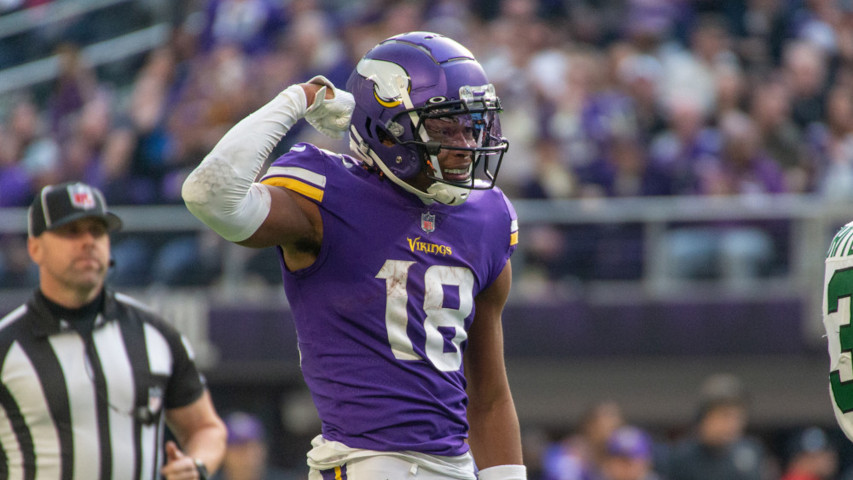
Jaxon Smith-Njigba Smashes All Expectations
No one got JSN totally “right” last year, because he wasn’t going in the first round of drafts. He finished, of course, with more receiving yards than anyone else in the league and the position’s second-most fantasy points per game across formats.
How We Got it Wrong
Despite what I just said in his intro, drafting Smith-Njigba in Round 1 last summer wouldn’t have been the right move. Because you didn’t need to. You could have waited until the Round 2-3 turn, and more often even into Round 3 before selecting him.
Our projections still came in under market price at that level, though.
The downside risk wasn’t difficult to find. We expected a run-heavy offense, and that’s exactly what we got. Seattle attempted the league’s fourth-fewest passes for the season.
QB Sam Darnold was also no sure thing, coming off the first actual good season of his career. But he bettered his career-high Pro Football Focus passing grade from 2024, ranking ninth in that category for 2025. His 8.5 yards per attempt trailed only Drake Maye.
So Darnold not only stayed good. He got better.
And -- perhaps most importantly -- JSN dominated the passing game. He drew a league-high 32.6% target share. That made up for the dearth in team passing volume.
What’s That Mean for 2026 (and Beyond)?
There are two key lessons here:
- Bet on talent.
- Don’t ignore “wisdom of the crowd.”
We all knew Smith-Njigba was good. How good was tough to gauge, because he really only had one good college season. But he beat Ohio State teammate Garret Wilson by 25 catches and Chris Olave by 30 that season, despite being younger than both guys.
I don’t think we factored that in enough. And JSN even tried to signal us by beating DK Metcalf 5.9 to 4.4 in receptions per game in 2024.
Wisdom of the crowd might be most important here, though. ADP gives us a terrific snapshot of the redraft market every summer. Finding spots to disagree with the crowd there can be key to fantasy success. But you need to apply sound reasoning.
In this case, we should have further recalibrated the JSN outlook so that we weren’t trailing the market.
Sure, Seattle presented the aforementioned risk factors. But we also knew Smith-Njigba brought the talent, enhanced opportunity (with Metcalf gone), and potential that Darnold would prove to be an upgrade over Geno Smith.
We’re never just gonna adjust to match the market around here. If we did, there wouldn’t be much reason for DS to exist. But I’ll have 2025 JSN in mind when I’m considering why I disagree strongly with ADP … and whether/how much I need to adjust.
Let’s Never Doubt Amon-Ra St. Brown Again
The Lions stud finished the season fourth among WRs in PPR points per game and third in total points. It marked his fourth straight finish among the top 7 in total points.
How We Got it Wrong
This one probably stings the most. We labeled St. Brown as our early-round bust for 2025, and he busted that designation right in the lip.
Honestly, it never felt like a safe pick. But that’s historically the point of our annual bust selection. We’re trying to find a guy you should pass over at his high ADP, in a range where pretty much everyone seems a little scary to pass on.
Our case against St. Brown basically broke down like this:
- The Detroit offense was likely headed for at least slight decline, coming off good TD luck in 2024 and losing OC Ben Johnson to Chicago.
- St. Brown was due for some regression after finishing 2024 just 11th among WRs in expected PPR points per game (seventh in actual).
- His role showed some decline in 2024. (St. Brown ranked just 22nd among WRs in target share over the final eight games of that season.) And the Jameson Williams buzz appeared to threaten that further.
The offense did regress some vs. its 2024 heights but still finished fifth in scoring and total yards. St. Brown’s target share rebounded (fifth-highest in the league). And he stayed his usual, disgustingly efficient self.
We got it wrong by overplaying the risk factors and failing to trust the talent and proven production.
What’s That Mean for 2026 (and Beyond)?
If a guy has done nothing but deliver since his NFL opportunity arrived, then you’ve gotta make a strong case for why he’ll stop doing so.
Frankly, I still think we made a decent case for why St. Brown might disappoint relative to his Round 1 ADP. But labeling him the bust overplayed that risk.
Plenty of other Round 1 picks from 2025 carried much more actual crash potential. That’s easy to say in hindsight, of course. But that hindsight will help reveal similar distinctions going forward -- before it’s too late.
James Cook Might Not Have Presented an Actual Lesson
We doubted Cook’s ability to match his high-end scoring from 2024. He made us look stupid by increasing it, landing sixth among RBs in PPR points per game.
But does this example present a learning opportunity or a cautionary tale?
How We Got it Wrong
We were plainly wrong to be low on Cook vs. ADP ahead of last season. He went roughly 11th to 13th among RBs on average last summer and finished top-6. But the case against him was sensible.
Sure, Cook finished eighth at the position in total PPR points in 2024 and 11th in points per game. But he checked in just 27th in expected points per game. That meant his extreme TD luck -- 18 total TDs on 239 touches -- inflated the scoring. Meanwhile, Cook’s receiving role declined. His carries per game even decreased by 1.0 vs. 2023. And his team spent most of the offseason refusing to meet his price on a new contract.
That extension finally came in mid-August, though. And then the Bills boosted Cook from 12.9 carries per game to 18.2. He ranked third in the league in carries, led the league in rushing yards, and racked up the TDs once again (12 rushing, 2 receiving).
He outperformed his usage again but by a slimmer margin this time: sixth in PPR points per game vs. 10th in expected.
What’s That Mean for 2026 (and Beyond)?
Honestly, I’m OK with this kind of miss for a couple reasons:
1. Projecting Cook to gain five-plus carries per game would have been bad practice. Sure, you can look back now and say we should have done something like that given the contract extension.
But projecting anything close to a 40% carry increase for a RB heading into his third season as lead back for the same team -- coming off a year-and-a-half under that same OC -- will get you into trouble a lot more often than it’ll help.
And that huge carry boost was vital to his 2025 production, because …
2. The receiving role did not rebound. Danger remains in that factor. Cook tied Michael Carter for 32nd among RBs in target share last season, according to Fantasy Points Data. That’s not what you want in a RB you’re drafting in Round 3.
The formula worked for Cook last year. But if you keep assuming he’ll make it work perennially, you’re inviting risk.
Among the position’s top 21 PPR scorers last year, only Derrick Henry caught fewer passes than Cook. Just three of the top 23 PPR scorers from 2024 supplied fewer than Cook’s 33 catches from last year.
Cook’s going even higher in early 2026 drafting: fifth in best ball ADP (half-PPR). That aligns with our early ranking. We’re certainly not projecting Cook to lose that 40% growth in carries. And we’re not assuming he’ll suddenly get bad at scoring TDs.
But the elevated ADP almost necessarily means elevated downside risk. So I -- at least -- will once again be a bit wary of Cook’s rush-heavy profile at market cost.
There is One Overarching Takeaway Here, Though
What I will learn from 2025 James Cook -- as I try to learn from some example every season -- is to always consider the “what if.”
What if … the Bills finally agreeing to that sizable RB contract means they’ll give him the ball a lot more?
What if … a Josh Allen-led offense remains good at finding its lead RB scoring opportunities?
What if … the Bills do rebound his receiving usage? (This one didn’t play out, but we need to consider all the possibilities.)
What if … you just draft some James Cook, Matt, in case luck simply works in his favor in this high-variance game?
Thank you for the reminder, ghost of fantasy future.
We incorporate ceiling (and floor) projections into the 3D Values that drive our rankings for exactly that purpose. And we’ll keep trying to get as specific as possible on the high-end “what ifs” to avoid freezing you out of the next James Cook.
Of course, we also got plenty of things right in 2025. And some of the biggest hits can help our 2026 drafting as well …
The Calls We Nailed (and Why)
Getting in (or out) on these four situations helped your fantasy success last season. But the reasons they worked are what will help our future drafting.
Trevor Lawrence Wants You to Draft QBs Differently
Lawrence used a strong second half of the season to finish 2025 fourth among QBs in total fantasy points (depending on your scoring format) and sixth in points per game.
From Week 9 through the end of the regular season (following Jacksonville’s bye), Lawrence finished just one of the final 10 weeks outside the position’s top 12 fantasy scorers. And he closed the year with four straight top-6 performances.
How We Got it Right
We didn’t project those end-of-season heights for Lawrence, but we didn’t need to. We did rank Lawrence solidly ahead of his QB20 ADP, which was enough to get him recommended in many a Draft War Room. And we plastered his face on the main Sleepers article throughout the summer.
What did we like? Importing HC Liam Coen looked good for the offense, given the boosts his offenses got the season before in Tampa Bay and previously at University of Kentucky. The Jags also moved up to second overall to grab Travis Hunter (who at least used to play WR).
Add those factors to a QB with displayed rushing upside and likely positive regression in his passing-TD rate, and Lawrence made for a fairly easy bet in QB2 range.
What’s That Mean for 2026 (and Beyond)?
There are a couple of key lessons at work here:
- Don’t overlook what’s changed since last season -- plus signals of what other changes could be coming -- as you project a player. Factor that what if along with what has been to date.
- You can still wait on a QB.
Other recent seasons have suggested you might need to chase an elite performer at the position more than in the past. Lawrence (and others) reminded us in 2025 that you can still find upside down the board.
Remember When Jaylen Waddle Was Fun to Have?
Malik Willis’ arrival might be clouding Waddle’s future. But that doesn’t remove his WR23 finish in total PPR points last season, ahead of Ladd McConkey, Brian Thomas Jr., and others.
How We Got it Right
We named Waddle our Comeback Player of the year ahead of the 2025 season. We were targeting him at his WR31 ADP, and it paid off.
Tyreek Hill’s injury certainly didn’t hurt his production. But Waddle’s renaissance started early, with a WR14 finish in Week 2 and WR20 in Week 3, before Hill went down.
This case ran opposite to the JSN and St. Brown whiffs above, because we did bet on the talent and on Waddle’s team adjusting from the prior season to send the ball his way more often.
What’s That Mean for 2026 (and Beyond)?
The lesson here is simple: Bet on talent -- and, to some degree, situation -- when the cost is modest.
Had Waddle sat WR25 in ADP last summer, he wouldn’t have been a special target. In WR3 range, though, chasing the upside made more sense than worrying about the downside.
That’s an evergreen truth the further you get into any fantasy draft. That’s why we automatically switch on Upside Mode in the Draft War Room halfway through your draft, further emphasizing the ceiling end of a player’s projection.
Travis Etienne Delivered the Payoff on the Jags RB Bet
The Jacksonville backfield lacked clarity last summer, with Tank Bigsby still around to crowd the situation alongside Etienne and rookie Bhayshul Tuten. But if you took any shots on Etienne at his RB30 ADP, then you cashed in big time when he finished top 10 at the position across formats.
How We Got it Right
Training camp didn’t clear up who Jacksonville’s lead back would be, or even if Liam Coen’s first Jags team planned to feature one guy ahead of the rest. That kind of muddled situation always gives fantasy drafters indigestion.
But even though we weren’t sure who would pay off, we listed the whole Jaguars backfield in our primary fantasy football sleepers article throughout last offseason.
Coen’s arrival drove that push, with the cheap draft cost for all the options making it even easier to buy in.
Even if you wound up with Tuten or Bigsby and no Etienne, your team didn’t suffer for getting the wrong Jaguars. The payoff potential of chasing any upside option in this range (and beyond) far outweighs the penalty of drafting someone who doesn’t break through.
What’s That Mean for 2026 (and Beyond)?
Muddled backfields can often present the best RB value picks later in your draft.
Sometimes, that group will remain a frustrating committee all season. And you’ll find an annoying piece glued to your bench that you’re scared to start or send to waivers.
Hanging onto that guy in case a teammate injury propels him to more work might be the move. Other times, you might just need to make yourself dump him.
But still other occasions will reveal an emergent single performance like Etienne’s or Javonte Williams’ in Dallas.
Target such situations with the reserve-RB picks in your draft.
Worrying About Bucky Irving Was the Way to Go
The second-year Bucs RB came off a strong finish to his rookie season and landed 11th among RBs in 2025 ADP -- at times even higher than that.
Injuries helped derail his season. But even when on the field, Irving ranked a mere 18th in PPR points per game; 19th in non-PPR.
How We Got it Right
Market projections for Irving in 2025 did a little too much extrapolating of his late-2024 numbers across a full workload. They failed to factor in enough downside risk for his sub-200-pound size.
It’s tough to know whether his diminutive size factored into the injuries Irving has dealt with to date in the NFL. But the combo of time lost to injury and depleted goal-line chances (six total carries inside the 10-yard line in 2025) look like size-related issues.
We like Irving as a player. But expectations for his production ignored the risk last summer.
What’s That Mean for 2026 (and Beyond)?
The Irving-specific lesson here doesn’t seem to have fully landed for the market. He’s sitting 15th among RBs in best ball ADP as of this writing.
Perhaps that falls some after the Kenny Gainwell signing early in free agency. If it doesn’t, the rankings suggest we’ll be pretty much out on Irving again this summer.
More broadly, though, your takeaway here should be this: Don’t lose sight of reality just because you like a player.
You can root for a player like Irving while also recognizing that he’s too expensive to chase in your drafts. Try to find a format in which he makes more sense -- or consider whether your argument against the wisdom of the crowd is strong enough to hold this anti-market position.
But the whole point of fantasy football projections is to make sure we’re grounded in reality, taking account of:
- What the worst-case scenario might be (floor)
- What the best-case scenario looks like (ceiling)
- And what’s most likely (median or “DS Proj” on the rankings pages).
Now Let’s Put These Lessons to Work
Are you ready to draft new teams for 2026?
We’ve already put all these 2025 lessons to use in our projections, and those numbers power the Draft War Room, which you can tailor to whatever format you’re looking to play.
Sync your own DWR now, or check out the video below to learn more.